📦 Request Quote
📞 Connect with us
Compare self drilling screws vs self tapping screws, including pilot holes, metal and roofing uses, TEK screws, key differences and selection tips.
A complete comparison of self drilling and self tapping screws covering pilot holes, metal, roofing, TEK screws, applications and selection tips.
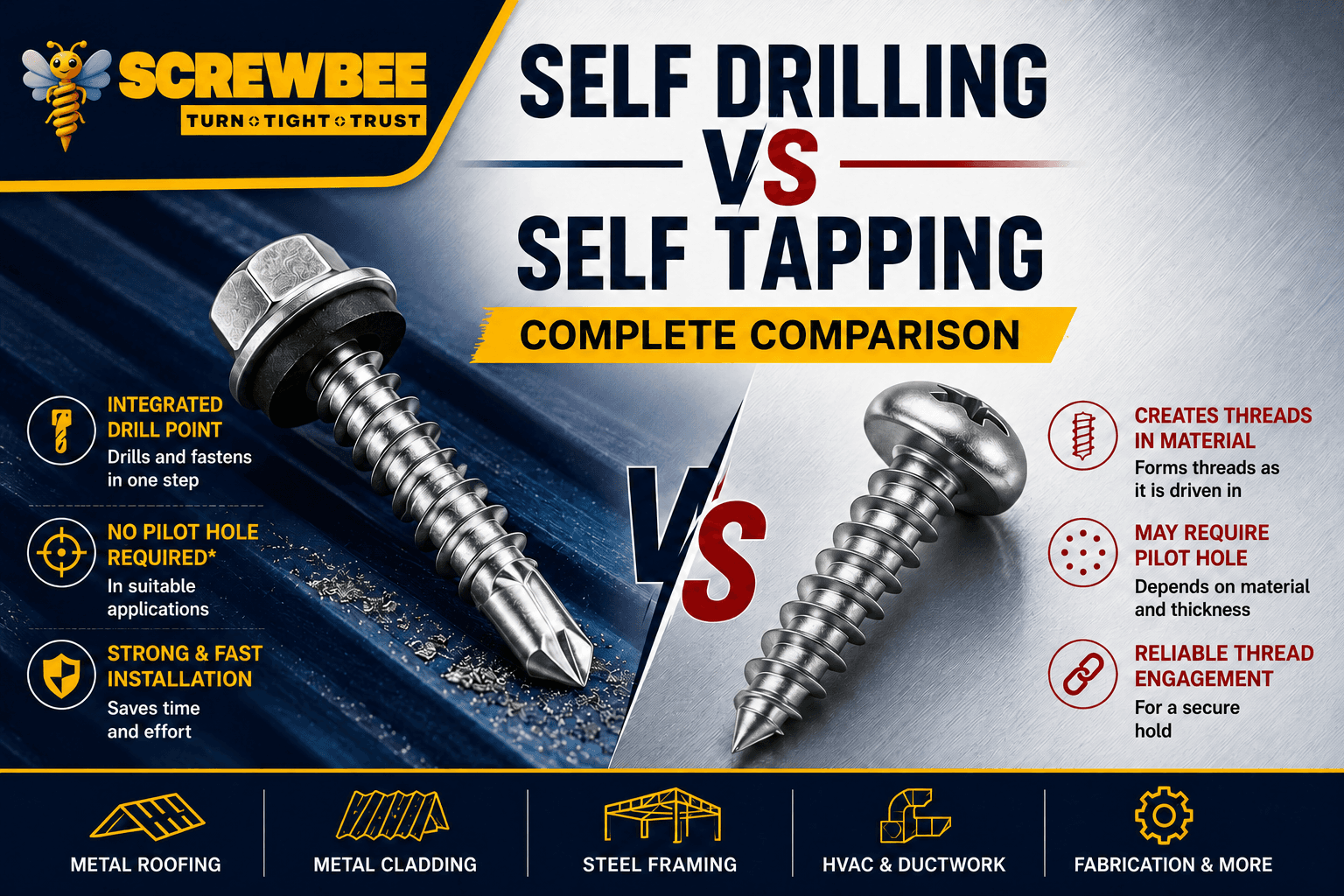
Self Drilling Screws vs Self Tapping Screws: Complete Comparison
Self Drilling Screws vs Self Tapping Screws: What Is the Difference?
Self Drilling Screws and Self Tapping Screws are both designed to simplify fastening, but they do not work in exactly the same way.
A Self Drilling Screw has a drill-shaped point that can create its own hole in compatible material while the screw is being installed.
A Self Tapping Screw is designed to form or cut threads during installation, but depending on the screw design and material, it may still require a pre-drilled pilot hole.
The easiest way to remember the difference is:
Self Drilling Screw = Drills + Creates Threads + Fastens
Self Tapping Screw = Creates Threads + Fastens
This difference is especially important when choosing fasteners for sheet metal, metal roofing, cladding, steel framing, HVAC, fabrication and other industrial applications.
What Are Self Drilling Screws?
Self Drilling Screws are fasteners designed with an integrated drill-point tip.
The drill-shaped point penetrates compatible metal during installation. Once it passes through the material, the threaded section engages and creates the fastening connection.
Self drilling screws are commonly used for:
Metal roofing
Metal cladding
Sheet-metal fastening
Light-gauge steel
Steel framing
HVAC and ductwork
Fabrication
Metal brackets
Industrial assembly
For a detailed introduction, read What Are Self Drilling Screws? Types, Uses & Benefits.
What Are Self Tapping Screws?
Self Tapping Screws are fasteners designed to create or form mating threads as they are driven into compatible material.
They may use thread-cutting or thread-forming action depending on the screw design.
Unlike a self drilling screw, a self tapping screw does not necessarily include an integrated drill point.
This means some self tapping applications require a pilot hole before the screw can be installed.
Self tapping screws can be used in compatible:
Sheet metal
Light metal
Plastic
Wood
Industrial components
General assembly applications
The exact screw design should always match the material being fastened.
How Do Self Drilling Screws Work?
The key feature is the drill-point tip.
Installation typically happens in three stages:
The drill point contacts the material.
The drill point penetrates the compatible metal.
The threads engage and secure the screw.
This allows the screw to perform drilling and fastening during the same installation operation.
However, the screw's drilling capacity must match the total material thickness.
A self drilling screw should not be selected only by length or appearance.
How Do Self Tapping Screws Work?
A self tapping screw creates threads as it enters the material.
Depending on its design, it may:
Cut threads into the material
Form threads by displacing material
Engage with an existing pilot hole
If the screw does not include a drill point, an appropriately sized pilot hole may be required.
The pilot-hole requirement depends on:
Material
Material thickness
Screw diameter
Thread geometry
Screw design
Self Drilling Screws vs Self Tapping Screws: Quick Comparison
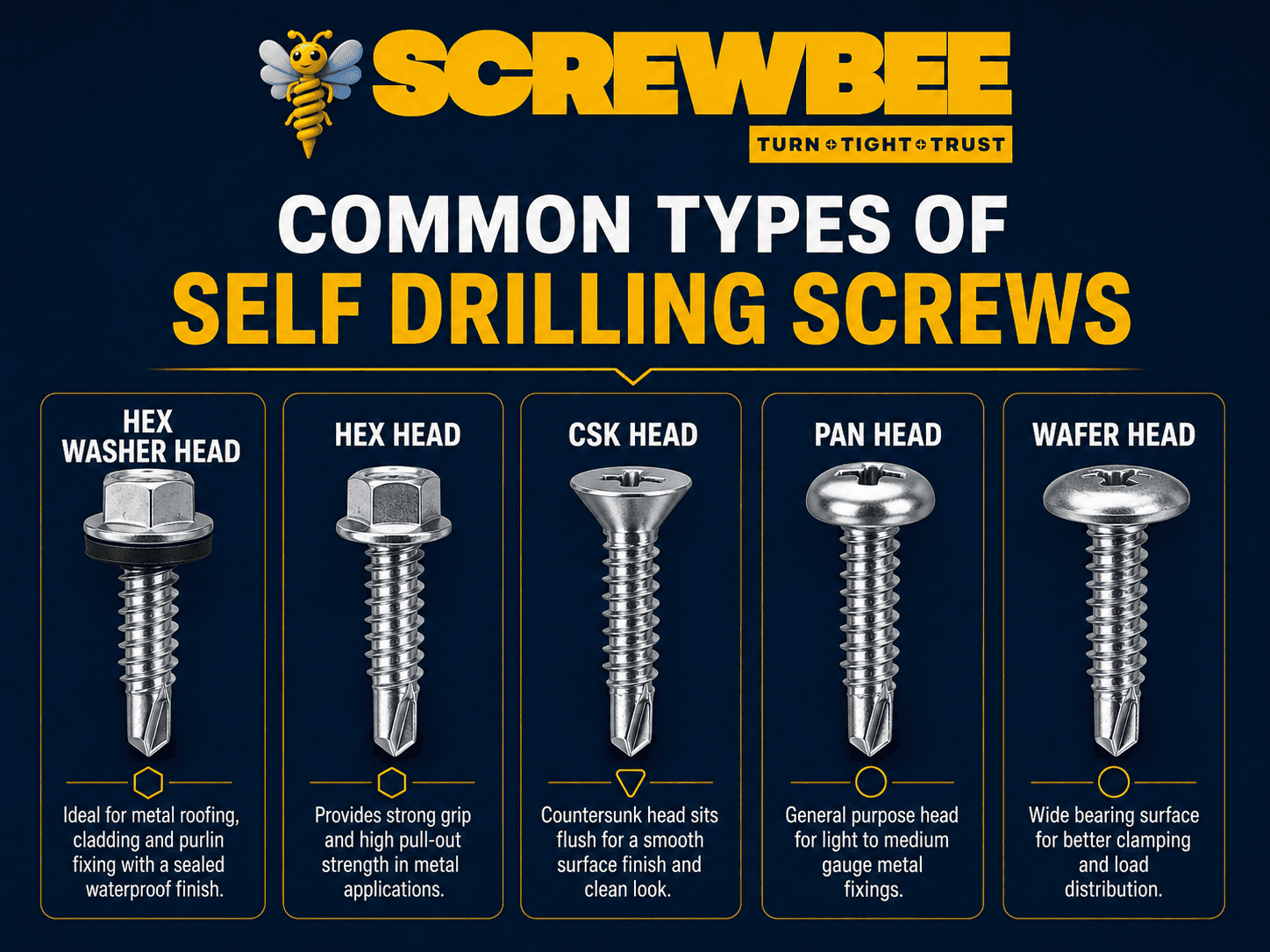
Self Drilling Screws
Integrated Drill Point: Yes.
Self drilling screws have a drill-shaped tip that can create its own hole in suitable material.
Pilot Hole: Usually not required in suitable applications.
The drill point helps reduce the need for separate pre-drilling.
Thread Formation: Yes.
After drilling through the material, the threads engage and create the fastening connection.
Metal Roofing: Commonly used.
Suitable self drilling screws are widely used in compatible metal roofing systems.
Metal Cladding: Common application.
They are useful where drilling and fastening need to happen in one operation.
Sheet Metal: Commonly used.
Self drilling screws are frequently selected for compatible sheet-metal fastening.
Steel Framing: Common application.
They can be used for suitable light-gauge steel and framing work.
Installation Steps: Usually fewer.
In suitable applications, drilling and fastening can happen during the same operation.
Best Choice Depends On:
Drill-point capacity, material thickness, screw size and application.
Self Tapping Screws
Integrated Drill Point: Usually no.
Self tapping screws are mainly designed to create or form threads rather than drill their own hole.
Pilot Hole: May be required.
The requirement depends on the screw design and material being fastened.
Thread Formation: Yes.
Self tapping screws form or cut mating threads during installation.
Metal Roofing: Depends on the specification.
They may be used in some roofing systems when the fastener and installation method are suitable.
Metal Cladding: Possible depending on design.
A pilot hole or specific tapping configuration may be required.
Sheet Metal: Commonly used.
Self tapping screws can be suitable for compatible sheet-metal applications.
Steel Framing: Depends on the application.
The correct screw design should match the steel thickness and joint requirement.
Installation Steps: May involve separate drilling.
Some applications require a pilot hole before the screw is installed.
Best Choice Depends On:
Pilot-hole requirement, thread design, material type and thickness.
Which One Should You Choose?
For quick selection:
Choose a Self Drilling Screw when:
You need to fasten compatible metal
You want drilling and fastening in one operation
You are working with roofing, cladding or sheet metal
Repetitive installation speed matters
The drill point is suitable for the total material thickness
Choose a Self Tapping Screw when:
A pilot hole already exists
The screw is specifically designed for the material
You need thread-forming or thread-cutting action
The application specification calls for a tapping screw
Neither type is universally better. The correct screw is the one that matches the application.
Do Self Drilling Screws Need a Pilot Hole?
In many suitable applications, Self Drilling Screws do not require a separate pilot hole.
The drill-shaped point creates the hole during installation.
This depends on:
Drill-point capacity
Metal thickness
Screw diameter
Material hardness
Installation speed
Application specification
If the drill point is not suitable for the material thickness, the screw may fail to penetrate correctly.
Do Self Tapping Screws Need a Pilot Hole?
Sometimes.
A self tapping screw may require a pilot hole if it does not have an integrated drilling point.
The correct pilot-hole diameter is important because:
A hole that is too small can make installation difficult.
A hole that is too large can reduce thread engagement.
Always select the pilot hole according to the screw and material specification.
Self Drilling Screws for Metal
Self Drilling Screws for Metal are widely used because they can often create their own hole while fastening compatible metal components.
Typical applications include:
Sheet metal
Metal panels
Brackets
Steel sections
Roofing sheets
Cladding
HVAC components
Fabrication assemblies
When selecting a self drilling screw for metal, consider:
Total material thickness
Drill-point capacity
Screw diameter
Screw length
Thread type
Head style
Washer requirement
Finish
Self Tapping Screws for Metal
Self tapping screws can also be used for compatible metal applications.
They may be useful where:
A pilot hole has already been prepared
The application requires thread-forming action
The required fastener specification is a self tapping design
For metal fastening, never assume that self drilling and self tapping screws are interchangeable simply because they look similar.
Self Drilling Screws for Roofing
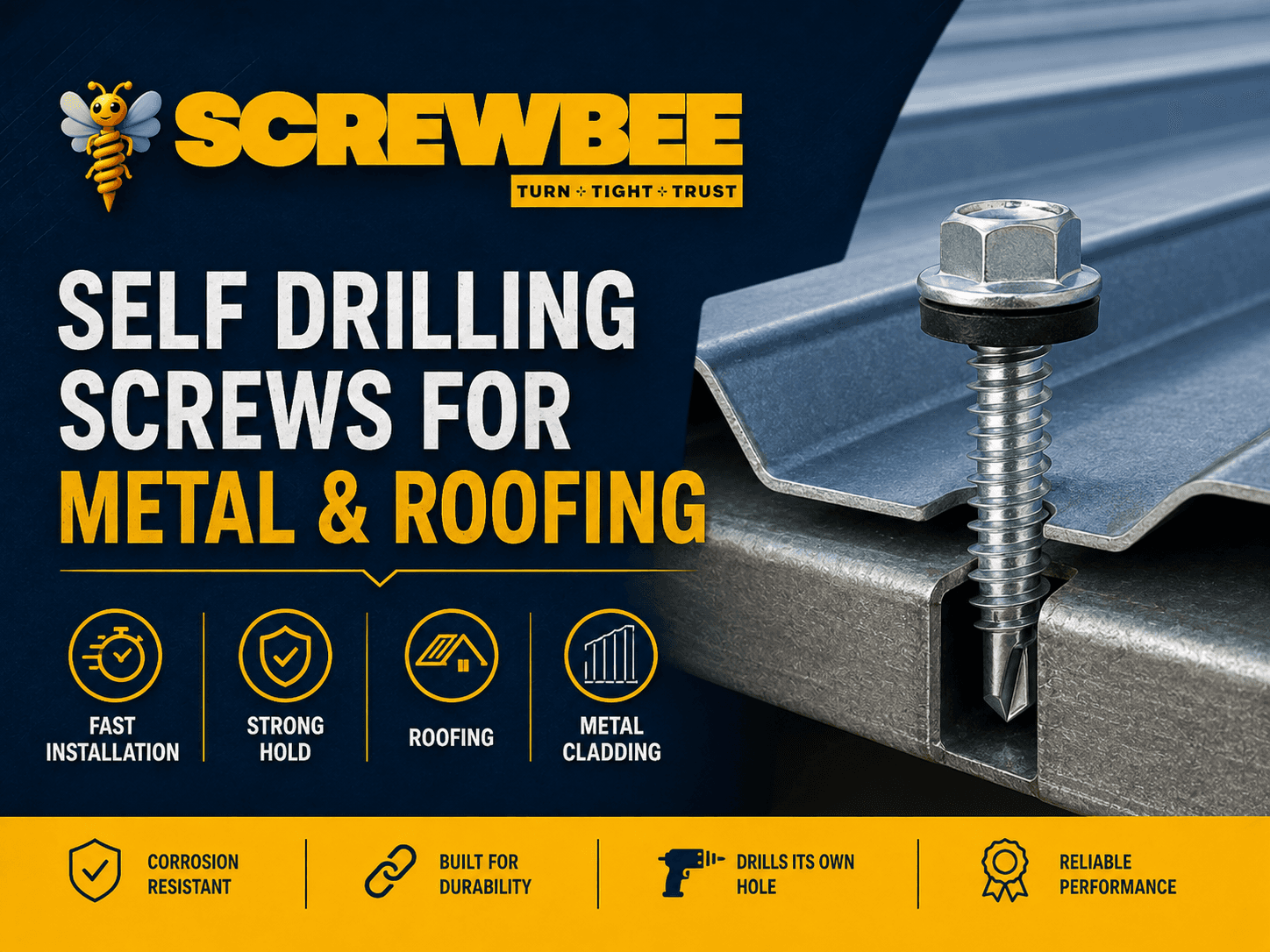
Self Drilling Screws for Roofing are widely used in suitable metal roofing systems.
A typical roofing fastener may include:
Hex washer head
Drill-point tip
Threaded body
Metal washer
EPDM sealing washer
Suitable surface finish
The EPDM sealing washer can help seal around the fixing point when the fastener is properly selected and installed.
Before choosing a roofing screw, confirm:
Roofing sheet thickness
Supporting metal thickness
Screw length
Drill-point capacity
Washer requirement
Exposure conditions
What Is a Hex Washer Head Self Drilling Screw?
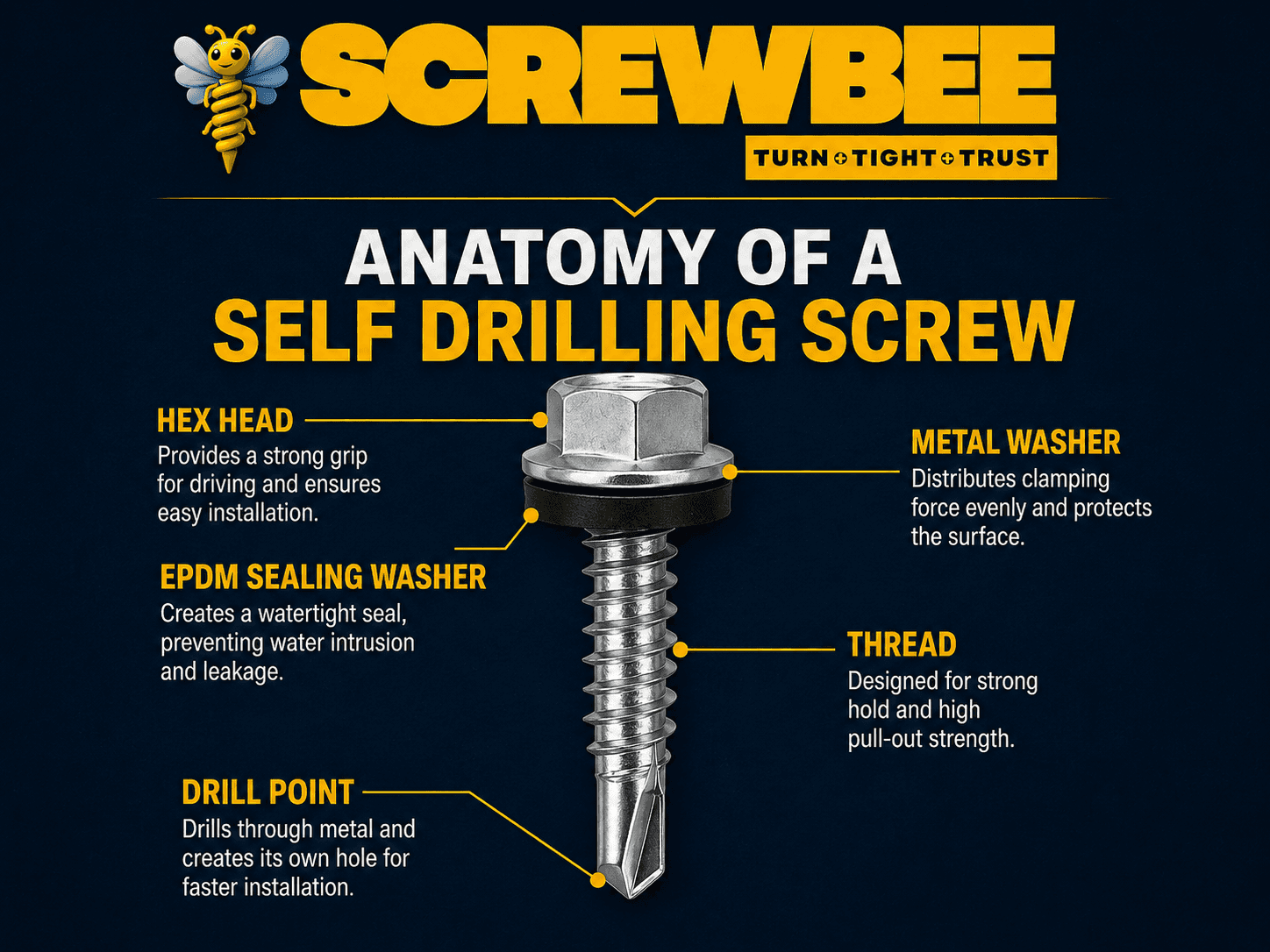
A Hex Washer Head Self Drilling Screw combines a hexagonal driving head with a broad bearing surface and an integrated drill point.
This design is commonly relevant to:
Roofing
Cladding
Sheet metal
Industrial structures
General metal fastening
Some configurations also include an EPDM sealing washer for suitable exterior fixing applications.
Self Tapping Screws for Roofing
Self tapping screws may be used in some roofing applications depending on the system specification.
If a pilot hole is required, installation may involve:
Drill → Position Screw → Fasten
A suitable self drilling roofing screw may allow:
Position Screw → Drill + Fasten
For repetitive metal roofing installation, this can reduce the number of installation steps.
Self Drilling Screws for Cladding
Metal cladding projects can involve hundreds or thousands of fastening points.
Suitable Self Drilling Screws for Cladding can simplify installation by combining drilling and fastening.
Before selecting the fastener, verify:
Cladding panel thickness
Supporting metal thickness
Head style
Drill-point capacity
Washer
Finish
Environmental exposure
Self Drilling Screws for Steel Framing
Light-gauge steel framing is another common use for self drilling screws.
The drill point penetrates compatible steel sections and the threads create the fastening connection.
Applications can include:
Steel framing
Support sections
Metal brackets
Interior framing
Fit-out structures
The drill point must be suitable for the total thickness being joined.
Self Drilling Screws for HVAC and Ductwork
HVAC and ventilation installations frequently involve light sheet-metal components.
Suitable self drilling screws can be used for:
Duct connections
Metal brackets
Ventilation components
Light sheet-metal assemblies
Support components
Head style, diameter and length should match the actual installation requirement.
What Is a TEK Screw?
TEK Screw is a commonly used industry term for certain self drilling screws that have a drill-point tip.
The drill point works similarly to a small drill bit, allowing the fastener to penetrate compatible metal before the threads engage.
People searching for:
TEK Screw
Self Drilling Screw
Metal Drilling Screw
Self Drilling Screw for Metal
may therefore be looking for related drill-point fastening solutions.
TEK Screws vs Self Tapping Screws
The main difference again comes down to drilling.
A TEK-type self drilling screw includes a drill point.
A typical self tapping screw focuses on forming or cutting threads and may require a prepared hole.
Therefore:
TEK Screw → Drill-point fastening
Self Tapping Screw → Thread-forming or thread-cutting fastening
Which Screw Is Faster to Install?
For suitable metal applications, Self Drilling Screws can reduce installation steps.
A self tapping installation may involve:
Pilot hole → Position screw → Drive screw
A self drilling installation may involve:
Position screw → Drill and fasten
For repetitive work such as roofing, cladding or sheet-metal assembly, fewer steps can improve installation efficiency.
Actual installation time still depends on the screw, material, tool and installer.
Which Screw Is Better for Metal Roofing?
For many compatible metal roofing applications, a Hex Washer Head Self Drilling Screw with an appropriate sealing washer is commonly used.
This configuration combines:
Drill-point penetration
Hex-drive installation
Broad bearing surface
Washer support
However, roofing systems vary.
The correct screw should always match the roofing material, support thickness and environmental requirements.
Which Screw Is Better for Thin Sheet Metal?
Both screw types may work in thin sheet metal depending on their design.
A suitable Self Drilling Screw may be more convenient when avoiding a separate drilling operation is important.
A Self Tapping Screw may be appropriate when a correctly sized pilot hole already exists.
Selection should be based on:
Sheet thickness
Screw diameter
Thread design
Joint configuration
Required fastening performance
Benefits of Self Drilling Screws
Fewer Installation Steps
Drilling and fastening can often happen during one operation.
Suitable for Metal Fastening
They are commonly used in roofing, cladding, fabrication, steel framing and sheet-metal work.
Useful for Repetitive Installation
They can simplify projects involving many similar fixing points.
Different Head Options
Self drilling screws can be available with different head styles depending on the application.
Integrated Drill Point
The drill point is the defining feature that separates self drilling screws from many other tapping fasteners.
Benefits of Self Tapping Screws
Thread Formation
They create or form mating threads during installation.
Multiple Material Applications
Depending on the exact design, they may be used with metal, plastic, wood and other compatible materials.
Useful with Prepared Holes
They are practical where the required pilot hole has already been created.
Different Thread Designs
Different self tapping screw geometries can be selected for different materials.
Common Problems with Self Drilling Screws
Screw Does Not Drill Through the Metal
Possible causes include:
Incorrect drill point
Material too thick
Worn or damaged screw tip
Incorrect installation speed
Drill Point Burns or Wears
Excessive speed or unsuitable material thickness can affect drilling performance.
Screw Spins Without Holding
The material thickness, thread engagement or hole condition may not suit the screw.
Washer Is Over-Compressed
For roofing applications, excessive tightening can damage the sealing washer.
Common Mistakes When Choosing Self Drilling vs Self Tapping Screws
Assuming They Are the Same
They perform different functions.
Choosing Only by Length
Length is only one specification.
Also consider:
Diameter
Thread
Drill point
Head
Material thickness
Washer
Finish
Ignoring Drill Capacity
A self drilling screw cannot reliably drill every metal thickness.
Using the Wrong Pilot Hole
Self tapping performance can be affected by an incorrectly sized pilot hole.
Over-Tightening
Excessive torque can damage the fastener or material.
Ignoring Environmental Conditions
Exterior roofing and cladding may require different finish and sealing considerations from indoor fabrication.
Self Drilling Screws vs Self Tapping Screws for UAE Projects
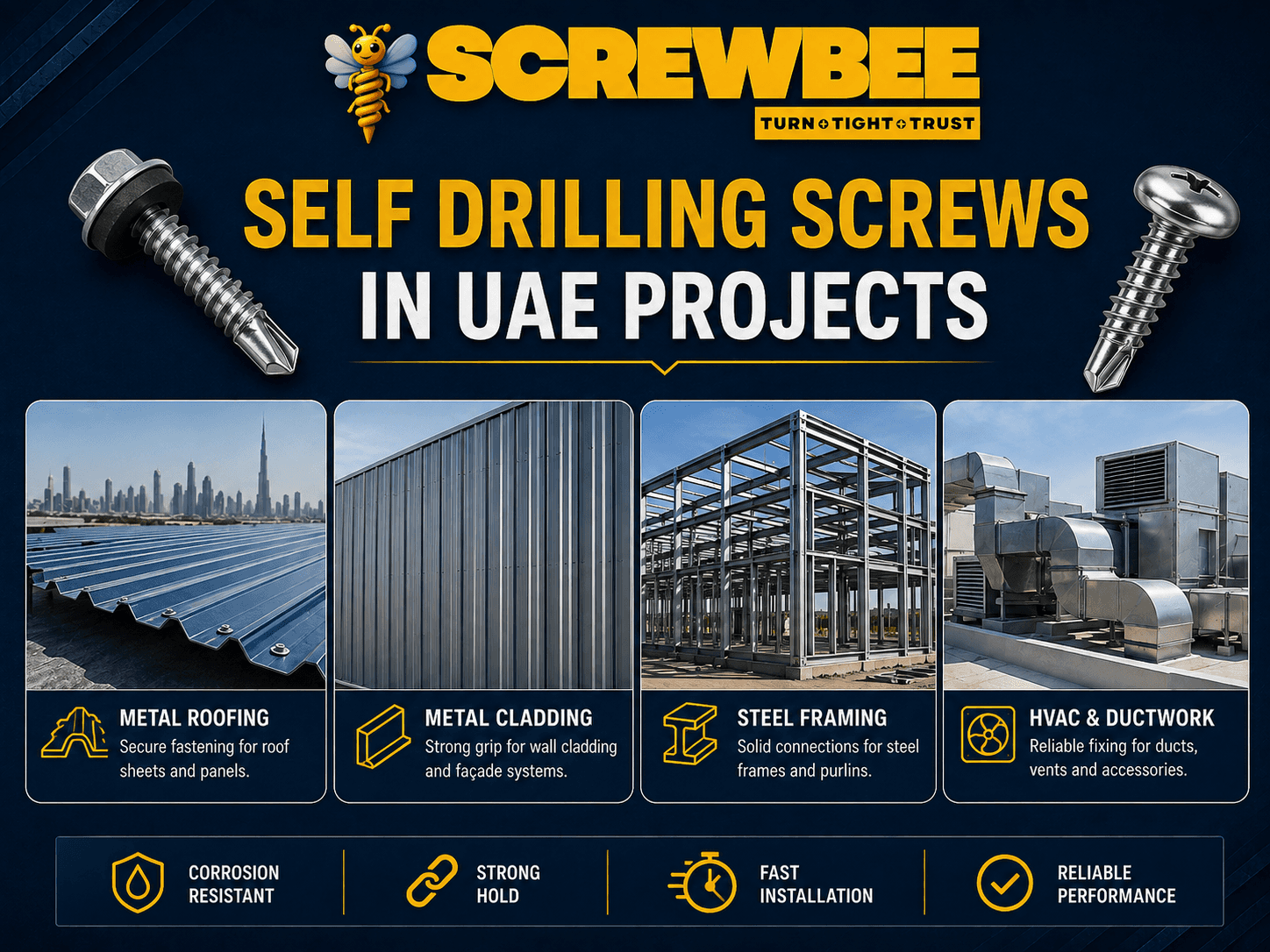
Both fastener categories can be relevant to construction and industrial work across the UAE.
Self Drilling Screws are particularly relevant to:
Metal roofing
Warehouse structures
Metal cladding
Steel framing
HVAC installations
Fabrication workshops
Industrial projects
Fit-out support structures
Projects across Dubai, Abu Dhabi, Sharjah, Ajman and other UAE markets may require different screw sizes and configurations according to project specifications.
UAE contractors, distributors and project buyers should confirm:
Material type
Material thickness
Head style
Drill point
Washer requirement
Finish
Quantity
Packaging
Delivery destination
before placing bulk orders.
Self Drilling Screws for Bulk Buyers and Distributors
Professional buyers sourcing Bulk Self Drilling Screws should provide complete requirements rather than only the product name.
Confirm:
Diameter
Length
Head style
Drill-point type
Thread
Washer requirement
Finish
Quantity
Packaging
Application
Delivery destination
This helps reduce specification errors during procurement.
For larger requirements, buyers can explore Screwbee Self Drilling Screws, Screwbee Products, Screwbee Exports, or Contact Screwbee.
Frequently Asked Questions
Are Self Drilling Screws and Self Tapping Screws the Same?
No. Self drilling screws include a drill point, while self tapping screws are primarily designed to create or form threads.
Do Self Drilling Screws Need a Pilot Hole?
Usually not in compatible materials when the drill point is suitable for the material thickness.
Do Self Tapping Screws Need a Pilot Hole?
They may. It depends on the screw design and material.
Can Self Drilling Screws Be Used for Metal?
Yes. Metal fastening is one of their main applications.
Are Self Drilling Screws Suitable for Roofing?
Yes, when the screw configuration is suitable for the roofing system.
What Is a TEK Screw?
TEK screw is a common term for certain self drilling screws with integrated drill-point tips.
Which Is Better: Self Drilling or Self Tapping?
Neither is universally better. Choose according to the material, hole requirement and application.
Can Self Drilling Screws Be Used for Cladding?
Yes, when the drill point, head, washer and size match the cladding system.
Can Self Tapping Screws Be Used in Sheet Metal?
Yes, depending on the screw design and sheet-metal specification.
Which Screw Is Better for Repetitive Metal Fastening?
A suitable self drilling screw can reduce installation steps because drilling and fastening can often happen during one operation.
Explore Related Screw Guides
To learn more about choosing the correct fastener, explore:
What Are Self Drilling Screws? Types, Uses & Benefits
What Are Chipboard Screws? Uses, Types & Benefits
What Are Flat Head Allen Screws? Uses, Features & Applications
7 Things to Check Before Buying Precision Engineered Screws
You can also explore Screwbee Products, learn more About Screwbee, review Screwbee Exports, or Contact Screwbee for product and bulk enquiries.
Final Thoughts
Self Drilling Screws and Self Tapping Screws are related fastening solutions, but they are not the same.
A self drilling screw combines drilling, thread engagement and fastening in a single installation process when used with suitable material.
A self tapping screw focuses on creating or forming threads and may require a pilot hole depending on the application.
For applications such as metal roofing, cladding, steel framing, sheet metal, HVAC and fabrication, a properly selected self drilling screw can reduce installation steps.
The final selection should always be based on:
Material
Material thickness
Drill-point capacity
Screw diameter
Screw length
Thread
Head style
Washer requirement
Environmental conditions
The best screw is not simply the fastest one to install—it is the fastener that correctly matches the material and application.