📦 Request Quote
📞 Connect with us
Learn what self drilling screws are, how hex washer head and TEK screws work, their uses in metal, roofing and cladding, and how to choose the right screw.
A practical guide to self drilling screws, including head types, metal and roofing applications, benefits, selection tips and common questions.

What Are Self Drilling Screws? Types, Uses & Benefits
What Is a Self Drilling Screw?
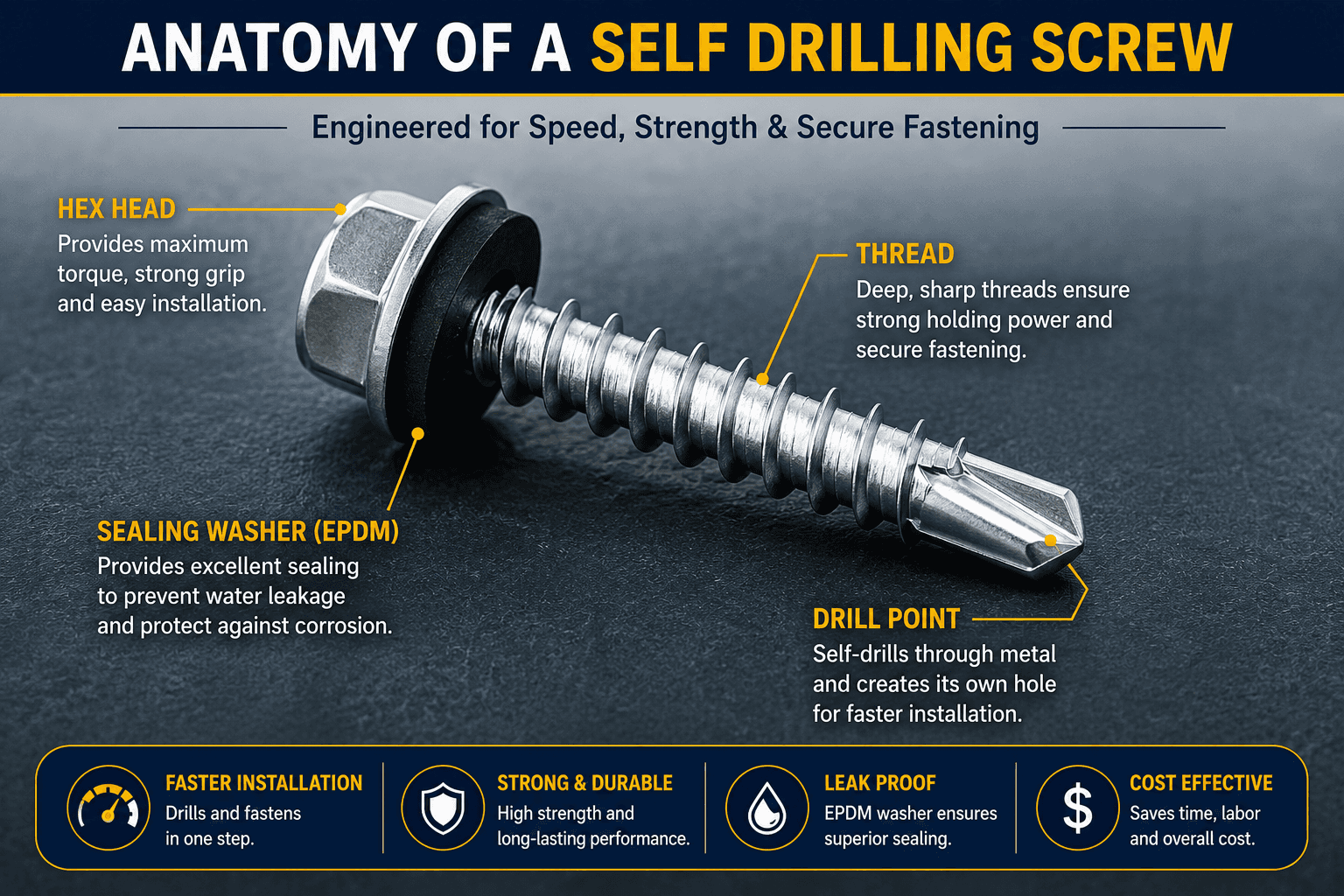
Self Drilling Screws are fasteners designed with a drill-shaped point that can create their own hole while being driven into suitable material.
Unlike conventional screws that may require a separate pilot hole, self drilling screws can often drill and fasten in a single operation. This makes them useful for metal roofing, cladding, steel framing, fabrication, HVAC work, industrial installations and other construction applications.
For contractors, distributors, fabricators and project buyers, choosing the correct self drilling screw is important for achieving a secure and reliable fastening result.
How Do Self Drilling Screws Work?
The drill-shaped tip is the key feature.
Instead of creating a pilot hole separately, the screw drills through compatible material during installation. Once the drill point passes through, the threaded section engages with the material and creates the fastening connection.
This makes self drilling fasteners especially useful for repetitive metal-fixing work where installation speed and consistency matter.
Common Types of Self Drilling Screws
Self drilling screws are available in different head styles and configurations depending on the application.
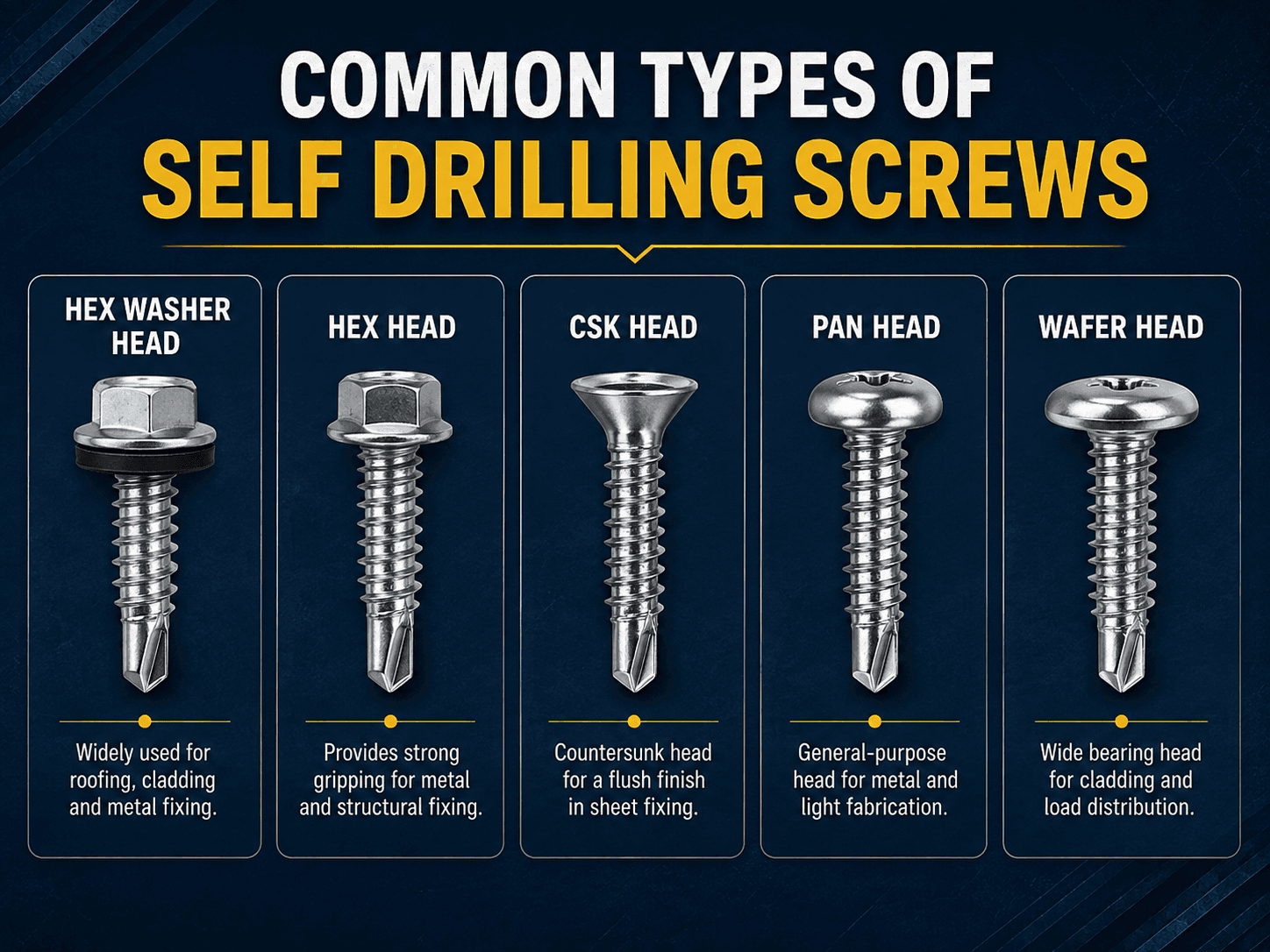
Hex Washer Head Self Drilling Screw
A hex washer head self drilling screw combines a hexagonal head with a wider bearing surface.
This design is commonly used for:
roofing
cladding
sheet-metal fixing
light-gauge steel framing
fabrication work
Some versions also include an EPDM sealing washer, which can help provide sealing around the fixing point.
You can explore Screwbee Self Drilling Screws for current product details.
Hex Head Self Drilling Screw
Hex head self drilling screws can be installed using a socket or nut setter.
They are useful where good installation torque is required for metal fastening.
CSK Self Drilling Screw
A CSK self drilling screw uses a countersunk head.
It is useful where the screw head needs to sit closer to or flush with the surface.
For applications where a recessed Allen-drive fastener is preferred instead, buyers can explore Flat Head Allen Screws.
Pan Head Self Drilling Screw
Pan head self drilling screws have a rounded head and are commonly used for general sheet-metal fastening and light fabrication.
Wafer Head Self Drilling Screw
Wafer head self drilling screws have a broad, relatively low-profile head.
They can be useful where a wider clamping surface is required.
What Is a TEK Screw?
TEK screw is a commonly used term for certain self drilling screws with drill-point tips.
The drill point works similarly to a small drill bit, allowing the screw to create its own hole in compatible material.
People searching for TEK screws, self drilling metal screws or metal drilling screws may therefore be looking for similar fastening solutions.
Self Drilling Screws for Metal
One of the most common applications is metal fastening.
These screws are frequently used for:
sheet metal
light-gauge steel
brackets
metal panels
framing sections
fabrication components
HVAC and ductwork
The correct fastener should always be selected based on material thickness, screw diameter, drill-point capacity, thread type, head style and finish.
For metal-related fastening requirements, buyers can review Screwbee Self Drilling Screws.
Self Drilling Screws for Roofing
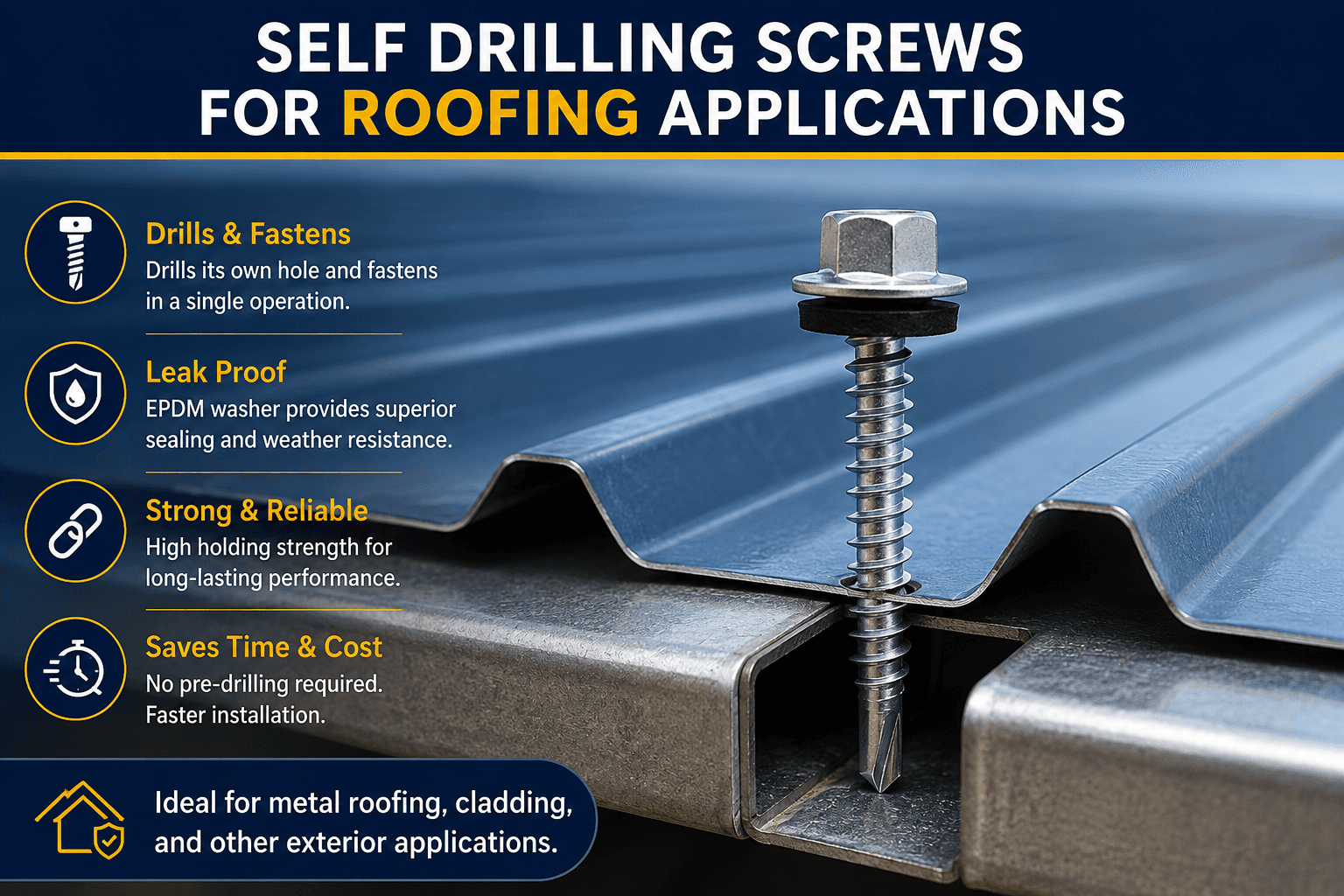
Self drilling screws are widely used in roofing applications because they can combine drilling and fastening in one step.
A roofing fastener may require:
a hex washer head
suitable drill-point tip
threaded body
sealing washer
suitable protective finish
The sealing washer is especially important because it can help reduce water entry around the fixing point when installed correctly.
Self Drilling Screws for Cladding
Metal cladding systems often require quick and consistent fastening.
Self drilling screws can be used to attach cladding panels to suitable supporting metal sections.
Before selecting a screw for cladding, buyers should check:
sheet thickness
supporting material thickness
screw length
drill-point capacity
washer requirement
coating or finish
Self Drilling Screws for Steel Framing
Light-gauge steel framing is another common application.
The drill point can penetrate suitable steel sections while the threads provide grip.
This makes these screws useful for repetitive fastening work in steel framing and fit-out support structures.
Self Drilling Screws for Fabrication
Fabrication workshops often use self drilling fasteners for assembling:
metal panels
brackets
ducts
enclosures
light frames
sheet-metal components
They can help reduce installation time in suitable applications where separate drilling would otherwise be required.
Who Should Use Self Drilling Screws?
These screws are especially relevant for:
roofing contractors
metal fabricators
cladding installers
HVAC contractors
steel-frame installers
industrial maintenance teams
hardware distributors
project procurement teams
The exact screw type should still be selected according to the material and project requirement.
Self Drilling Screws vs Self Tapping Screws
Self drilling screws and self tapping screws are often confused, but they are not exactly the same.
A self drilling screw has a drill-shaped point that can create its own hole in suitable material.
A self tapping screw is designed to form or cut threads during installation, but it may still require a pre-drilled hole depending on the application.
A simple way to remember the difference is:
Self drilling screw = drills and fastens
Self tapping screw = forms threads during fastening
The correct choice depends on material type, thickness and installation requirement.
Self Drilling Screws vs Drywall Screws
Self drilling screws and drywall screws are designed for different fastening requirements.
Self drilling screws are commonly used for:
metal roofing
cladding
sheet metal
steel framing
fabrication
Drywall screws are mainly designed for fixing gypsum board or drywall to suitable supporting structures.
For drywall-related fastening, buyers can explore Zinc Drywall Screws and Black Zinc Drywall Screws.
Self Drilling Screws vs Chipboard Screws
Self drilling screws are mainly associated with metal fastening.
Chipboard Screws are more suitable for materials such as:
chipboard
MDF
particle board
furniture panels
cabinetry
joinery materials
Choosing the correct screw depends on the material being fastened.
Benefits of Self Drilling Screws
Faster Installation
Drilling and fastening can often be completed in a single operation.
Reduced Pre-Drilling
In suitable applications, a separate pilot-hole step may not be necessary.
Suitable for Metal Applications
They are widely used in roofing, cladding, steel framing, fabrication and general sheet-metal work.
Multiple Head Styles
Different head types make this screw category suitable for different fastening requirements.
Useful for Repetitive Installation
They are especially practical where many similar fastening points need to be installed efficiently.
How to Choose the Right Self Drilling Screw
Choosing the correct fastener requires more than simply selecting a length.
Check the Material
Identify whether the screw will be used with:
sheet metal
roofing panels
steel framing
cladding
fabrication components
Check Material Thickness
The drill point must be capable of penetrating the total material thickness.
Choose the Correct Head Type
Common examples include:
Hex washer head for roofing and cladding
Hex head for metal fastening
CSK head for a lower-profile finish
Pan head for general sheet-metal work
Check the Washer Requirement
For roofing or weather-exposed applications, a sealing washer may be important.
Choose the Right Finish
The finish should suit the intended environment and corrosion-resistance requirement.
Select the Correct Size
Length, diameter, thread and drill-point capacity should match the materials being joined.
Self Drilling Screws for UAE Projects
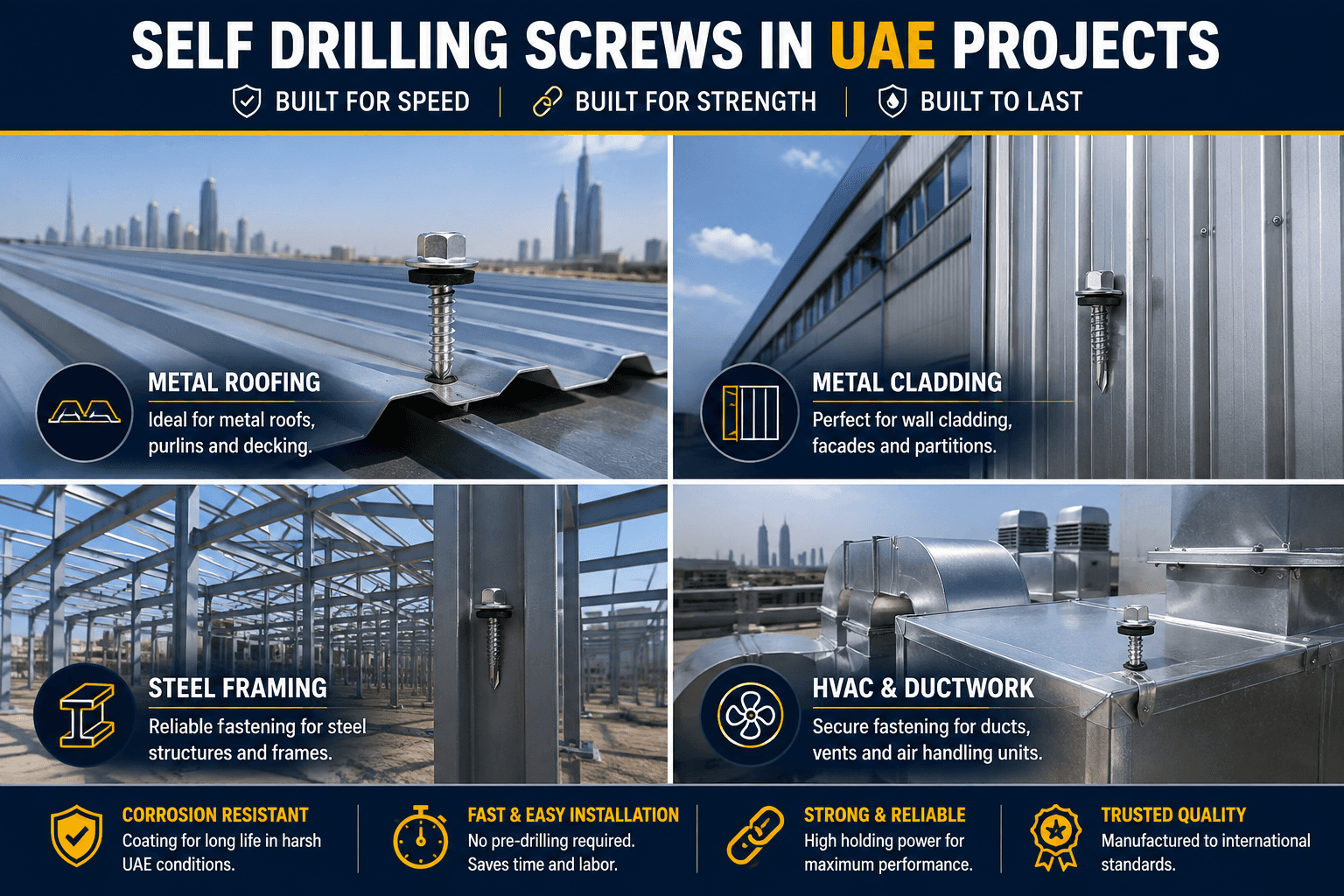
Self drilling screws are relevant across many construction and industrial applications in the UAE.
Common project areas include:
metal roofing
warehouse construction
cladding systems
fabrication workshops
light-gauge steel framing
industrial buildings
HVAC installations
fit-out support structures
For UAE contractors, distributors and project buyers, selecting the correct head style, drill point, washer, finish and size is important for reliable fastening performance.
Buyers should also confirm application requirements, quantities, packaging and delivery requirements before placing bulk orders.
Self Drilling Screws for Bulk Buyers and Distributors
Bulk buyers generally need more information than the product name alone.
Before placing an order, confirm:
screw size
diameter
head type
drill-point type
washer requirement
finish
quantity
packaging
delivery destination
For bulk product requirements, visit Screwbee Self Drilling Screws.
For international supply enquiries, explore Screwbee Exports.
Choosing the Correct Screw for Different Materials
One screw type should not be used for every material.
For metal fastening, explore Self Drilling Screws.
For compatible wood-based boards, explore Chipboard Screws.
For recessed Allen-drive fastening in suitable wood applications, explore Flat Head Allen Screws.
For drywall-related fastening, explore Zinc Drywall Screws and Black Zinc Drywall Screws.
This material-based selection approach helps buyers choose a more appropriate fastener instead of relying only on appearance.
Common Mistakes When Choosing Self Drilling Screws
Using the Wrong Drill Point
A drill point that is not suitable for the material thickness may not penetrate correctly.
Over-Tightening
Excessive torque can damage the washer, threads, screw or material.
Choosing the Wrong Head Style
Roofing, cladding and fabrication applications may require different head configurations.
Ignoring Environmental Exposure
Outdoor and semi-outdoor installations may require greater attention to finish and corrosion resistance.
Selecting Only by Length
Diameter, drill point, thread type, head style, washer and material thickness should also be considered.
Frequently Asked Questions About Self Drilling Screws
What is a self drilling screw?
A self drilling screw is a fastener with a drill-shaped tip that can create its own hole while being installed into suitable material.
Are self drilling screws suitable for metal?
Yes. They are commonly used for sheet metal, roofing, cladding, steel framing, HVAC and fabrication work.
Do self drilling screws need a pilot hole?
In many suitable applications, a separate pilot hole is not required. The correct drill-point capacity must still be selected for the material thickness.
What is a hex washer head self drilling screw?
It is a self drilling screw with a hexagonal head and a washer-style bearing surface. Some versions also include an EPDM sealing washer.
What is a TEK screw?
TEK screw is a common industry term used for certain self drilling screws with drill-point tips.
Which self drilling screw is suitable for roofing?
Roofing applications commonly use a suitable hex washer head self drilling screw with the correct drill point, sealing washer, finish and size for the roofing system.
Can self drilling screws be used for cladding?
Yes, provided the screw size, drill point, washer and finish are suitable for the cladding system and supporting material.
Are self drilling screws the same as self tapping screws?
No. Self drilling screws include a drill-point tip, while self tapping screws mainly form or cut threads during installation.
What screw should I use for MDF or chipboard?
For compatible wood-based boards, review Screwbee Chipboard Screws.
What screw should I use for cabinet or general woodwork?
Depending on the joint and application, Screwbee Flat Head Allen Screws may be suitable.
How do I choose self drilling screws for bulk projects?
Check the application, material thickness, head type, drill-point capacity, washer, finish, size, quantity, packaging and delivery requirements before ordering.
Explore Screwbee Fasteners
Different applications require different screw types.
Explore Self Drilling Screws for compatible metal fastening applications.
Explore Chipboard Screws for MDF, particle board, furniture and joinery applications.
Explore Flat Head Allen Screws for compatible Allen-drive fastening applications.
Explore Zinc Drywall Screws and Black Zinc Drywall Screws for drywall-related fastening requirements.
For international enquiries and bulk supply support, visit Screwbee Exports.
Final Thoughts
Self drilling screws provide an efficient fastening solution for metal roofing, cladding, steel framing, fabrication, HVAC and other suitable metal applications.
The best fastening performance depends on selecting the correct drill point, screw size, head style, washer and finish for the materials being fixed.
For contractors, distributors, fabricators and project buyers, understanding these factors makes it easier to choose the right fastener and reduce installation problems.
Explore Screwbee Self Drilling Screws for product, project and bulk supply requirements.