📦 Request Quote
📞 Connect with us
Learn what chipboard screws are, including DIN 7505, countersunk wood screws, MDF and particle board uses, furniture applications and buying tips.
A practical guide to chipboard screws covering DIN 7505, MDF, particle board, furniture and joinery applications, benefits, selection tips and FAQs.

What Are Chipboard Screws? Uses, Types & Benefits
What Are Chipboard Screws?
Chipboard Screws are fasteners commonly used for fixing chipboard, particle board, MDF, plywood, furniture panels and other compatible wood-based materials.
They typically feature a coarse thread designed to engage effectively with engineered wood materials and a countersunk head that can sit neatly into the surface when installed correctly.
Chipboard screws are widely used in:
Furniture manufacturing
Cabinet assembly
Modular furniture
Interior fit-out work
Joinery
MDF fixing
Particle board assembly
Plywood applications
Shelving
General woodworking
For furniture manufacturers, carpenters, joinery workshops and bulk buyers, selecting the correct chipboard screw is important for achieving a secure and clean fastening result.
How Do Chipboard Screws Work?
The thread design is one of the most important features of a chipboard screw.
As the screw is driven into compatible wood-based material, the thread engages with the board and creates the fastening connection.
Many chipboard screws also use a countersunk head, allowing the screw head to sit closer to or flush with the material surface.
This combination makes chipboard screws particularly useful for furniture, cabinetry, MDF and particle board assembly.
What Is a DIN 7505 Chipboard Screw?
DIN 7505 Chipboard Screw is a common search term used by buyers looking for screws associated with wood and engineered wood fastening applications.
When selecting a DIN 7505 chipboard screw, buyers should still confirm:
Screw diameter
Screw length
Head type
Drive type
Thread configuration
Material
Finish
Intended application
The correct specification should always match the material and joint requirement.
Common Features of Chipboard Screws
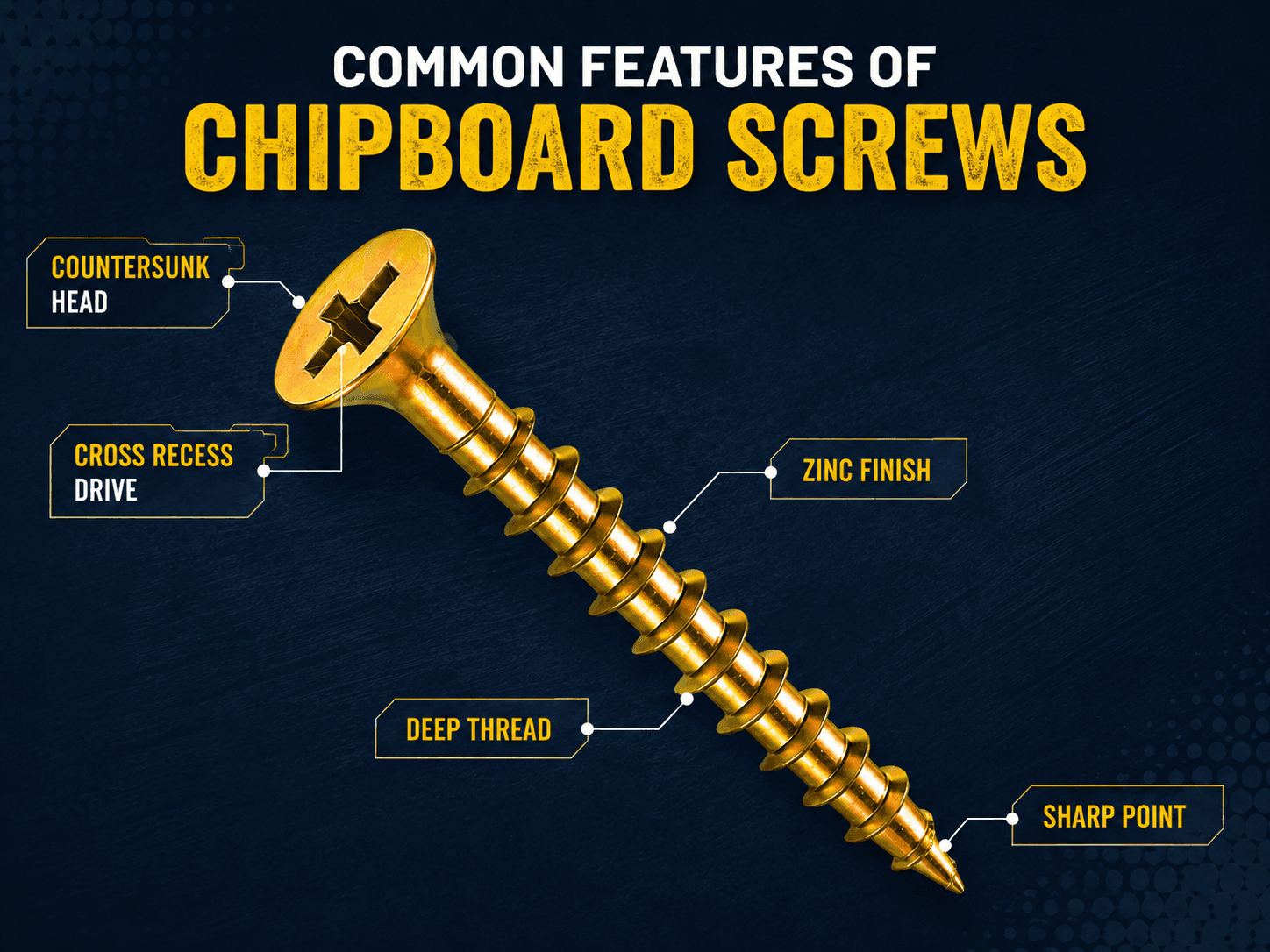
Coarse Thread
A coarse thread helps the screw engage effectively with compatible wood-based boards.
This makes chipboard screws useful for materials such as:
Chipboard
Particle board
MDF
Plywood
Furniture panels
Countersunk Head
Many chipboard screws use a flat countersunk head.
This allows the head to sit neatly into the board surface and helps provide a cleaner finished appearance.
Sharp Point
A suitable point helps the screw enter compatible wood-based material during installation.
Different Sizes and Configurations
Chipboard screws are available in different sizes and configurations depending on the furniture, joinery or woodworking application.
Explore Screwbee Chipboard Screws for current product information.
Chipboard Screws for MDF
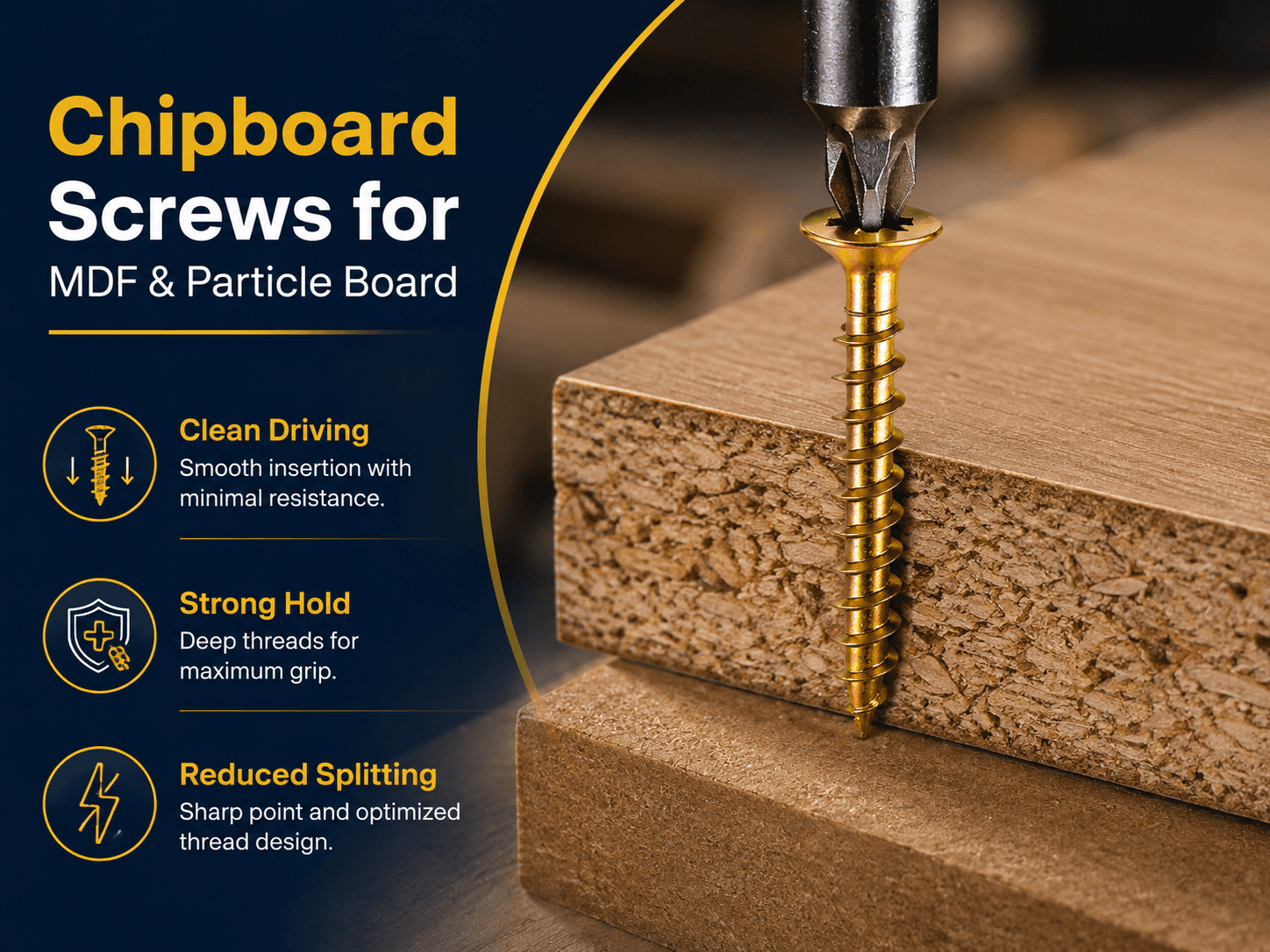
One important application keyword is MDF Screws.
MDF is widely used in:
Furniture
Cabinets
Wardrobes
Shelves
Interior panels
Modular furniture
Decorative joinery
When selecting screws for MDF board, the screw diameter, length and installation method should be chosen according to the board thickness and joint design.
Suitable Chipboard Screws can be considered for compatible MDF applications.
Chipboard Screws for Particle Board
Screws for Particle Board need suitable thread engagement because particle board is made from compressed wood particles.
Chipboard screws are commonly used in compatible particle board applications including:
Furniture frames
Cabinets
Shelving
Storage units
Office furniture
Modular interiors
The correct screw should be selected based on board thickness, diameter, thread and required fastening depth.
Chipboard Screws for Furniture
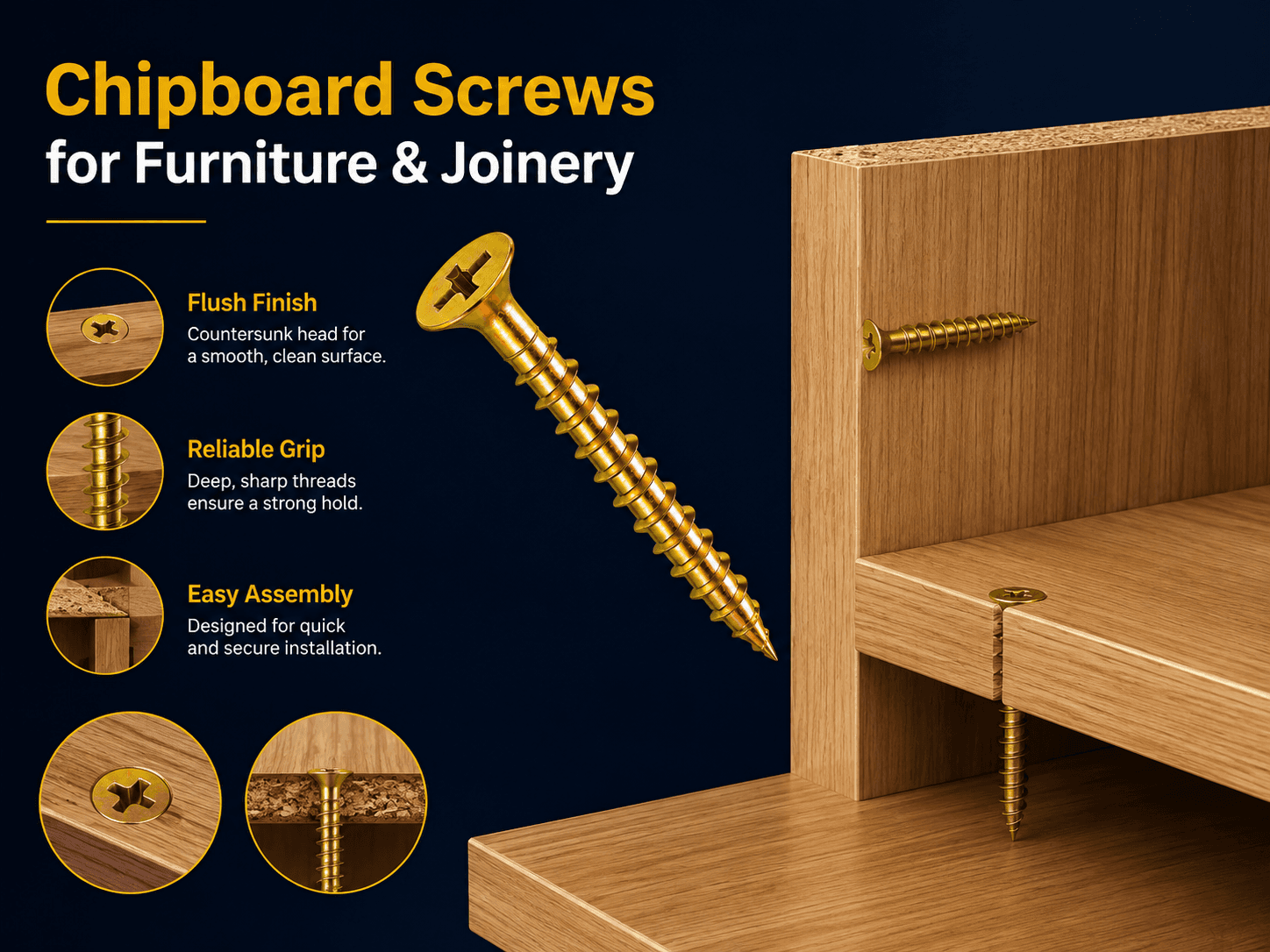
Chipboard Screws for Furniture are commonly used in furniture production and assembly.
Typical applications include:
Wardrobes
Cabinets
Desks
Shelves
Kitchen units
Storage furniture
Office furniture
Modular furniture
Furniture manufacturers often require screws that provide reliable engagement and a neat finished appearance.
The countersunk head design can help create a clean surface when installed correctly.
Chipboard Screws for Cabinets
Cabinet manufacturing often involves MDF, particle board, plywood and laminated boards.
Suitable cabinet screws may be used for:
Cabinet side panels
Shelves
Internal partitions
Cabinet carcasses
Storage systems
Modular cabinet units
Where a recessed internal-hex drive is required for a different furniture fastening application, buyers can also explore Flat Head Allen Screws.
Chipboard Screws for Joinery
Professional joinery and interior fit-out work frequently involves engineered wood materials.
Suitable joinery screws can be required for:
Furniture panels
MDF components
Decorative joinery
Shelving
Cabinetry
Interior fixtures
Modular furniture
Chipboard screws can be useful when the material, screw size and joint design are compatible.
What Are Countersunk Wood Screws?
Countersunk Wood Screws have a head profile designed to sit closer to or below the surface of the material.
Many chipboard screws use this type of head design.
Advantages can include:
Cleaner surface appearance
Reduced head projection
Suitable appearance for furniture panels
Better integration into finished joinery
Care should be taken not to over-tighten the screw or damage the board surface.
Chipboard Wood Screws
The term Chipboard Wood Screws is commonly used by buyers searching for screws suitable for engineered wood materials.
Typical applications may include:
Chipboard
Particle board
MDF
Plywood
Laminated boards
However, these materials have different densities and structures.
The selected screw should always match the specific board material and fastening requirement.
Chipboard Screws vs Regular Wood Screws
Chipboard screws and regular wood screws can look similar, but they may be designed for different applications.
Chipboard screws are commonly associated with engineered wood boards such as chipboard and particle board.
General wood screws may be used across a broader range of timber and woodworking applications.
Important selection factors include:
Material type
Board density
Thread design
Screw diameter
Screw length
Head profile
Joint configuration
Chipboard Screws vs Self Drilling Screws
These two screw types are designed for very different fastening requirements.
Chipboard Screws are mainly associated with compatible wood-based materials.
Self Drilling Screws are mainly used for compatible metal fastening applications such as roofing, cladding, sheet metal and light-gauge steel.
A simple way to remember:
Chipboard Screw = Wood-Based Board Fastening
Self Drilling Screw = Metal Fastening
Chipboard Screws vs Drywall Screws
Chipboard screws and drywall screws are not designed for exactly the same applications.
Chipboard screws are commonly used for:
MDF
Chipboard
Particle board
Furniture panels
Plywood
Drywall screws are mainly used for gypsum board and drywall installation with suitable supporting structures.
For drywall fastening requirements, buyers can explore:
Chipboard Screws vs Flat Head Allen Screws
Both screw categories can appear in furniture-related applications depending on the joint and design.
Chipboard screws are commonly used for engineered wood panels and usually feature a countersunk profile.
Flat Head Allen Screws use an internal hex drive and are suited to applications requiring Allen-key or hex-drive installation.
The correct choice depends on the material, joint design and fastening requirement.
Benefits of Chipboard Screws
Good Thread Engagement
The thread profile helps provide effective engagement in compatible wood-based boards.
Clean Countersunk Finish
A countersunk head can sit neatly into the board surface.
Suitable for Engineered Wood
Chipboard screws can be relevant for compatible:
Chipboard
MDF
Particle board
Plywood
Furniture panels
Useful for Furniture Manufacturing
They are commonly used by:
Furniture manufacturers
Cabinet makers
Carpenters
Joinery workshops
Interior fit-out companies
Multiple Application Options
Different screw sizes can support different furniture and woodworking requirements.
How to Choose the Right Chipboard Screw
Selecting the correct Chipboard Screw requires several checks.
Check the Board Material
Identify whether the material is:
Chipboard
Particle board
MDF
Plywood
Laminated board
Check Board Thickness
The screw length should be suitable for the material thickness and joint design.
Select the Correct Diameter
The diameter should match the material and fastening requirement.
Check the Head Type
A countersunk head can be useful where a flush or low-profile finish is preferred.
Check the Thread
The thread profile should suit the wood-based material being fastened.
Check the Drive Type
The drive should be compatible with the installation tool.
Check the Finish
The finish should suit the intended application and environment.
What Size Chipboard Screw Should You Use?
There is no single chipboard screw size suitable for every application.
The correct size depends on:
Board thickness
Material type
Joint configuration
Screw diameter
Screw length
Required engagement depth
For bulk orders or project requirements, buyers should confirm the exact specification before ordering.
Common Applications of Chipboard Screws
Furniture Manufacturing
Used for compatible furniture panels, cabinets, wardrobes, desks and shelving.
Kitchen Cabinets
Useful for suitable cabinet panels and furniture assembly.
Office Furniture
Used in desks, storage units and modular office furniture.
Interior Fit-Out
Relevant to furniture and joinery components used in interior projects.
MDF Assembly
Suitable chipboard screws can be considered for compatible MDF applications.
Particle Board Assembly
Commonly used for compatible particle board furniture and panels.
Plywood Applications
Selection depends on plywood thickness, grade and joint design.
Chipboard Screws for UAE Furniture and Fit-Out Projects
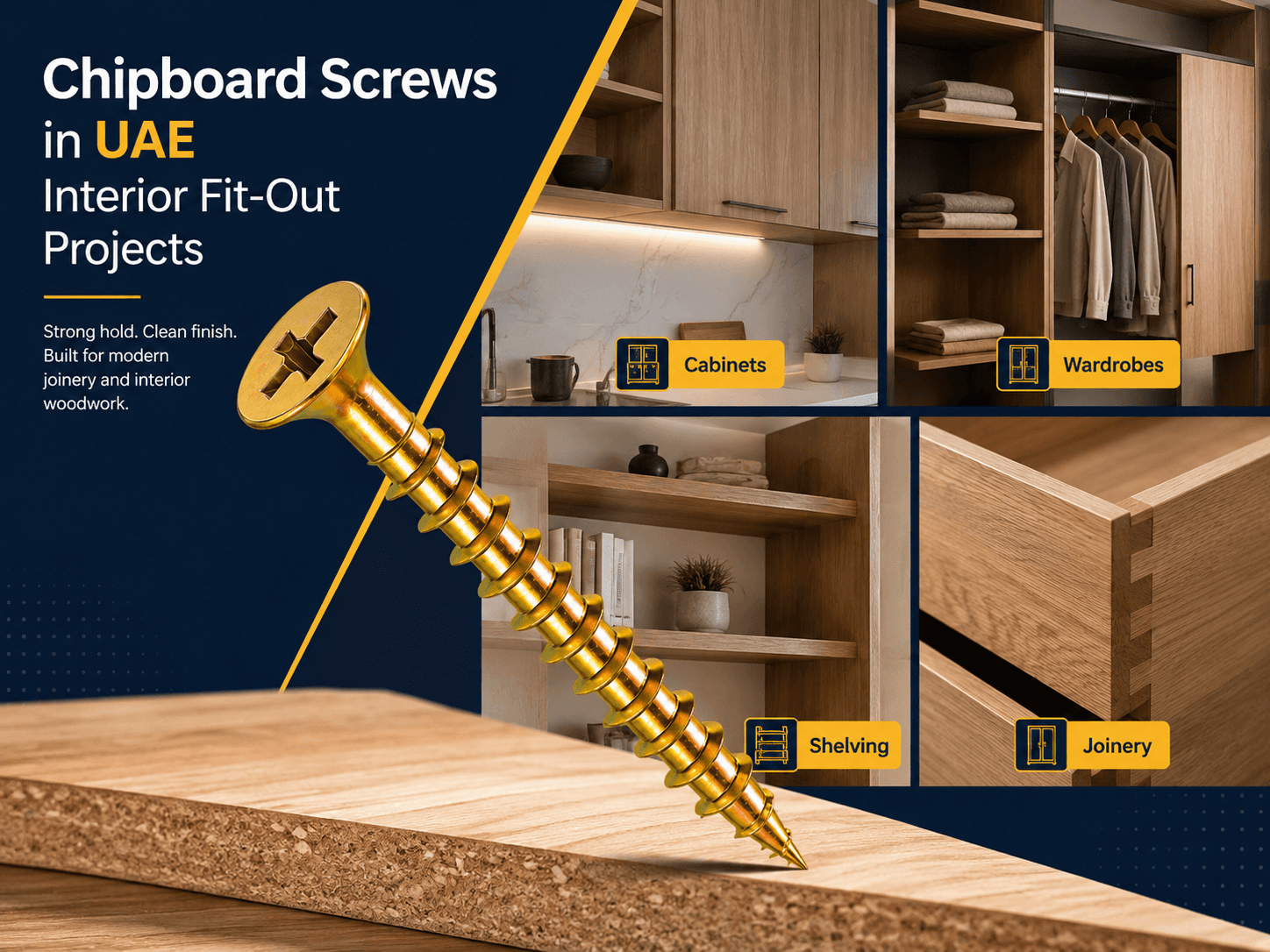
Furniture manufacturing, joinery and interior fit-out are important applications across the UAE.
Chipboard Screws in UAE projects can be relevant for:
Furniture manufacturers
Joinery workshops
Fit-out contractors
Cabinet manufacturers
Interior contractors
Hardware distributors
Building material suppliers
Procurement teams
Furniture and interior projects across Dubai, Abu Dhabi, Sharjah, Ajman and other UAE markets frequently use MDF, chipboard, plywood and laminated panels.
Buyers should confirm:
Board material
Screw size
Thread type
Head profile
Quantity
Packaging
Delivery requirements
before placing bulk orders.
Chipboard Screws for Bulk Buyers and Distributors
Professional buyers purchasing Bulk Chipboard Screws should confirm more than the product name.
Before ordering, check:
Diameter
Length
Head type
Drive type
Thread profile
Material
Finish
Application
Quantity
Packaging
Delivery destination
For product enquiries, visit Screwbee Chipboard Screws.
Choosing a Chipboard Screw Manufacturer
Buyers searching for a Chipboard Screw Manufacturer should evaluate more than price.
Important factors can include:
Dimensional consistency
Thread formation
Head quality
Drive recess quality
Material specification
Available sizes
Packaging support
Quality inspection
Bulk-order capability
Export coordination
For larger orders, buyers can also request the required product specifications before confirming procurement.
Choosing a Chipboard Screw Supplier
A professional Chipboard Screw Supplier should clearly communicate product specifications, quantities, packaging and delivery requirements.
Distributors and procurement teams may also need to confirm:
Availability
Minimum order requirement
Packaging options
Lead time
Required documentation
Delivery destination
For international enquiries, visit Screwbee Export Supply.
Choosing the Correct Screw for Different Materials
One screw should not automatically be used for every material.
For MDF, chipboard and particle board, explore Chipboard Screws.
For metal roofing, cladding and compatible steel applications, explore Self Drilling Screws.
For suitable Allen-drive fastening applications, explore Flat Head Allen Screws.
For drywall and gypsum board, explore Zinc Drywall Screws and Black Zinc Drywall Screws.
Material-based screw selection helps buyers choose a more appropriate fastener instead of relying only on appearance.
Common Mistakes When Using Chipboard Screws
Choosing the Wrong Length
A screw that is too short may not provide sufficient engagement.
A screw that is too long may protrude through the material.
Using the Wrong Diameter
An unsuitable diameter can affect the board or fastening connection.
Over-Tightening
Excessive torque can damage the screw recess, countersunk area or wood-based material.
Driving the Screw Too Deep
The head should sit correctly without unnecessarily damaging the board surface.
Ignoring the Board Type
MDF, chipboard, particle board and plywood behave differently.
The selected screw should match the material.
Using a Chipboard Screw for the Wrong Material
Chipboard screws should not automatically replace fasteners designed for metal applications.
For compatible metal fastening, explore Self Drilling Screws.
Frequently Asked Questions About Chipboard Screws
What Are Chipboard Screws Used For?
Chipboard screws are commonly used for fastening compatible chipboard, MDF, particle board, plywood and furniture panels.
Are Chipboard Screws Suitable for MDF?
They can be suitable for compatible MDF applications when the correct screw diameter, length and installation method are selected.
What Is a DIN 7505 Chipboard Screw?
DIN 7505 is commonly referenced when buyers search for certain screw types intended for wood and wood-based material fastening.
Are Chipboard Screws the Same as Wood Screws?
Not exactly. Chipboard screws are commonly associated with engineered wood boards, while wood screws can cover a wider range of timber applications.
What Head Type Is Commonly Used for Chipboard Screws?
A countersunk head is commonly used because it allows the screw head to sit neatly into the surface.
Can Chipboard Screws Be Used for Particle Board?
Yes, suitable chipboard screws are commonly used for compatible particle board applications.
Can Chipboard Screws Be Used for Furniture?
Yes. Chipboard Screws for Furniture are commonly used in cabinets, wardrobes, shelving, desks and modular furniture.
What Screws Can Be Used for MDF?
Suitable MDF Screws or chipboard screws may be considered depending on the board thickness, joint design and installation requirements.
Can Chipboard Screws Be Used for Metal?
Chipboard screws are mainly intended for compatible wood-based materials.
For metal fastening applications, explore Self Drilling Screws.
What Screws Are Suitable for Cabinets?
Depending on the material and joint design, suitable chipboard screws or Flat Head Allen Screws may be considered.
Can Chipboard Screws Be Purchased in Bulk?
Yes. Bulk buyers should confirm the required size, quantity, packaging and delivery requirements before ordering.
Does Screwbee Support Export Enquiries?
For international and bulk supply enquiries, visit Screwbee Export Supply.
Learn More About Choosing the Right Screws
For additional fastener information, explore these Screwbee resources:
7 Things to Check Before Buying Precision Engineered Screws
You can also read:
What Are Self Drilling Screws? Types, Uses & Benefits
Explore Screwbee Fasteners
For furniture, MDF and compatible engineered wood applications, explore Chipboard Screws.
For metal roofing, cladding, fabrication and compatible steel applications, explore Self Drilling Screws.
For suitable internal-hex fastening applications, explore Flat Head Allen Screws.
For drywall applications, explore Zinc Drywall Screws and Black Zinc Drywall Screws.
For international buyers and bulk supply enquiries, visit Screwbee Export Supply.
Final Thoughts
Chipboard Screws are practical fasteners for furniture, cabinetry, MDF, particle board, plywood and other compatible wood-based applications.
Their thread design helps engage with engineered wood materials, while a countersunk head can provide a clean, low-profile finish when installed correctly.
Whether you are a furniture manufacturer, joinery workshop, fit-out contractor, hardware distributor or bulk buyer, selecting the correct screw according to the board type, diameter, length, thread, head style and joint requirement is important.
Explore Screwbee Chipboard Screws for product and bulk supply enquiries.