📦 Request Quote
📞 Connect with us
Learn how to select drywall screws for metal studs, including thread type, screw length, head design, installation tips and Screwbee drywall screw options.
A practical guide to selecting and installing suitable drywall screws for metal-stud gypsum board systems.

Drywall Screws for Metal Studs: Selection and Installation Guide
Metal stud framing is commonly used for interior partition walls, wall linings, commercial fit-outs and selected ceiling systems. When gypsum boards are fixed to metal framing, the fastener must pass through the board, engage the metal profile and hold the panel securely without damaging the surface.
Choosing suitable drywall screws for metal studs can improve installation consistency, board alignment and finishing quality. Important factors include thread type, screw length, head design, drive type, board thickness and the requirements of the approved drywall system.
This guide explains how fine-thread drywall screws are used with suitable light-gauge metal framing, how to select the correct screw and which installation mistakes should be avoided.
Quick Answer
Fine-thread drywall screws are generally used for fixing gypsum boards to suitable light-gauge metal studs.
Their closely spaced threads are designed to engage thin metal framing, while the bugle head allows the screw to sit slightly below the board surface without unnecessarily damaging the paper facing.
The correct screw should:
Match the board thickness and number of layers
Use a thread suitable for metal framing
Provide secure engagement with the profile
Sit slightly below the board surface
Avoid tearing the paper facing
Follow the approved project specification
The exact screw size and fixing arrangement should always be confirmed according to the board system, framing type and project requirements.
What Are Drywall Screws for Metal Studs?
Drywall screws for metal studs are fasteners used to attach gypsum boards or plasterboards to compatible lightweight steel framing.
They commonly feature:
Fine-thread design
Sharp point
Bugle head
Phillips drive
Protective surface finish
Multiple diameter and length options
The bugle-shaped head helps distribute pressure as the screw enters the board. When driven correctly, the head forms a shallow recess that can be covered with joint compound.
These screws are intended for board-to-frame fixing. They should not automatically be treated as the same fasteners used to connect one metal framing section to another.
Why Fine Thread Is Used for Metal Framing
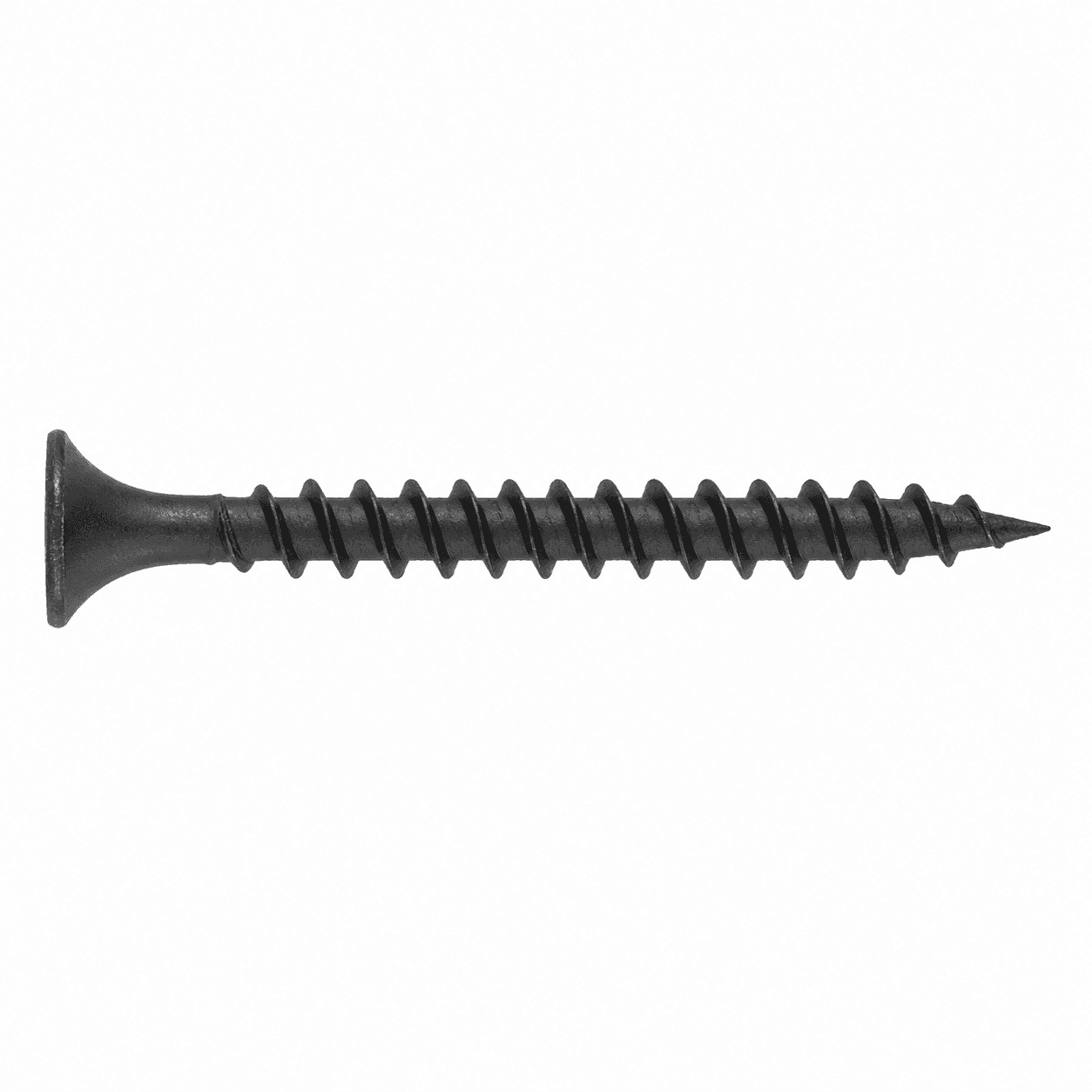
The thread pattern affects how the screw engages with the framing material.
Fine-thread drywall screws
Fine-thread screws have closely spaced threads. They are generally selected for suitable light-gauge metal framing because the thread profile can engage thin steel while the screw is being driven.
Typical applications may include:
Metal-framed wall linings
Commercial interior fit-outs
Lightweight steel framing
Approved ceiling systems
Coarse-thread drywall screws
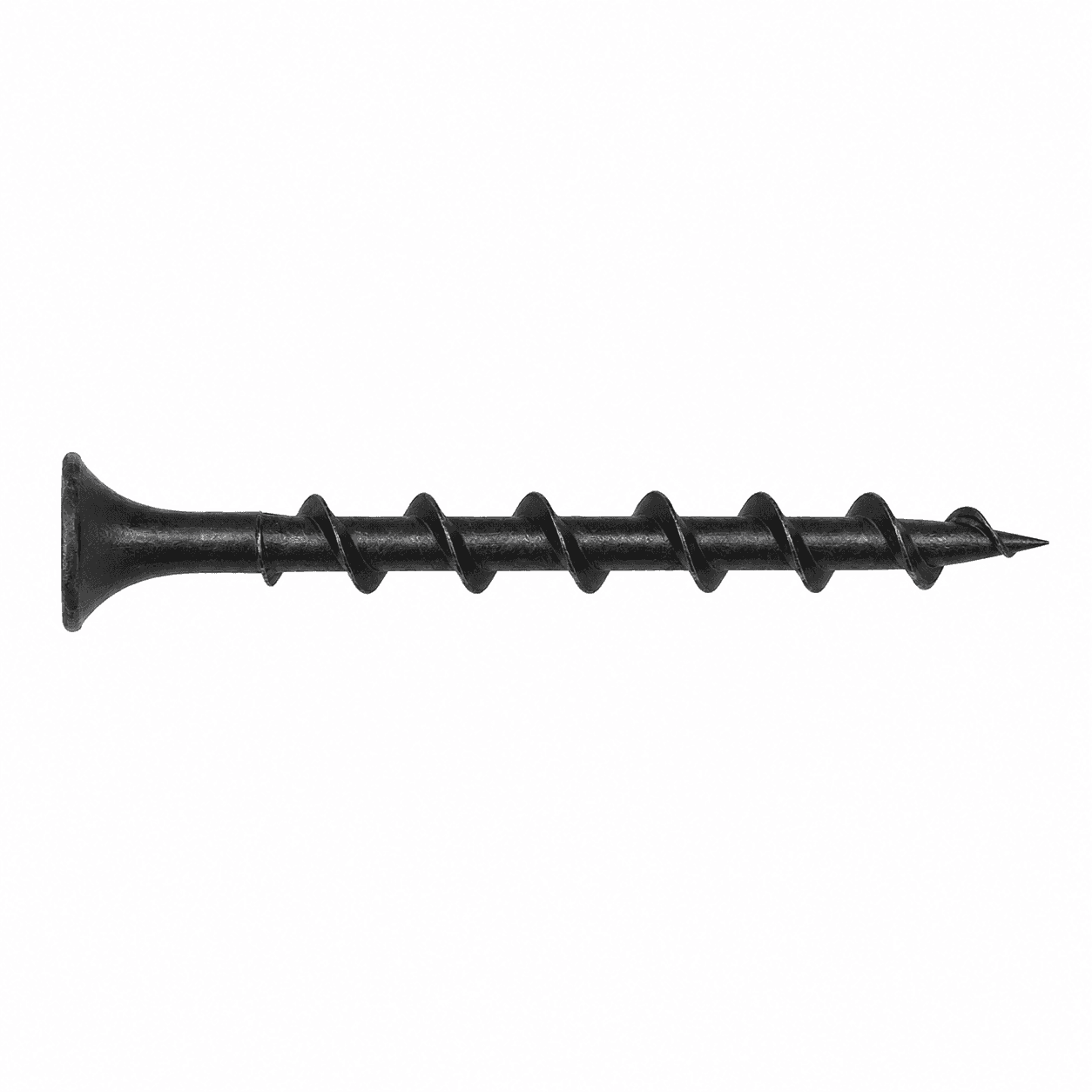
Coarse-thread screws have wider and deeper threads. They are commonly associated with wood framing because the larger thread pattern can grip into timber fibres.
The screw should therefore be selected according to the framing material rather than using the same thread type for every project.
For a detailed comparison, read Screwbee’s fine thread vs coarse thread drywall screws guide.
Fine Thread vs Coarse Thread Drywall Screws
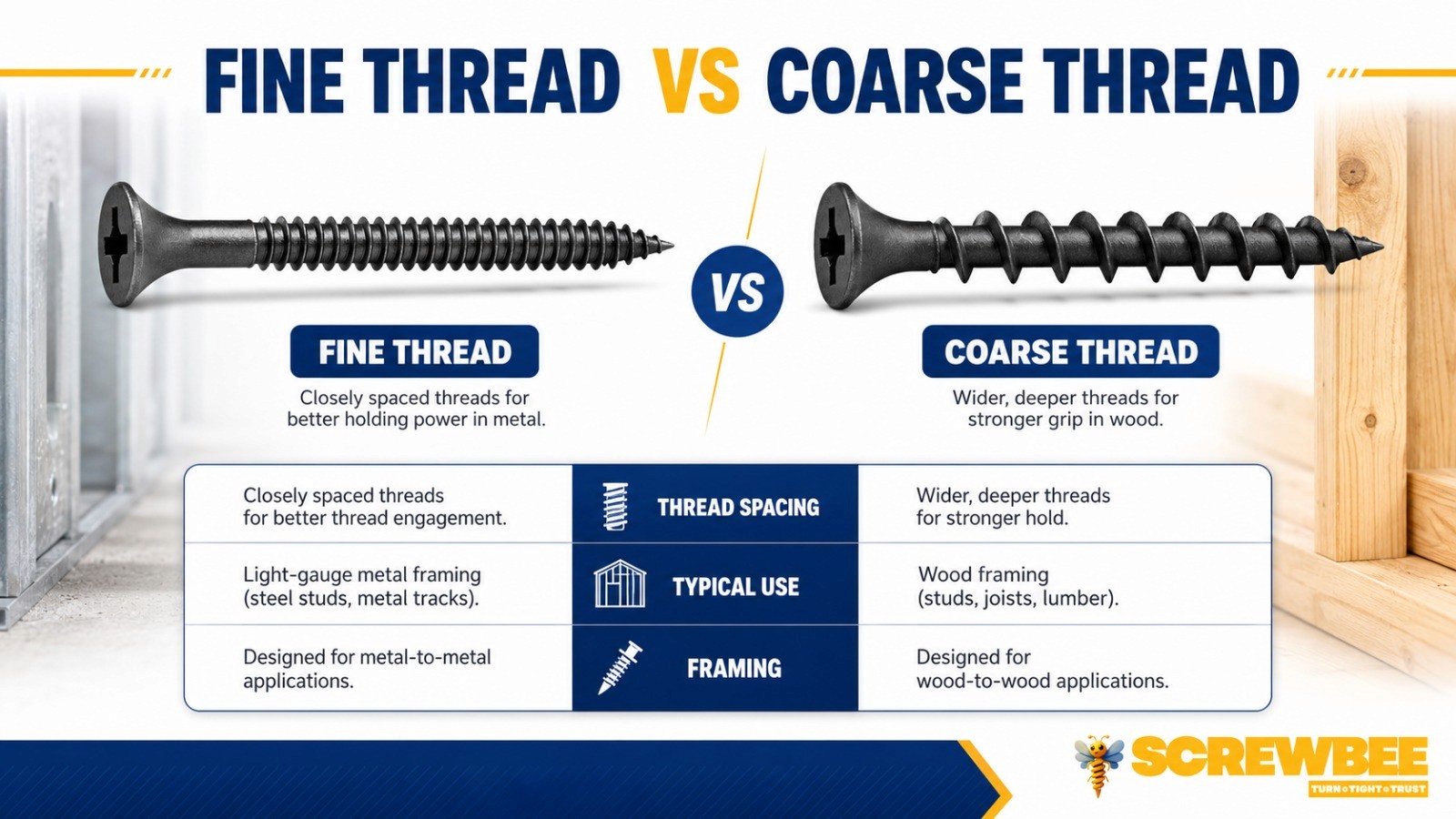
Feature | Fine Thread | Coarse Thread |
Thread spacing | Closely spaced | Wider and deeper |
Common framing use | Suitable light-gauge metal framing | Wood framing |
Typical application | Gypsum board to metal studs | Gypsum board to wooden studs |
Selection factor | Metal profile and system requirements | Timber type and board build-up |
Screwbee availability | Available | Available |
The table provides general selection guidance. Final product suitability should be confirmed according to the actual framing, board system and project specification.
Features to Check Before Selecting a Screw
1. Thread type
For suitable light-gauge metal-stud applications, fine-thread drywall screws are generally the relevant choice.
Do not select coarse-thread screws for metal framing only because they are available in the required length.
2. Screw length
The screw must pass through the complete gypsum-board build-up and engage the framing securely.
Length selection depends on:
Board thickness
Number of board layers
Framing type
Required engagement
Wall or ceiling system
Project specification
A screw that is too short may not engage the framing sufficiently. An unnecessarily long screw may not match the intended board system.
3. Head design
Bugle heads are widely used for drywall installation.
The curved underside helps the screw enter the board surface while reducing concentrated pressure around the fixing point.
The head should sit slightly below the board surface without breaking the paper facing.
4. Drive type
A compatible drive system helps installers maintain control and achieve consistent screw depth.
Screwbee drywall screws use a Phillips drive with a bugle-head design.
5. Surface finish
The required finish depends on:
Project environment
Storage conditions
Corrosion-resistance expectations
Application requirements
Approved system specification
Screwbee’s product range includes:
The finish alone does not determine suitability for metal studs. Thread type, point design, screw dimensions and framing compatibility must also be considered.
Explore the Screwbee drywall screw product range.
How to Choose the Correct Screw Length
There is no single screw length suitable for every metal-stud installation.
Single-layer board installation
For a single gypsum-board layer, choose a screw that passes through the board and engages the metal framing according to the approved installation system.
Multiple-layer board installation
For double-layer or multi-layer systems, the outer-layer screw must pass through the complete board build-up and engage the framing correctly.
Specialist board systems
Fire-resistant, acoustic, impact-resistant and high-density boards may require specific screw lengths, fixing centres and installation patterns.
Before selecting a screw, confirm:
Board type
Board thickness
Number of layers
Framing profile
Required screw length
Fixing centres
Project specifications
Avoid choosing screw length based only on the visible thickness of one board.
Installation Guide
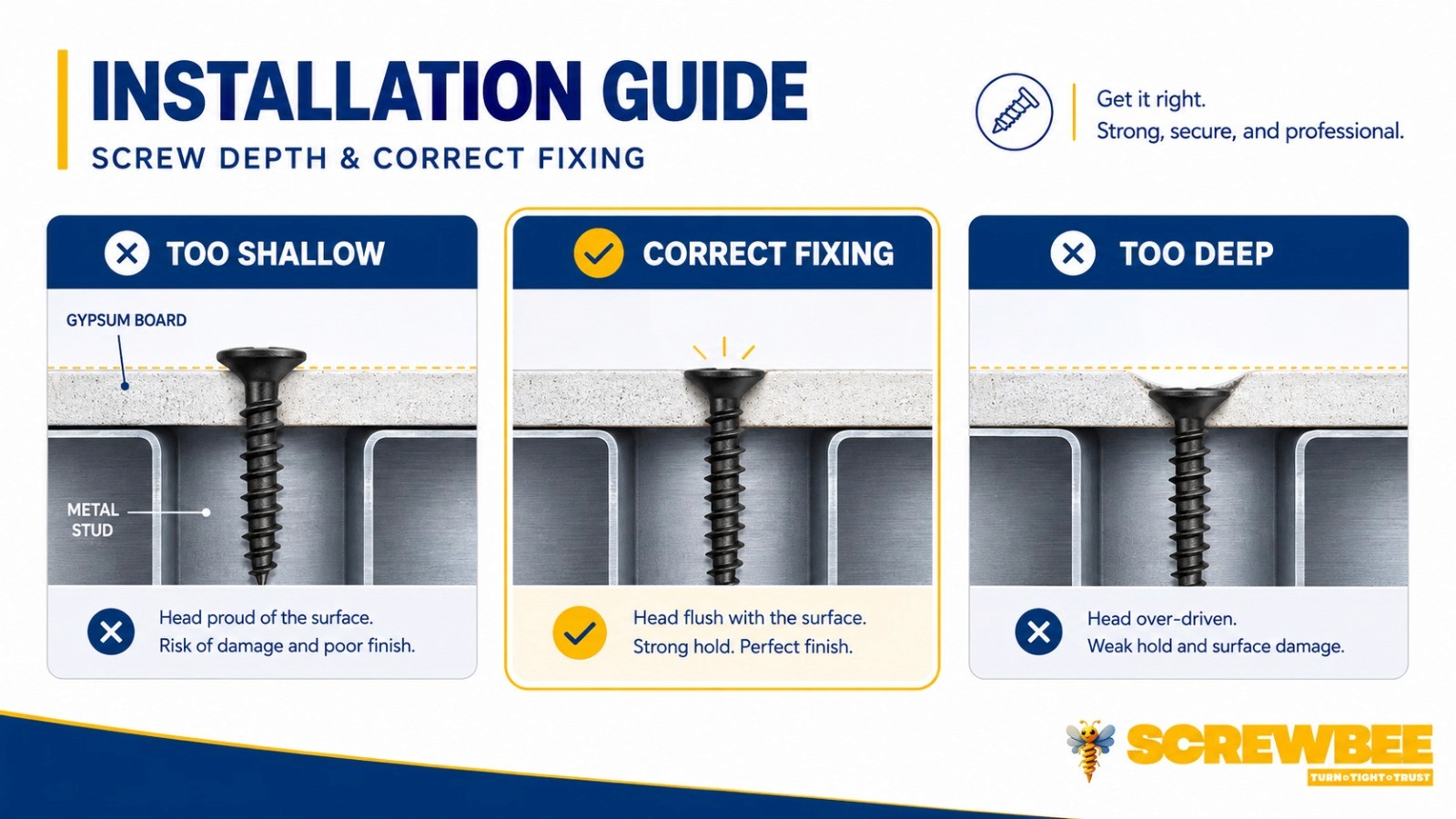
Step 1: Inspect the metal framing
Before fixing the board, make sure the metal studs are:
Straight
Properly aligned
Securely installed
Free from visible deformation
Positioned to support the required board edges
Poor framing alignment can make fixing difficult and may lead to an uneven finished surface.
Step 2: Position the gypsum board
Hold the gypsum board firmly against the framing.
Avoid leaving gaps between the rear surface of the board and the metal stud. Board edges should be supported according to the approved system.
Step 3: Locate the stud correctly
Drive each screw into the metal framing member.
A screw that misses the stud will not create a secure board-to-frame connection.
Step 4: Drive the screw straight
Keep the screw perpendicular to the board surface.
Driving at an angle may:
Reduce thread engagement
Damage the board facing
Leave part of the screw head exposed
Produce an inconsistent fixing
Step 5: Control the driving depth
The screw head should sit slightly below the board surface without tearing the paper.
Screw too shallow
Head remains above the surface
Board may not sit firmly against the framing
Joint finishing becomes difficult
Screw too deep
Paper facing may tear
Head may enter the gypsum core
Fixing quality may be reduced
Step 6: Follow the specified fixing pattern
Screw spacing can vary depending on:
Wall or ceiling application
Board type
Number of layers
Framing system
Project requirements
Do not apply one spacing measurement to every installation. Follow the approved system documentation.
Step 7: Inspect before finishing
Before applying joint compound, check for:
Raised screw heads
Overdriven screws
Missed studs
Loose board areas
Damaged board edges
Incorrectly positioned fasteners
Correct any defective fixing before finishing work begins.
Common Installation Mistakes
Using the wrong thread type
Using a coarse-thread screw where a fine-thread screw is required may result in poor engagement with the metal profile.
Ignoring the framing specification
Metal studs are available in different profiles and thicknesses. A screw suitable for one lightweight framing system should not automatically be assumed suitable for every steel section.
Selecting screws that are too short
A short screw may pass through the board without achieving sufficient engagement with the framing.
Assuming longer screws are always better
Extra length does not automatically improve fixing quality. The screw should match the complete board and framing system.
Overdriving the screw
Driving the head through the paper facing can weaken the fixing area and affect finishing quality.
Leaving the screw head raised
A proud screw head can remain visible after joint treatment and interfere with the finished surface.
Missing the metal stud
A screw driven beside the profile does not create a proper connection between the board and framing.
Mixing unrelated fasteners
Drywall screws, wood screws and metal framing screws are designed for different applications. Avoid substituting one type without confirming suitability.
Ignoring the approved system
The performance of a drywall system depends on the combination of:
Metal framing
Fasteners
Fixing centres
Joint treatment
Installation method
This is especially important for fire-rated, acoustic and other specialist systems.
Learn more in Screwbee’s drywall screw applications guide.
Screwbee Drywall Screw Options
Screwbee manufactures zinc and black zinc drywall screws for construction and interior applications.
The available product details include:
MS Zinc Drywall Screws

Mild carbon steel
Zinc-plated finish
Phillips drive
Bugle head
Fine-thread and coarse-thread options
Diameter range from M3.5 to M4.8
Length range from 16 mm to 60 mm
MS Black Zinc Drywall Screws
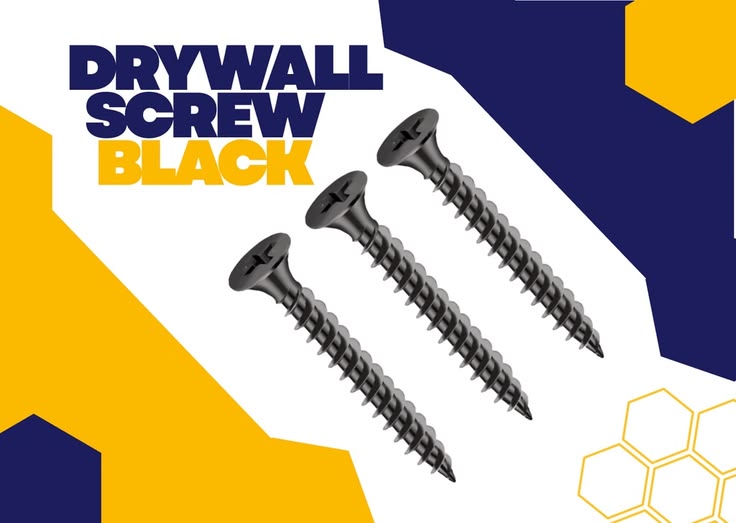
Mild carbon steel
Black zinc finish
Phillips drive
Bugle head
Fine-thread and coarse-thread options
Diameter range from M3.5 to M4.8
Length range from 16 mm to 60 mm
These product specifications are supported by Screwbee’s official brochure.
For suitable metal-framing applications, buyers should provide complete details about the board thickness, framing type, required screw dimensions and project specification before selecting a product.
Learn more about Screwbee and its manufacturing focus.
Buying Checklist for Contractors and Bulk Buyers
Before purchasing drywall screws for a metal-stud project, confirm the following information.
Application
Specify whether the screws are required for:
Partition walls
Wall linings
Ceiling systems
Commercial interior work
Single-layer boards
Multi-layer boards
Framing details
Provide:
Framing profile
Metal thickness
Board thickness
Number of board layers
Required screw length
Product specification
Check:
Diameter
Length
Thread type
Head design
Drive recess
Surface finish
Packaging quantity
Product consistency
For bulk orders, confirm consistency in:
Thread formation
Point geometry
Head dimensions
Overall length
Drive shape
Surface finish
Packaging and export requirements
Bulk and export buyers may also need:
Product labelling
Packing details
Quantity confirmation
Shipping documentation
Destination-specific requirements
Visit the Screwbee exports page for international supply information.
Samples and confirmation
For large projects, request product information or samples before confirming the complete order.
The actual board, framing and screw combination should be checked for project suitability.
Frequently Asked Questions
Which drywall screws are generally used for metal studs?
Fine-thread drywall screws are generally used for suitable light-gauge metal-stud applications. Final selection should depend on the framing profile, board build-up and project requirements.
Can coarse-thread drywall screws be used for metal studs?
Coarse-thread screws are commonly associated with wood framing. Fine-thread screws are generally the more relevant choice for suitable lightweight metal profiles.
How do I choose the correct screw length?
Consider the board thickness, number of board layers, framing type and required engagement. Follow the approved board or drywall-system specification.
How deep should a drywall screw be driven?
The screw head should sit slightly below the board surface without tearing the paper facing.
Can one screw type be used for every metal stud?
No. Metal framing profiles vary in thickness and design. Product suitability should be confirmed for the actual framing used in the project.
What is the purpose of a bugle head?
A bugle head helps the screw seat below the board surface while distributing pressure around the fixing point.
Does Screwbee offer zinc and black zinc drywall screws?
Yes. Screwbee offers zinc and black zinc drywall screws with Phillips drives, bugle heads and fine-thread or coarse-thread options. Available diameters range from M3.5 to M4.8, with lengths from 16 mm to 60 mm.
Can contractors and distributors place bulk enquiries?
Yes. Contractors, dealers, distributors and export buyers can contact Screwbee regarding product sizes, quantities, packaging and supply requirements.
Conclusion
Choosing suitable drywall screws for metal studs requires careful consideration of the framing material, board build-up, thread type, screw length and installation method.
Fine-thread drywall screws are generally selected for suitable light-gauge metal framing. Correct screw positioning and controlled driving depth help maintain the board surface and support clean joint finishing.
Before confirming a bulk order, contractors and buyers should provide complete project details and verify that the selected screw matches the board and framing system.
Explore the Screwbee product range or contact Screwbee for information about available sizes, packaging, bulk supply and export enquiries.
Source Drywall Screws from Screwbee
Looking for reliable drywall screws for wholesale, distribution or project procurement? Screwbee offers zinc and black zinc drywall screws in multiple sizes with dependable bulk-supply support.
📞 Ready to Work with a Trusted Drywall Screw Manufacturer?
Whether you're sourcing drywall screws for wholesale distribution, commercial construction, or long-term procurement, Screwbee is ready to support your business with premium manufacturing, consistent quality, and dependable supply.
🟨 Request Bulk Quote
📘 Download Product Catalogue
📞 Contact Our Sales Team
Related Products
Zinc Drywall Screws — Explore available sizes and thread options.
Black Zinc Drywall Screws — Discover Screwbee’s dark zinc-finished product range.
Drywall/Gypsum Screws — Learn about available specifications for gypsum-board fixing.