📦 Request Quote
📞 Connect with us
Explore drywall screws applications in gypsum-board fixing, partition walls, false ceilings, metal framing and modern interior construction.
Discover where drywall screws are used—from gypsum-board fixing and partition walls to false ceilings, timber framing and commercial interiors.

Drywall Screws Applications:
Where and How Drywall Screws Are Used
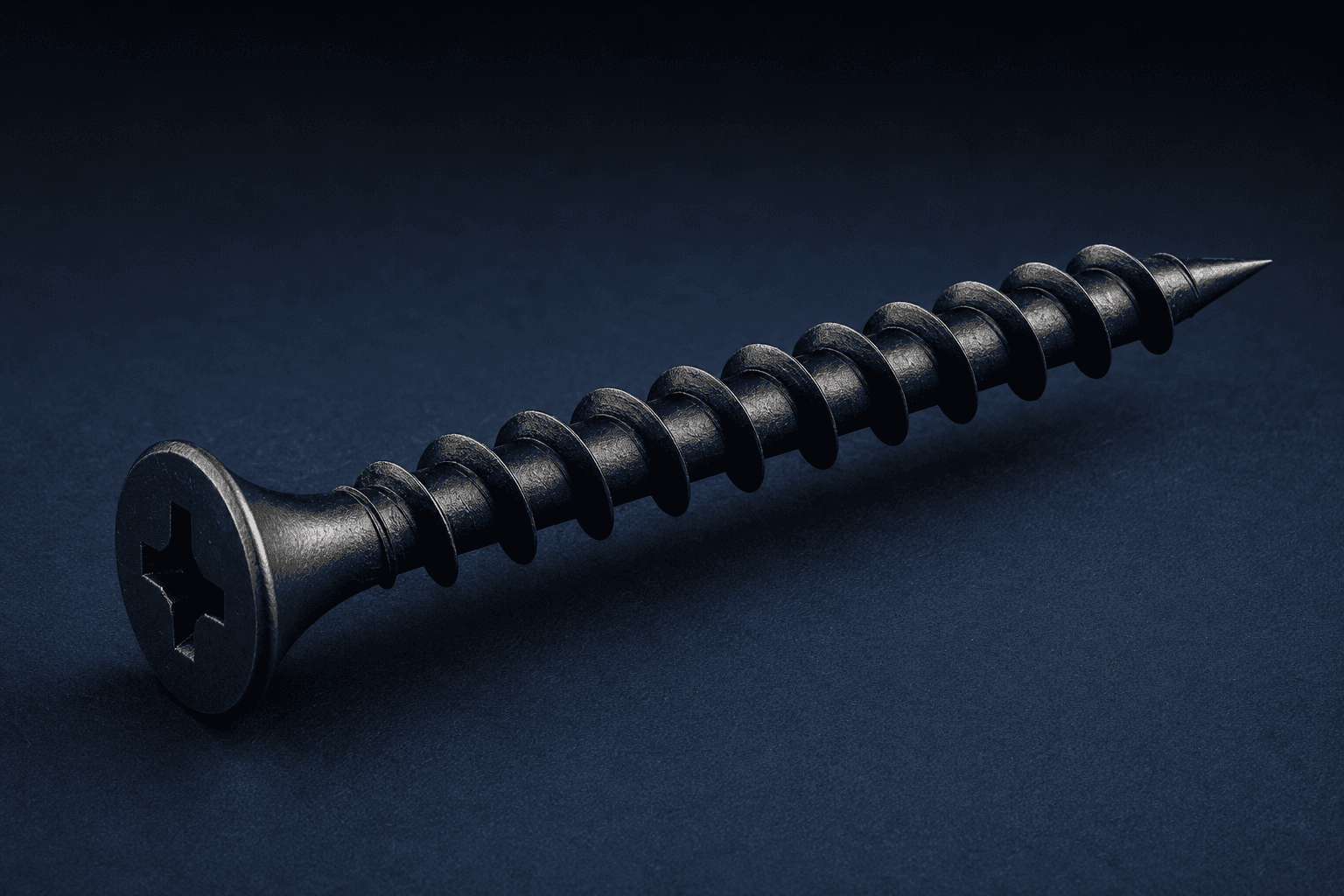
Drywall screws are purpose-designed fasteners commonly used to attach gypsum boards or plasterboards to compatible timber and light-gauge metal framing. Their sharp point, threaded body, Phillips drive and bugle-shaped head make them suitable for controlled installation in modern drywall systems.
Common drywall screws applications include:
Drywall partition walls
False ceilings
Drywall ceilings
Interior wall lining
Commercial fit-out projects
Residential interior construction
Office partitions
Retail interiors
Compatible timber framing
Compatible light-gauge metal framing
Although drywall screws are frequently used in interior construction, they should not be treated as universal-purpose or structural fasteners. Correct selection depends on board thickness, framing material, drywall screw size, thread type, surface finish and the approved drywall-system specification.
QUICK ANSWER
What Are the Main Applications of Drywall Screws?
Drywall screws are primarily used to attach gypsum boards or plasterboards to compatible timber and light-gauge metal framing. Common drywall screws applications include partition walls, false ceilings, drywall ceilings, interior wall linings, office partitions, commercial fit-outs and selected multi-layer gypsum-board systems.
The correct drywall screw size, length and thread type must be selected according to the board thickness, framing material and approved drywall-system specification.
What Are Drywall Screws Used For?
Drywall screws are primarily used to secure gypsum boards or plasterboards to a supporting timber or metal frame.
During installation, the screw passes through the gypsum board and engages the compatible framing behind it. The bugle head creates a controlled recess in the board surface so that the screw head can later be covered using jointing or finishing compound.
The principal applications of drywall screws are found in interior walls, partitions, ceilings and other dry-construction systems.
1. Gypsum-Board Fixing
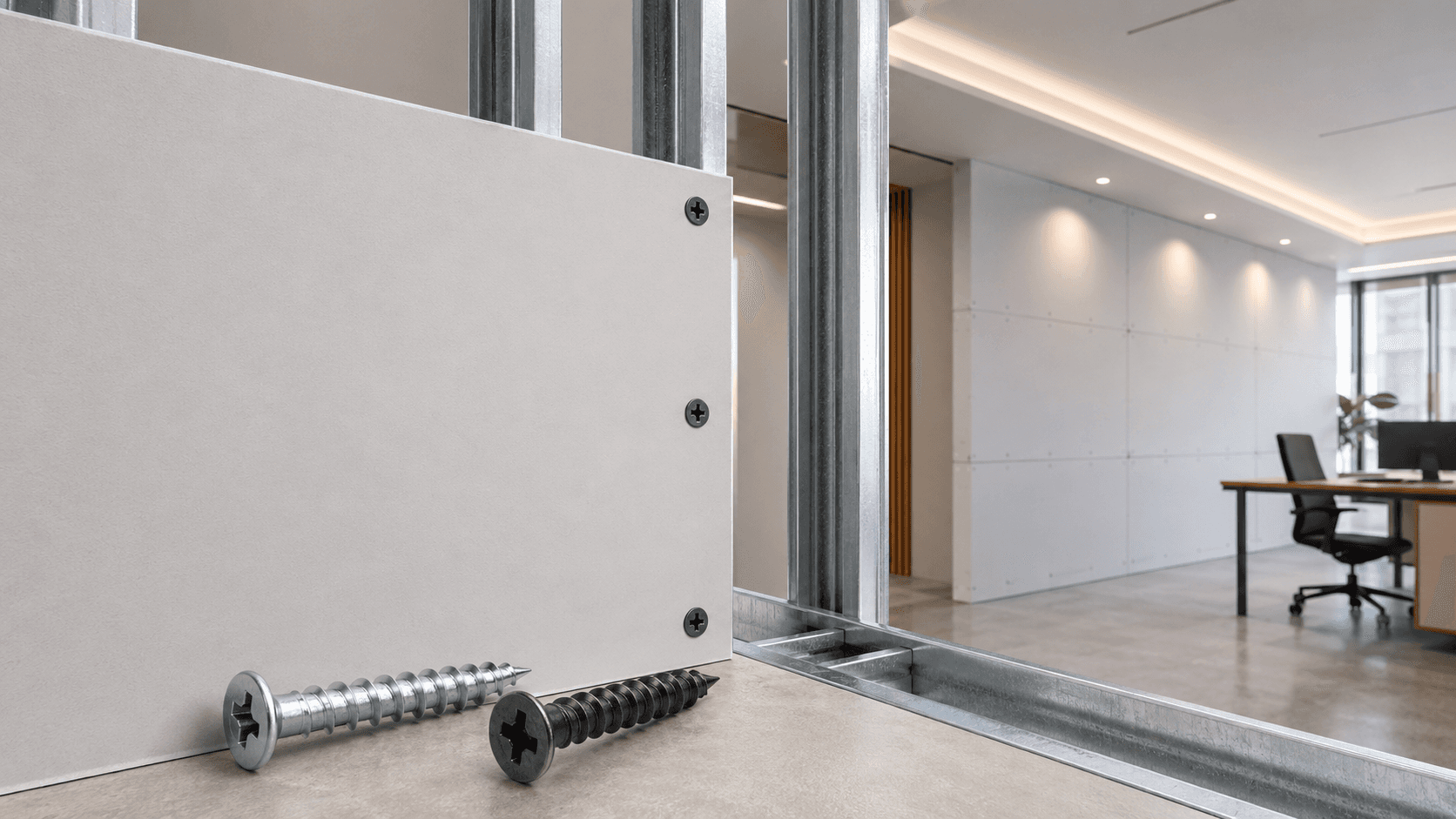
Gypsum-board fixing is the primary application of drywall screws.
The screw holds the gypsum board against the supporting framework and helps maintain consistent contact between the board and frame.
For reliable gypsum-board installation, installers must select:
Correct screw diameter
Appropriate screw length
Fine- or coarse-thread configuration
Compatible screw point
Suitable surface finish
Correct fixing spacing
The screw head should be seated slightly below the board surface as required by the system without breaking the face paper.
Screwbee manufactures gypsum-board screws in multiple diameter and length combinations for professional drywall installation and bulk-procurement requirements.
2. Drywall Partition Walls

Drywall screws for partition walls are used to attach gypsum boards to compatible metal or timber framing.
These systems generally consist of:
Metal or timber framing
Gypsum boards
Drywall screws
Jointing tape
Jointing compound
Insulation, where required
Correct screw spacing helps keep the gypsum board firmly positioned and prepares the surface for joint finishing.
Drywall partition walls are commonly installed in:
Offices
Hotels
Hospitals
Educational buildings
Shopping centres
Retail stores
Apartments
Industrial offices
Institutional buildings
The selected drywall screw specification must follow the approved partition-wall system, particularly where fire resistance, acoustic performance or impact resistance is required.
3. False-Ceiling Installation
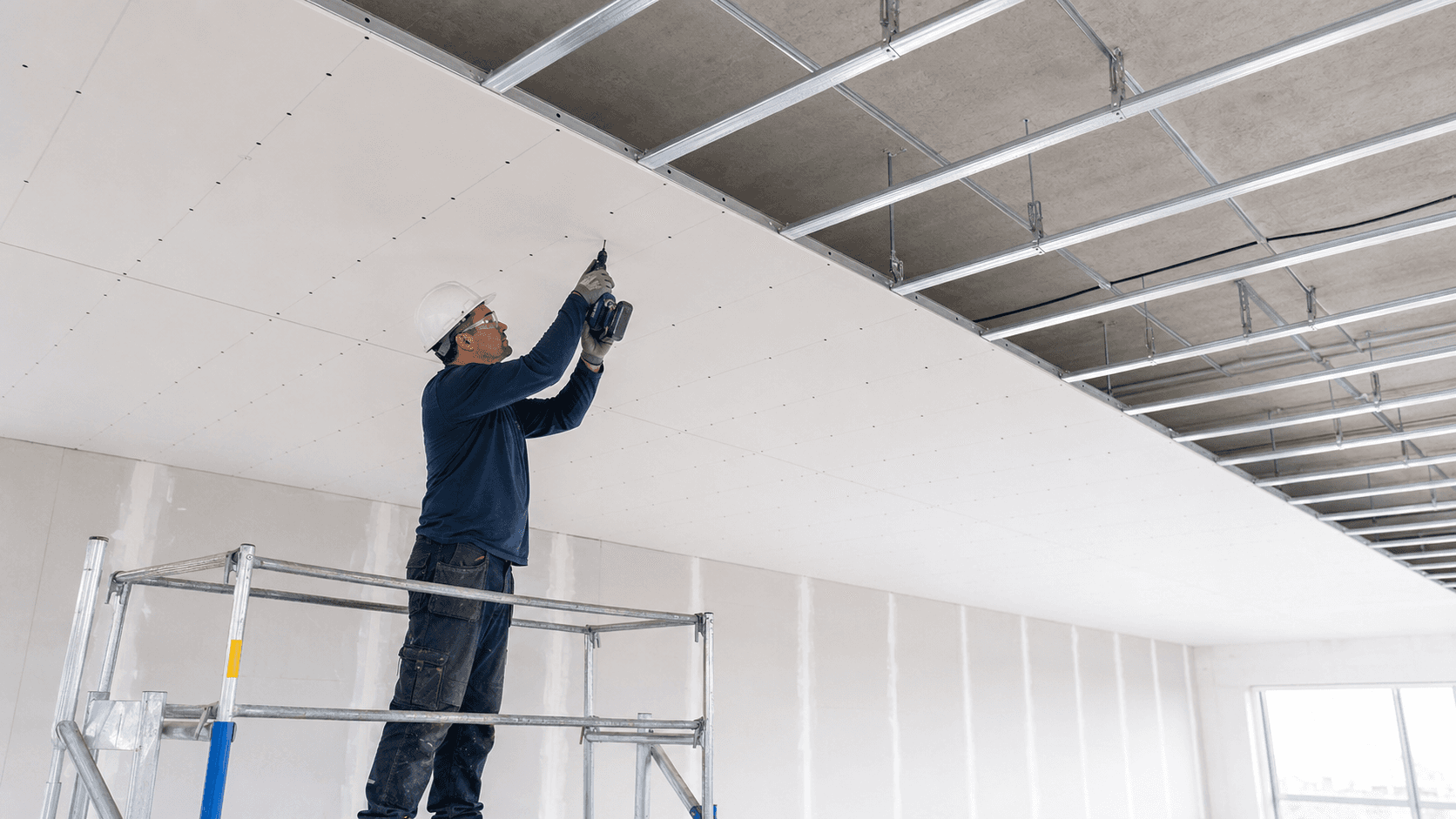
Drywall screws for false ceilings are used to secure gypsum boards to an approved suspended metal framework.
False ceilings may be installed to:
Conceal electrical wiring
Conceal air-conditioning services
Improve interior appearance
Accommodate lighting fixtures
Support acoustic design
Create different ceiling levels
Conceal pipes and building services
Ceiling applications require careful installation because the gypsum boards are positioned overhead. Drywall screw type, size and spacing must comply with the selected ceiling system.
Drywall screws used in false ceilings should not be selected solely by price. Dimensional consistency, drive stability, point formation and bugle-head geometry can directly influence installation efficiency.
4. Drywall Ceiling Systems
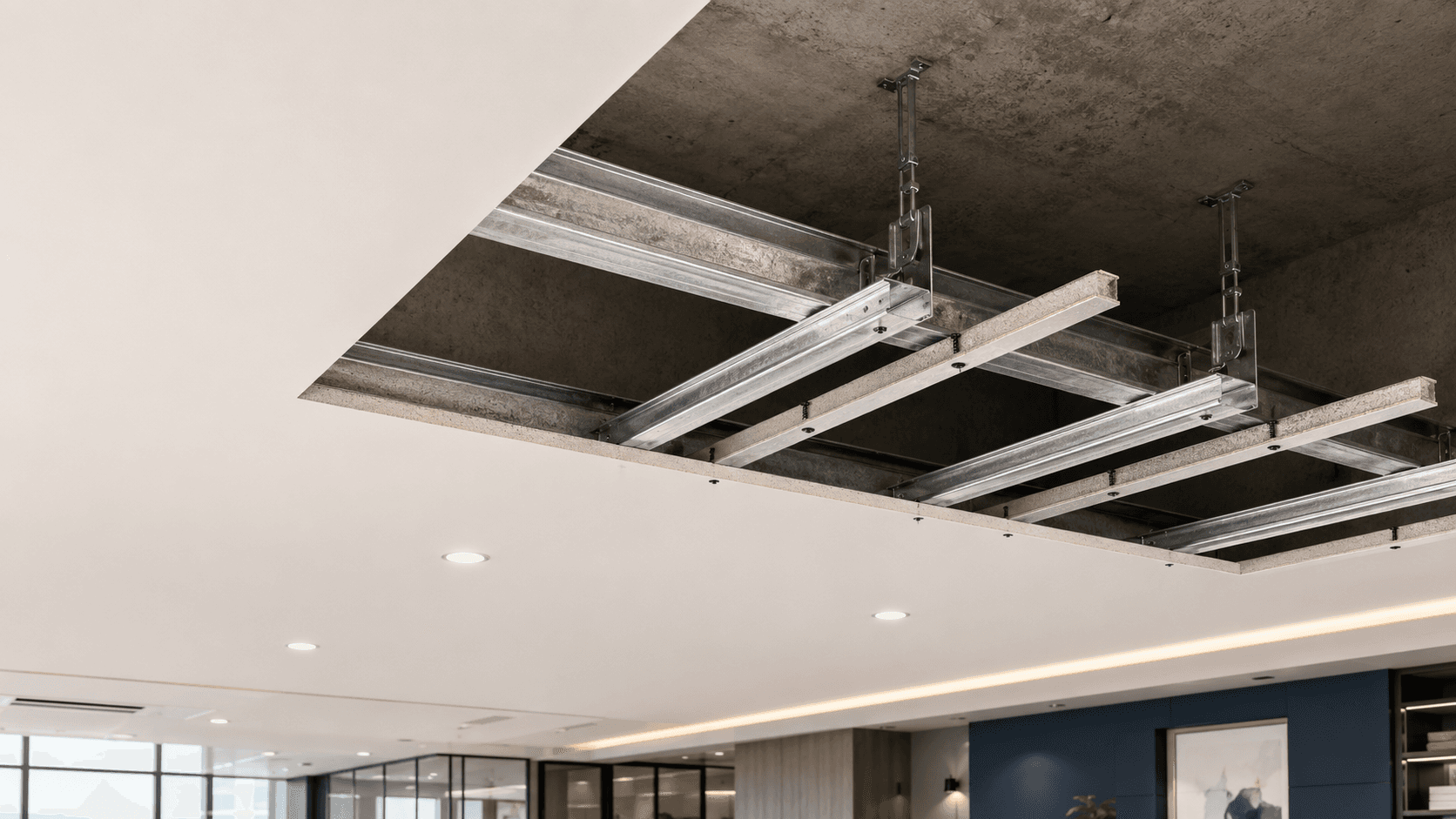
In drywall ceiling systems, gypsum boards are mechanically attached to compatible ceiling channels or furring members.
The screws help maintain close contact between the board and supporting grid. Incorrectly spaced, poorly driven or unsuitable ceiling drywall screws may contribute to uneven surfaces and finishing problems.
Drywall ceiling applications may be found in:
Residential buildings
Commercial offices
Hotels
Hospitals
Restaurants
Auditoriums
Educational institutions
Retail interiors
Ceiling systems may have different fixing requirements from partition walls. Installers must follow the screw spacing, perimeter details and board-system instructions supplied for the project.
5. Interior Wall Lining
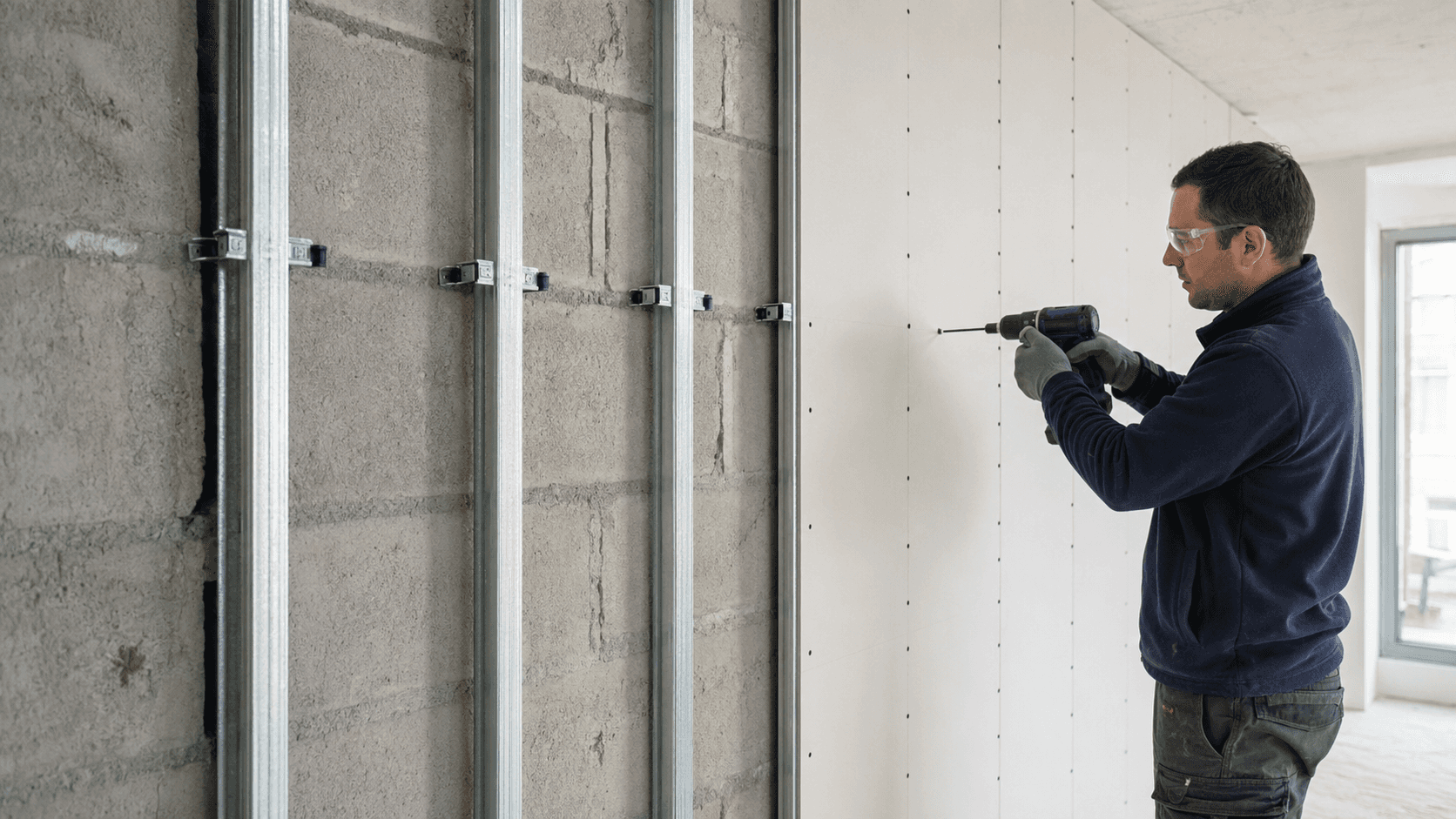
Drywall screws may be used when gypsum boards are installed over compatible framing to create an interior wall lining.
Wall-lining systems can help:
Produce a smooth finished surface
Conceal selected building services
Improve acoustic performance as part of an approved system
Improve thermal performance with specified insulation
Upgrade or cover an existing internal surface
Support faster dry-construction methods
The board must be fixed to an approved supporting structure. Drywall screws should not be driven directly into unsuitable masonry unless the complete wall-lining system specifically permits that installation method.
6. Office Partition Applications
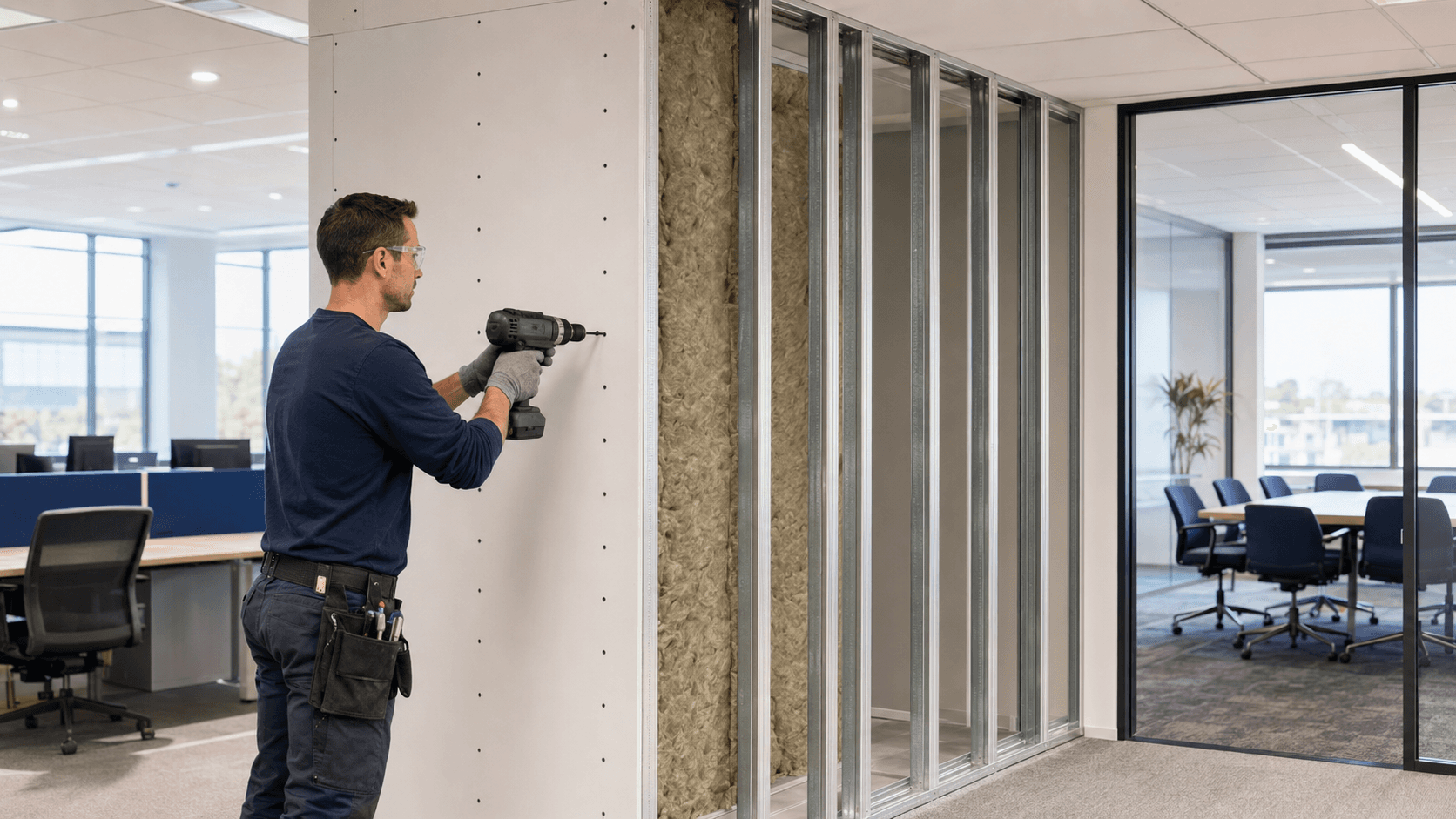
Modern offices frequently use drywall partitions to create:
Meeting rooms
Private cabins
Conference rooms
Reception areas
Work zones
Storage rooms
Utility spaces
Drywall construction allows internal layouts to be created with less wet construction than conventional masonry.
Fine-thread drywall screws are generally associated with compatible light-gauge metal framing used in office partition systems. However, the framing thickness and screw-point capacity must be checked before installation.
For large office projects, contractors may require bulk drywall screws with consistent dimensions, threads, finishes and packaging across multiple batches.
7. Commercial Fit-Out Projects
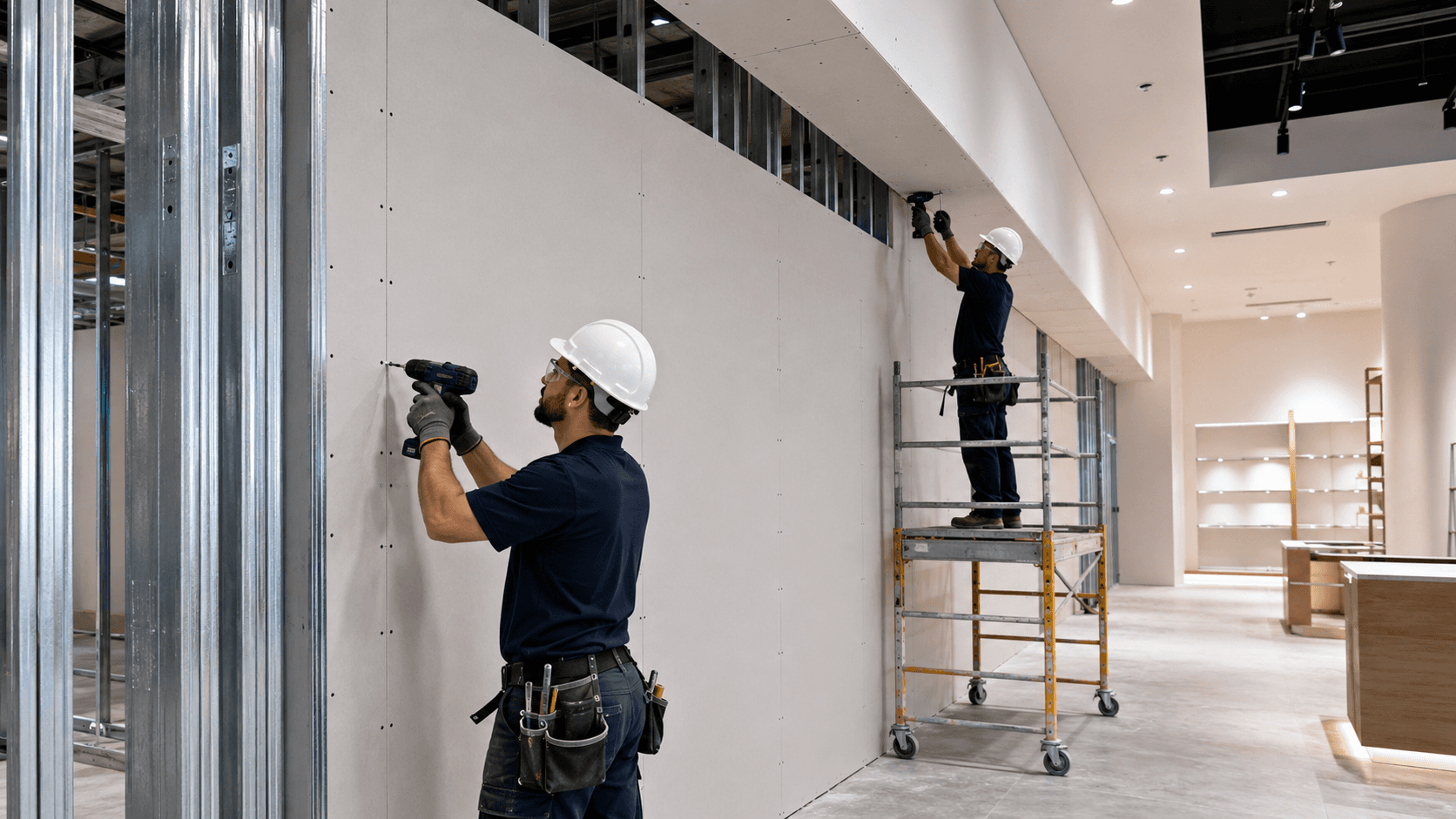
Commercial fit-outs require fast and repeatable interior construction. Drywall systems are frequently used because they support organised installation and a smooth finished appearance.
Common drywall screws applications in commercial construction include:
Showroom partitions
Retail display areas
Hotel interiors
Restaurant interiors
Shopping-centre units
Clinic partitions
Office renovations
Reconfigurable internal layouts
Commercial buyers should evaluate screw consistency before placing a bulk order. Irregular threads, malformed points or unstable Phillips recesses can slow installation and increase rejection.
Screwbee supplies zinc drywall screws and black-zinc drywall screws for bulk construction, distribution and professional interior projects.
8. Residential Interior Applications
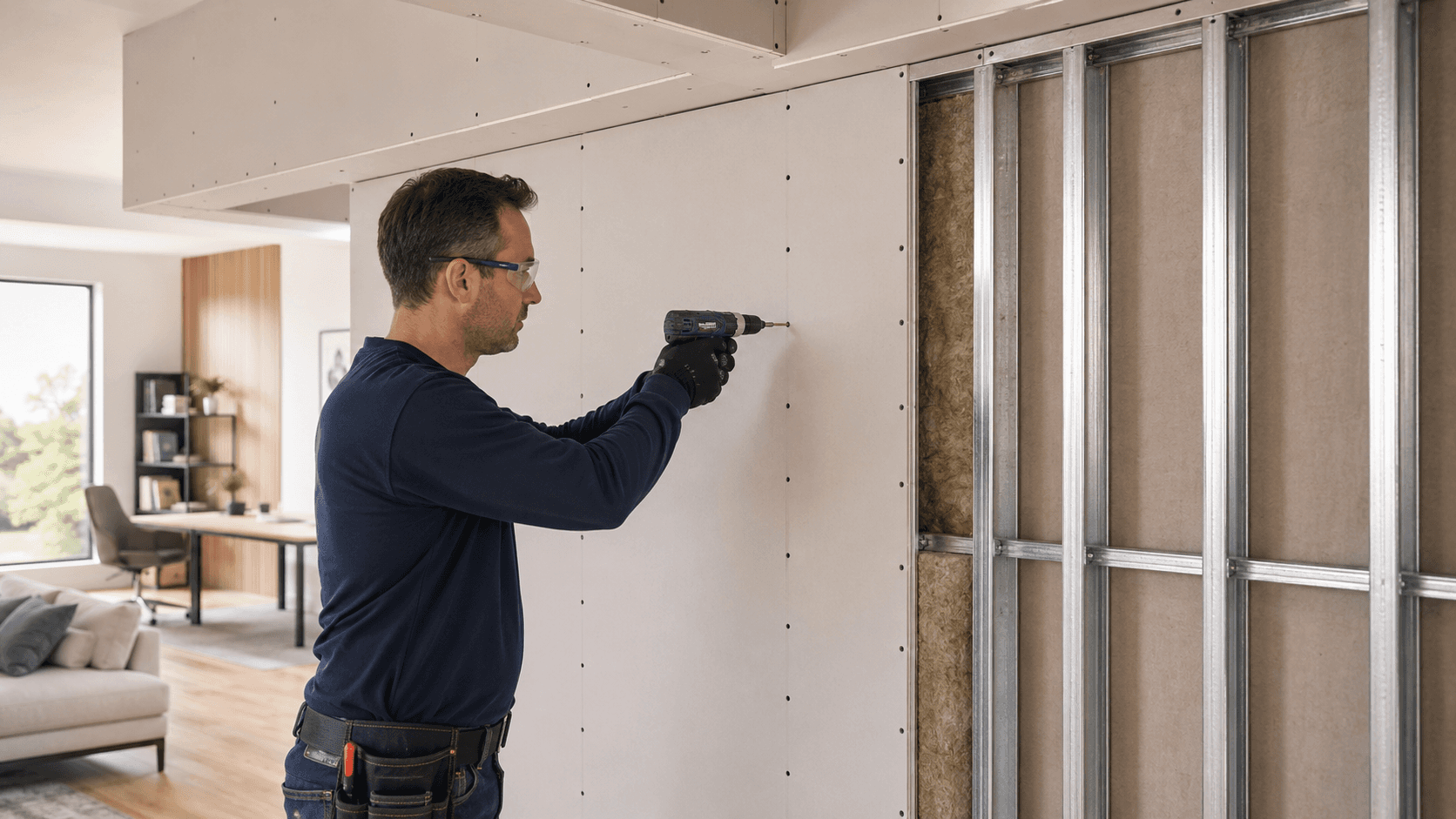
Drywall screws for residential interiors may be used in approved gypsum-board systems.
Applications can include:
Bedroom partition walls
Living-area ceiling systems
Home-office partitions
Utility-room linings
Decorative ceiling levels
Interior renovation projects
Service enclosures
Selected non-load-bearing internal walls
The screws must be compatible with the board and supporting frame.
Drywall screws should not automatically be used for mounting heavy furniture, cabinets, televisions or other loads directly to gypsum board. Heavy objects normally require an appropriate anchor or direct connection to suitable structural support.
9. Hotel and Hospitality Interiors
Hotels and hospitality buildings frequently contain large numbers of interior partitions and ceiling systems.
Drywall screws for hotel interiors may be used within approved systems for:
Guest-room partitions
Corridors
Reception areas
Restaurant interiors
Conference rooms
Service areas
Decorative ceilings
Projects involving fire-rated or acoustic partitions must follow the tested system exactly. Screw size, spacing, board layers and framing components can all affect the intended performance.
10. Hospital and Institutional Interiors
Hospitals, clinics, schools and institutional buildings may use gypsum-board systems to create organised internal spaces.
Typical applications include:
Consultation rooms
Administrative offices
Classrooms
Corridors
Staff areas
Meeting rooms
Selected service enclosures
These environments may require specialised boards, enhanced impact resistance, fire performance, moisture resistance or acoustic control.
Standard drywall screws should not be assumed suitable for every specialised board. The specified board and system documentation must be checked before installation.
11. Light-Gauge Metal Framing
One of the most common drywall screws applications involves fixing gypsum boards to compatible light-gauge metal studs or channels.
Fine-thread drywall screws are generally selected for compatible light-gauge metal framing because their closely spaced threads are designed to engage thin metal.
Before selecting drywall screws for metal studs, check:
Metal thickness
Board thickness
Number of board layers
Screw diameter
Screw length
Required penetration
Point configuration
Approved system specification
A standard sharp-point drywall screw may not be appropriate for heavier metal. A different approved fastener or point type may be required when the framing exceeds the screw’s permitted capacity.
12. Timber Framing
Coarse-thread drywall screws are generally associated with compatible timber framing.
The wider thread spacing helps the screw engage the timber fibres. The screw must be long enough to pass through the gypsum board and achieve the penetration required by the approved system.
When selecting drywall screws for timber framing, consider:
Board thickness
Timber condition
Screw length
Required penetration
Distance from framing edges
Screw spacing
Wall or ceiling position
Longer screws should not be chosen without calculating the actual requirement. An unnecessarily long screw does not automatically produce a stronger installation.
13. Multi-Layer Gypsum-Board Systems
Some partitions and ceilings use more than one layer of gypsum board.
Multi-layer drywall systems may be specified for:
Fire resistance
Acoustic control
Increased surface mass
Greater impact resistance
Specialised wall construction
Longer drywall screws for gypsum board are generally required for the outer layer because the screw must pass through the combined board thickness and engage the supporting framing.
The base and face layers may require different drywall screw sizes and spacing patterns. The approved system specification must be followed.
14. Fire-Rated Drywall Systems
Drywall screws may form part of a tested fire-rated drywall system.
However, a screw alone does not make a wall or ceiling fire-rated. Fire performance depends on the complete assembly, which may include:
Board type
Number of board layers
Board thickness
Framing type
Insulation
Joint treatment
Screw size
Screw spacing
Perimeter details
Do not substitute drywall screws or alter their spacing in a fire-rated system without technical approval.
15. Acoustic Partition Systems
Acoustic drywall partitions are designed to reduce sound transmission between interior spaces.
Drywall screws secure the gypsum boards within the system, but acoustic performance depends on the complete construction. This may include multiple board layers, insulation, resilient channels, sealants and staggered framing.
Overdriven screws, missing fixings or incorrect board installation can reduce construction quality. Installers should follow the approved acoustic-system details.
16. Decorative Gypsum Features
Drywall screws may be used in the supporting construction of selected decorative gypsum-board features, including:
Ceiling drops
Bulkheads
Boxed sections
Interior niches
Layered ceiling designs
Concealed-lighting features
The framing must be properly designed for the feature. Drywall screws should perform only the function permitted by the approved assembly.
They should not be treated as structural connectors for unsupported decorative elements.
Can Drywall Screws Be Used in Furniture?
Drywall screws are sometimes used informally for plywood, cabinets or furniture. However, this does not mean they are the correct fastener for those applications.
Drywall screws are designed primarily for gypsum-board fixing. Their slender body, hardening characteristics and bugle head are developed for drywall installation rather than general structural wood joining.
Furniture and cabinetry may require purpose-designed wood screws, confirmat screws, chipboard screws or other fasteners selected according to the material and load.
Can Drywall Screws Be Used to Hang Pictures?
A drywall screw should not automatically be driven into gypsum board alone to support a picture or decorative object.
The correct fixing depends on:
Object weight
Gypsum-board thickness
Availability of a stud
Anchor type
Required safety margin
Light objects may use a suitable gypsum-board anchor. Heavier objects should normally be fixed to appropriate structural support or installed using a rated anchoring system.
Can Drywall Screws Be Used Outdoors?
Standard drywall screws should not automatically be used outdoors.
Outdoor environments may expose fasteners to:
Rain
Condensation
Humidity
Salt
Chemicals
Temperature changes
The required corrosion resistance must be established before selecting a fastener.
Zinc drywall screws and black-zinc drywall screws should not be described as exterior-grade unless their coating performance and intended application are supported by relevant documentation.
Can Drywall Screws Be Used for Structural Connections?
Drywall screws should not be assumed to be structural screws.
They are primarily intended to attach gypsum board to compatible framing. Structural timber connections, load-bearing framing and safety-critical applications require purpose-designed structural fasteners selected by the responsible engineer or system designer.
The fact that a drywall screw appears strong does not establish a structural load rating.
Choosing the Correct Drywall Screw for Each Application
Use the following preliminary drywall screw selection guide:
Application | Primary consideration |
|---|---|
Gypsum board to compatible timber | Coarse thread and required timber penetration |
Gypsum board to light-gauge metal | Fine thread and verified metal thickness |
Single-layer partition | Board thickness plus required framing engagement |
Multi-layer partition | Combined layer thickness and system specification |
Drywall ceiling | Approved ceiling fixing pattern and screw spacing |
Fire-rated system | Exact tested-system specification |
Acoustic partition | Complete approved acoustic assembly |
Decorative gypsum feature | Properly designed frame and suitable board system |
This table provides general guidance. Final drywall screw selection must follow the applicable project and board-system documentation.
Screwbee Drywall Screw Range
Screwbee manufactures drywall screws for gypsum-board fixing, partition walls, ceiling systems and professional interior-construction requirements.
Available Diameters
3.5 mm
4.2 mm
4.8 mm
Available Lengths
16 mm
19 mm
25 mm
32 mm
38 mm
50 mm
60 mm
Available Product Configurations
Phillips bugle head
Multiple diameter and length combinations
Bulk-order support
Availability depends on the selected diameter, length, thread, finish, quantity and packaging requirements.
Why Buyers Choose Screwbee Drywall Screws
Professional buyers require more than a basic screw. Consistency across a large order affects installation speed, product acceptance and overall procurement reliability.
Screwbee focuses on important drywall screw characteristics, including:
Consistent dimensions
Clearly formed threads
Sharp point geometry
Phillips drive compatibility
Controlled bugle-head formation
Zinc and black-zinc finish options
Multiple size combinations
Inspection before packaging
Support for bulk enquiries
Reliable supply discussions
Contractors, distributors and procurement teams should request samples and supporting product information before confirming large or specification-sensitive orders.
Frequently Asked Questions About Drywall Screws Applications
What is the main application of drywall screws?
The main application of drywall screws is attaching gypsum board or plasterboard to compatible timber or light-gauge metal framing.
Are drywall screws used in partition walls?
Yes. Drywall screws for partition walls secure gypsum boards to compatible framing in approved non-load-bearing partition systems.
Are drywall screws used for false ceilings?
Yes. Drywall screws for false ceilings may be used to attach gypsum boards to compatible ceiling channels in an approved system.
Which drywall screws are used for metal framing?
Fine-thread drywall screws are generally associated with compatible light-gauge metal framing. The metal thickness and screw-point capacity must be verified.
Which drywall screws are used for timber framing?
Coarse-thread drywall screws are generally selected for compatible timber framing.
Can drywall screws be used for plywood?
Drywall screws may physically enter plywood, but that does not prove they are the correct fastener. A purpose-designed wood or construction screw may be more appropriate.
Can drywall screws be used for hanging heavy objects?
Drywall screws should not automatically be used in gypsum board alone for heavy objects. Use a rated anchor or connect the object to suitable structural support.
Are drywall screws structural?
Drywall screws should not be treated as structural fasteners unless the specific product has documented approval and load data for that application.
Are drywall screws waterproof?
No. A drywall screw should not be described as waterproof. Environmental suitability depends on its finish, exposure conditions and verified corrosion performance.
Where can buyers source drywall screws in bulk?
Contractors, distributors, wholesalers and procurement teams can contact Screwbee for bulk drywall screws, including zinc and black-zinc options in multiple size and thread configurations.
Source Drywall Screws from Screwbee
From gypsum-board fixing and drywall partition walls to false ceilings and commercial interior projects, correctly selected drywall screws help support consistent installation.
Screwbee supplies zinc drywall screws and black-zinc drywall screws for professional and bulk purchasing requirements.
Whether you require:
Multiple diameter and length combinations
Screwbee can discuss your required product specification, packaging and order quantity.
💬 Still Looking for the Right Drywall Screw Manufacturer?
Whether you're sourcing Drywall Screws zinc, Drywall Screws Black Zinc, or planning your next bulk purchase, Screwbee is ready to support your business with precision manufacturing, reliable quality, and dependable supply.
🟨 Request Bulk Quote
📘 Download Product Catalogue
📞 Contact Us Today
⭐ Why Choose Screwbee?
✔ Trusted Drywall Screw Manufacturer
✔ Premium Black Zinc Drywall Screws