📦 Request Quote
📞 Connect with us
Learn why drywall screw heads pop out, including framing shrinkage, loose boards, wrong screw depth and length, plus ways to prevent and repair screw pops.
Learn what causes drywall screw heads to pop out and how correct screw selection, framing and installation can help prevent visible screw pops.
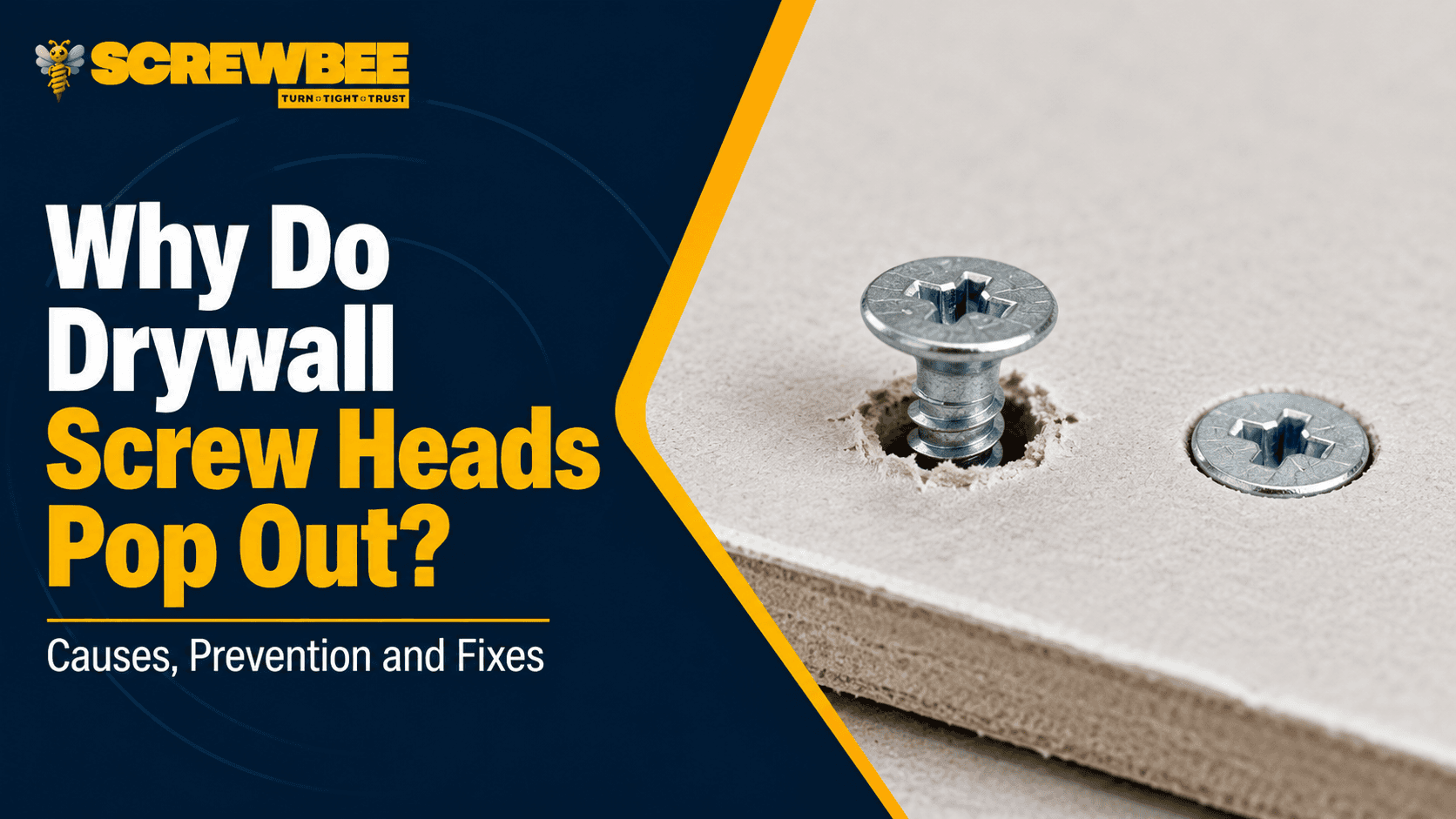
Why Do Drywall Screw Heads Pop Out? Causes, Prevention and Fixes
A drywall screw pop happens when a screw head or the area covering it becomes visible as a small bump, crack or raised spot on a finished drywall surface.
The screw itself may not always physically move outward. In many cases, movement between the gypsum board and framing causes the joint compound over the fastener to crack or protrude.
Common causes include wood-framing shrinkage, loose drywall attachment, incorrect screw length, poor fastening, framing movement and improper screw depth. The Gypsum Association identifies these among the main causes of screw and nail pops.
What Does a Drywall Screw Pop Look Like?
A screw pop usually appears as:
A small round bump on the wall
A cracked circle in the joint compound
A visible screw head
Paint lifting around one fixing point
A small depression or raised area after finishing
Screw pops may appear shortly after installation or months later as framing materials settle and dry.
If several pops appear in the same area, the problem may be related to the drywall installation or movement behind the board rather than only one defective screw.
1. Wood Framing Shrinks After Installation
One of the most common causes of drywall fastener pops is lumber shrinkage.
Wood contains moisture. After construction, the framing can dry and shrink. As the wood changes dimension, a small gap may develop between the drywall board and the framing.
That movement can place pressure around the screw head and damage the finished surface.
USG notes that lumber shrinkage is a common reason for fastener pops in wood-frame construction.
How to reduce the risk
Use suitably dry and stable framing material
Inspect warped or twisted studs before board installation
Keep gypsum board tight against the framing
Use the correct screw length
Follow the approved fixing pattern
2. The Drywall Is Not Tight Against the Framing
A screw should hold the gypsum board firmly against the supporting frame.
If there is a gap between the board and stud, the board can move after installation.
This movement may eventually make the screw head visible through the finished surface.
Possible reasons include:
Uneven framing
Insulation pushing against the board
Warped studs
Poor board positioning
Loose initial fastening
Simply covering the visible screw head with more joint compound may not solve the problem if the board is still loose.
3. The Screw Is Driven Too Deep
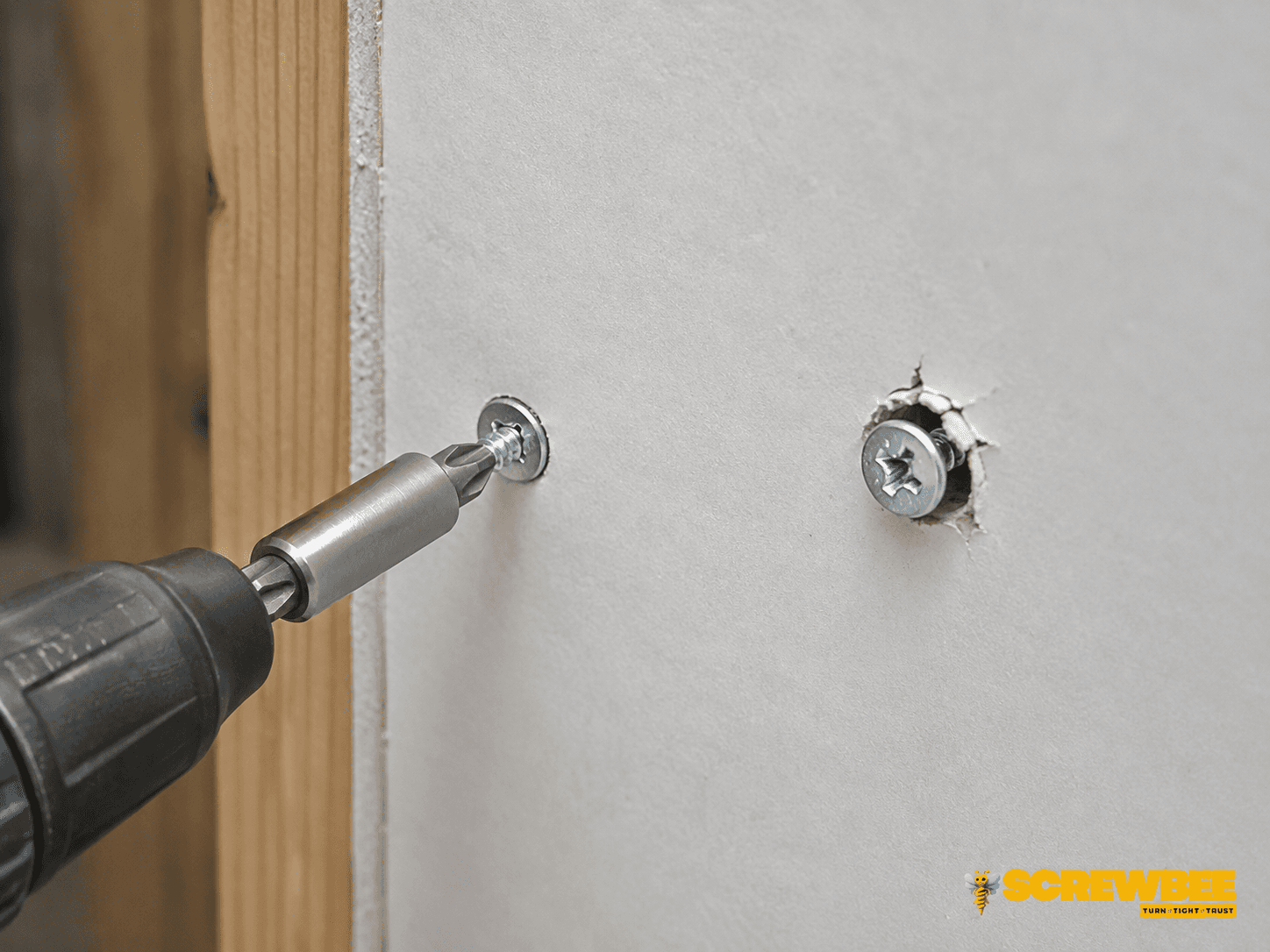
Drywall screws normally use a bugle-shaped head designed for controlled seating in gypsum board.
The head should sit slightly below the surface without tearing through the face paper.
If the screw is driven too deeply:
The paper around the head can tear
Holding strength at that fixing point can decrease
The board may move around the screw
Finishing compound may later crack
Correct driver control is therefore important.
Screwbee Zinc Drywall Screws use a Phillips bugle head, specifically intended for controlled seating and a clean finish in compatible drywall applications.
4. The Screw Is Not Driven Deep Enough
Driving too shallow can also create problems.
If the screw head remains above the board surface, joint compound must cover a raised point.
Later, sanding, finishing or small movements can expose the screw head.
The goal is not:
too deep ❌
or
too high ❌
It is:
controlled, slightly recessed seating without damaging the board paper ✅
5. The Wrong Screw Length Is Used
A drywall screw needs enough penetration into the supporting framing to create a reliable fixing.
If the screw is too short, it may not engage the framing sufficiently.
If it is unnecessarily long, it does not automatically create a better fixing and may contribute to problems in some wood-framing conditions.
The Gypsum Association specifically lists incorrect fastener length as one potential cause of fastener pops and recommends using the appropriate minimum required penetration, subject to system requirements.
Screwbee’s Zinc Drywall Screw range currently includes selected lengths from 16 mm to 60 mm, with diameters from approximately M3.5 mm to M4.8 mm.
Choose the size according to:
Gypsum board thickness
Number of board layers
Framing material
Required penetration
Project specification
6. The Screw Misses the Stud or Framing
Sometimes the screw passes through the gypsum board but does not properly enter the supporting framing.
This is called a missed fixing.
A missed screw cannot hold the board tightly.
Common signs include:
Screw spins without tightening
Board remains loose
Screw head moves when pressure is applied
Surface later develops cracks or bumps
If a screw misses the framing, it should not be treated as a proper fixing.
Install another correctly positioned screw according to the approved fixing pattern.
7. Warped or Twisted Framing Can Cause Movement
Not every screw pop starts with the screw.
The framing itself may be:
Bowed
Twisted
Warped
Misaligned
Moving as it dries
The Gypsum Association includes improperly aligned or distorted framing among the recognised causes of fastener pops.
Even correctly installed screws can experience additional stress if the framing changes after the drywall has been finished.
That is why framing inspection before board installation matters.
8. Incorrect Screw Spacing Can Increase Board Movement
Screw spacing determines how evenly the gypsum board is supported.
If fixing points are missing, too widely spaced or irregular, parts of the board may move more than intended.
This movement can place extra stress around individual screws.
Screwbee’s existing spacing guide notes that screw pops can be associated with board movement, framing movement, missed studs, loose fixing points, incorrect driving depth and poor screw placement.
This does not mean every screw pop is caused by spacing.
But correct fixing patterns can reduce unnecessary board movement.
9. Drywall Adhesive Shrinkage Can Create Screw Bumps
Some drywall systems use both screws and construction adhesive.
USG has documented cases where certain water-based drywall adhesives shrank during curing. As the adhesive pulled the board closer to the framing, the fixed screw position remained unchanged, which could create a visible protrusion over the screw head.
This is a useful reminder that a visible screw bump is not always caused by the screw moving outward.
Sometimes the board moves relative to the screw.
10. Environmental Conditions Can Affect the Finished Surface
Drywall installation is sensitive to moisture and changing job-site conditions.
High humidity, wet framing or rapid drying can influence:
Timber movement
Board condition
Joint compound drying
Surface appearance
USG notes that framing shrinkage and moisture-related conditions can contribute to fastener and finishing defects.
Before finishing, allow materials and the site to reach suitable conditions according to the applicable drywall-system guidance.
How Can You Prevent Drywall Screw Pops?
Prevention starts before the screw is driven.
1. Inspect the framing
Look for:
Bowed studs
Twisted timber
Uneven surfaces
Excessive moisture
Loose framing
2. Keep the board tight against the frame
Do not fasten drywall while a gap remains behind the board.
3. Select the correct screw
Check:
Screw length
Diameter
Thread type
Framing material
Board thickness
4. Use the correct thread for the substrate
Fine and coarse thread options are designed for different compatible framing conditions.
Screwbee Zinc Drywall Screws are available with fine / coarse thread options.
5. Control driving depth
Avoid tearing through the gypsum-board paper.
6. Follow the fixing pattern
Use the spacing and edge-distance requirements specified for the drywall system.
7. Inspect before finishing
Correct:
Missed studs
Spinning screws
Loose board areas
Overdriven screws
Raised screw heads
before joint compound and paint are applied.
How Do You Fix a Drywall Screw Pop?
A permanent repair usually requires more than simply covering the bump.
A typical repair approach is:
Identify whether the board is loose.
Secure the drywall properly to the framing near the affected area.
Reset or remove the defective fastener where appropriate.
Remove loose joint compound.
Apply suitable joint compound.
Allow it to dry.
Sand the repair smooth.
Prime and repaint the area.
Repair guidance commonly recommends re-securing the drywall to the framing, rather than merely pushing the popped screw back and covering it again.
For fire-rated or engineered wall systems, repair according to the approved system specification.
Can Better Drywall Screws Help Reduce Screw Pops?
Quality fasteners help, but a screw alone cannot correct poor framing or incorrect installation.
A suitable drywall screw should provide:
Consistent thread geometry
Correct head profile
Reliable drive engagement
Appropriate length
Suitable thread option
Consistent manufacturing quality
Screwbee Zinc Drywall Screws currently feature:
Bright zinc finish
Phillips drive
Bugle head
Fine / coarse thread options
Mild carbon steel
M3.5–M4.8 diameter range
16–60 mm selected lengths
The correct product must still be matched to the gypsum-board system and framing material.
Drywall Screw Pops in UAE Interior Projects
For contractors and buyers searching for drywall screws UAE, zinc drywall screws Dubai, gypsum board screws UAE, or a drywall screw supplier in UAE, screw selection should be based on more than price.
Interior fit-out projects should consider:
Using the correct fastener together with proper installation helps reduce callbacks for visible screw heads and finishing defects.
Frequently Asked Questions
Why do drywall screws pop through the wall?
Common causes include lumber shrinkage, loose drywall, incorrect screw length, poor fastening, framing movement and gaps between the board and framing.
Does a screw pop mean the screw is defective?
Not necessarily.
Many screw pops are caused by movement in the board or framing, not by a manufacturing defect in the screw itself.
Can overdriving cause drywall screw pops?
Yes. Driving a screw too deeply can damage the gypsum-board face paper and weaken the fixing around the screw.
Can wood studs cause screw pops?
Yes. As timber dries and shrinks after installation, movement between the framing and gypsum board can contribute to fastener pops.
Should I simply tighten a popped drywall screw?
Not always. First determine why the board moved. A lasting repair often requires securing the drywall properly to the framing near the affected fixing.
What type of head is used on Screwbee Zinc Drywall Screws?
Screwbee Zinc Drywall Screws use a Phillips bugle head, designed for controlled seating in compatible gypsum-board applications.
Final Thoughts
Drywall screw heads can become visible for several reasons, but the problem usually comes down to movement, poor fastening or incorrect screw selection.
The major causes include:
Framing shrinkage → loose board → incorrect screw depth → wrong length → missed framing → framing movement → poor fixing pattern
The best prevention is to inspect the framing, keep the gypsum board firmly against its support, choose the correct drywall screw and install every fixing at the correct depth.
A good screw is important — but correct screw + correct framing + correct installation is what produces a clean and reliable drywall finish.