📦 Request Quote
📞 Connect with us
Learn how drywall screws are manufactured through wire drawing, cold heading, thread rolling, heat treatment, finishing, inspection and packaging.
Follow the complete drywall screw manufacturing process, from steel wire and cold heading to thread rolling, finishing and final inspection.
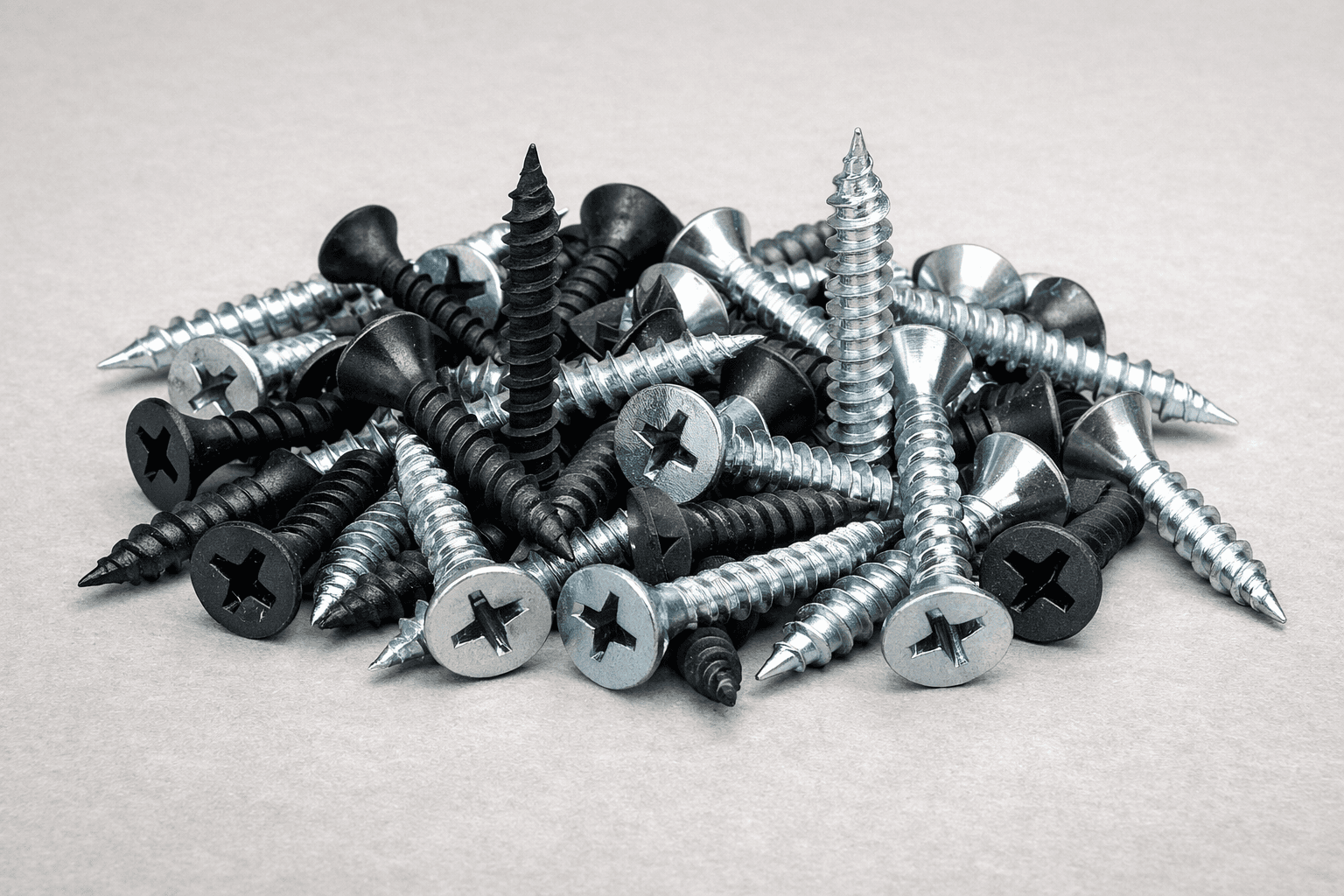
How Drywall Screws Are Manufactured in India: From Steel Wire to Finished Fastener
A drywall screw begins as steel wire and passes through several controlled production stages before it becomes a finished fastener. Its head shape, drive recess, point, thread geometry, heat treatment and surface finish are all created during manufacturing.
For buyers evaluating a drywall screws manufacturer in India, understanding this production sequence is more useful than relying on general claims such as “premium quality” or “best manufacturer.”
1. Wire Drawing and Preparation
Manufacturing begins with steel wire selected according to the required product specification. The wire is drawn through dies to achieve the diameter needed for the screw.
Wire preparation affects the consistency of subsequent operations. Significant variation in the wire diameter may influence the formed blank and finished thread dimensions.
The exact material grade should be confirmed through the manufacturer’s applicable documentation instead of assumed from a general product description.
2. Cold Heading
During cold heading, a measured section of wire is formed into the screw blank. This process creates the head without melting the material.
For a typical drywall screw, the heading operation forms features such as:
The screw head
Bugle-shaped profile
Drive recess
Shank or blank
Initial point geometry
Tooling condition and machine settings influence the consistency of the head and drive recess.
3. Forming the Bugle Head
The bugle head is one of the defining characteristics of a drywall screw. Its curved underside allows the screw to seat progressively into gypsum board when installed at the correct depth.
A correctly installed bugle-head screw should sit slightly below the board surface without tearing through the paper face.
The head alone does not guarantee a good installation. Screw selection, driver settings and installer technique remain important.
Explore bugle-head drywall screws.
4. Thread Rolling
Threads are commonly created by rolling the screw blank between specialised dies. The material is displaced to form the thread profile rather than being removed through cutting.
The tooling determines important characteristics such as:
Thread spacing
Thread depth
Major diameter
Minor diameter
Fine-thread or coarse-thread configuration
Fine-thread drywall screws are generally selected for compatible light-gauge metal framing. Coarse-thread drywall screws are generally selected for compatible timber framing.
The framing material and approved gypsum-board system should determine the final choice.
5. Point Formation
The point helps the screw begin penetrating the board and compatible framing material. Point consistency affects how easily the fastener starts during installation.
The suitability of a particular point design depends on the intended substrate. Buyers should confirm the required framing type and profile thickness before placing an order.
6. Heat Treatment
Heat treatment is used to develop specified mechanical characteristics in the formed screw. The relevant treatment parameters depend on the material and product requirements.
Inadequate control may contribute to undesirable performance, while excessive hardness can also create problems. Therefore, buyers should request applicable test information when mechanical performance is contractually important.
A marketing statement such as “hardened steel” is not a substitute for verified product data.
7. Zinc or Black-Zinc Surface Finishing
After forming and heat treatment, the screws receive the agreed surface finish. Screwbee’s stated range includes:
The finish contributes to the product’s appearance and may provide a level of surface protection. Its suitability depends on coating specifications and the intended service environment.
Do not describe every coated drywall screw as universally corrosion-resistant. For moisture-sensitive applications, buyers should request coating details and applicable test results.
8. Product Inspection
Inspection helps determine whether a production batch matches the agreed specification.
Checks may include:
Overall length
Diameter
Thread appearance
Head shape
Drive-recess formation
Point consistency
Surface-finish appearance
Packaging quantity
Any special tests, inspection method or acceptance criteria should be agreed upon before production begins.
9. Packaging and Dispatch
Finished drywall screws are counted or weighed according to the selected packaging configuration. Products may be packed into inner boxes, master cartons or other agreed formats.
Bulk buyers should specify:
Quantity or weight per box
Boxes per carton
Product labels
Barcode requirements
Private-label artwork
Carton markings
Pallet requirements
Destination information
After packing and final checks, the order is prepared for domestic delivery or export dispatch.
Questions to Ask a Manufacturer
Before approving a bulk order, ask:
Which dimensions and thread types are available?
Which material specification applies to the offered product?
What heat-treatment and inspection controls are used?
Which surface finishes are available?
Can samples be supplied for evaluation?
Which technical documents can be provided?
Can packaging and labelling be customised?
What are the minimum order quantity and production lead time?
These questions provide more useful information than simply asking whether a company produces “high-quality screws.”
Screwbee’s Manufacturing Operations
Screwbee manufactures zinc and black-zinc drywall screws in India for bulk buyers. Available specifications should be confirmed based on the framing material, gypsum-board system, required dimensions and destination-market requirements.
Explore the Screwbee drywall screw range or learn more about its manufacturing operations.
Conclusion
Drywall screw manufacturing involves a connected sequence of wire drawing, cold heading, thread rolling, heat treatment, surface finishing, inspection and packaging.
Understanding these stages helps buyers evaluate a drywall screws manufacturer in India using observable production and documentation criteria—not vague claims about quality.