📦 Request Quote
📞 Connect with us
Learn how to choose the right screw for drywall, wood, chipboard, sheet metal and assembly applications based on material and fastening needs.
A practical guide to choosing the right screw for drywall, wood, chipboard, metal and assembly applications.

How to Choose the Right Screw for Wood, Metal and Drywall Applications
Choosing the right screw starts with understanding the materials being fixed and the type of application.
A screw that works well for drywall may not be suitable for chipboard, sheet metal or assembly work. Different screws are designed with different thread patterns, head styles and point types to suit different materials.
This guide gives a simple overview of common screw types and where they are typically used.
Why Screw Selection Matters
The right screw can make installation easier and help create a more secure fixing.
Before choosing a screw, consider:
The material being fixed
The supporting material or framing
Screw length
Thread type
Head style
Installation method
Project environment
Screw selection should be based on the actual application rather than appearance alone.
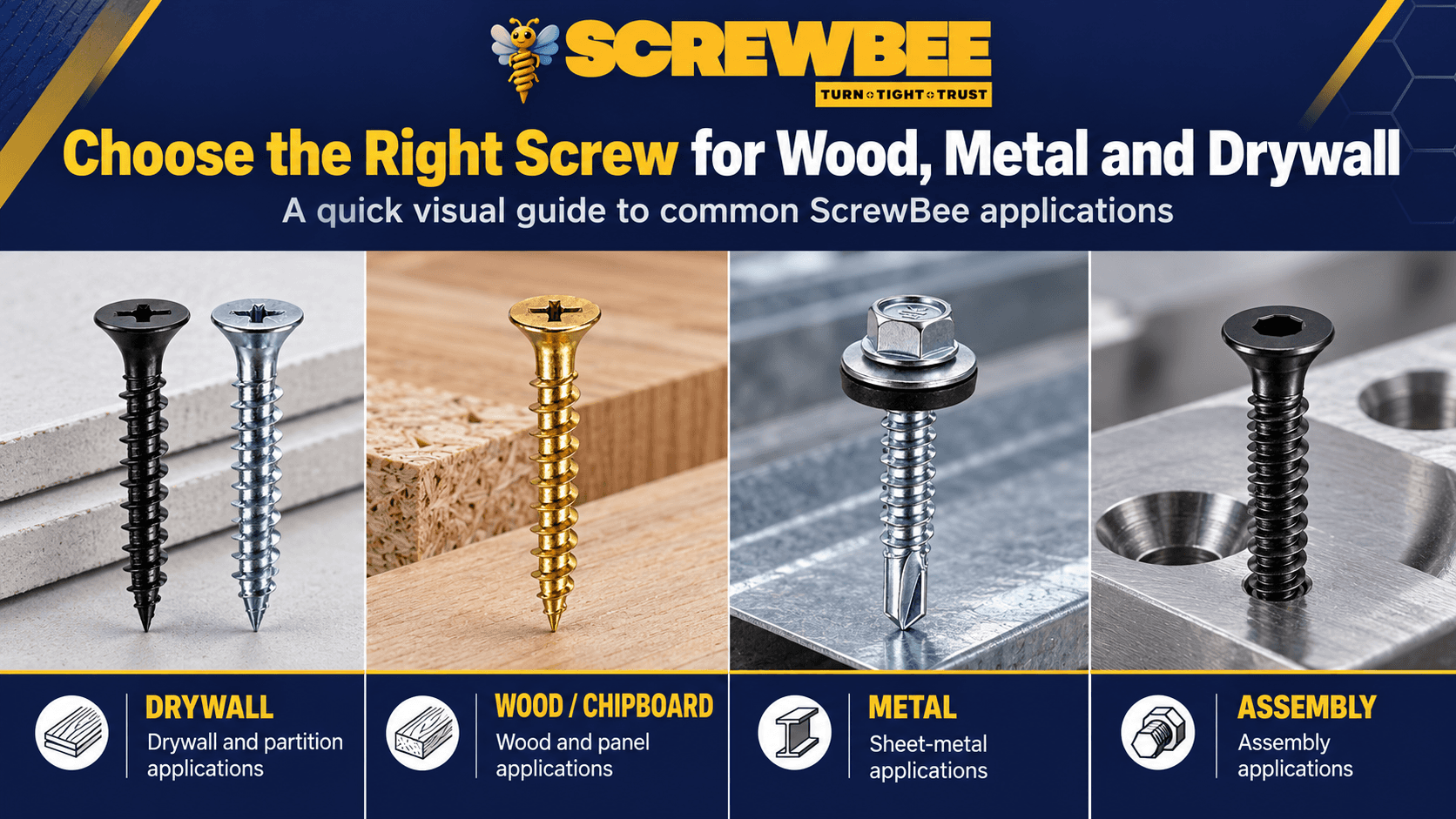
Drywall Screws for Gypsum Board Applications
Drywall screws are commonly used to fix gypsum or plasterboard to framing.
They usually have a bugle-style head that allows the screw to sit neatly into the board surface.
The thread type can vary depending on the framing material.
Drywall Screws for Timber Framing
Coarse-thread drywall screws are commonly used with timber or wooden framing.
The wider thread pattern helps the screw engage with the wood.
Drywall Screws for Light-Gauge Metal Framing
Fine-thread drywall screws are commonly used with light-gauge metal studs.
The finer thread pattern is generally better suited to this type of framing.
The final screw type and length should still be selected according to the board thickness, framing and project requirements.
ScrewBee offers MS Zinc Drywall Screws and MS Black Zinc Drywall Screws within its drywall screw range.
Chipboard Screws for Wood and Furniture Applications
Chipboard screws are commonly used with chipboard, particle board and similar wood-based panels.
Typical applications include:
Furniture assembly
Cabinet work
Wooden panels
Interior joinery
General wood fastening
When choosing a chipboard screw, consider the panel thickness, joint design and required screw length.
The screw should provide suitable engagement without passing unnecessarily through the material.
Self-Drilling Screws for Metal Applications
Self-drilling screws are commonly used in sheet-metal and light-gauge metal applications.
Their drill-point design allows them to create an entry point in suitable metal materials during installation.
Typical uses include:
Sheet-metal fixing
Light-gauge steel framing
Metal panels
General metal fastening
The correct screw should be selected according to the material thickness and fixing requirement.
Not every self-drilling screw is suitable for every metal application, so final selection should be confirmed for the project.
Flat Head Allen Screws for Assembly Applications
Flat Head Allen Screws are commonly used where a flush or low-profile finished surface is required.
The head can sit into a countersunk opening, while the internal hex socket allows the screw to be driven using an Allen or hex key.
Common applications may include:
Equipment assembly
Component fastening
Fabricated parts
General assembly work
The required screw should be selected according to the material, thread requirement, hole design and assembly configuration.
Quick Screw Selection Guide
Application | Common Screw Type |
|---|---|
Gypsum board to timber framing | Coarse-thread drywall screw |
Gypsum board to light-gauge metal framing | Fine-thread drywall screw |
Chipboard and furniture panels | Chipboard screw |
Sheet metal and light-gauge metal | Self-drilling screw |
Flush assembly applications | Flat Head Allen screw |
This table is a general guide only. Final screw selection should be based on the actual application and project requirements.
Start With the Material
A useful first question is:
What materials are being fastened together?
Examples include:
Gypsum board to timber
Gypsum board to metal
Wood panel to wood
Metal sheet to metal framing
Component to component
Once the materials are clear, it becomes easier to select the correct screw category.
Check the Thread Type
Thread design affects how a screw engages with the supporting material.
For drywall applications:
Coarse threads are commonly used with timber framing.
Fine threads are commonly used with light-gauge metal framing.
Other screw categories use thread designs suited to their own applications.
The thread should be selected based on the material and fixing requirement.
Check the Head Style
The screw head affects both installation and the finished surface.
Bugle Head
Bugle heads are commonly used on drywall screws.
Their shape helps the screw sit neatly into gypsum board.
Flat Head
Flat heads are used where the screw needs to sit flush in a countersunk opening.
This is common in certain assembly applications.
Different fastening applications may require different head styles, so the head type should match the intended use.
Choose the Correct Screw Length
Screw length should suit the materials being joined.
Before choosing a length, consider:
Thickness of the material being fixed
Supporting material thickness
Required penetration
Number of layers
Installation requirements
For drywall applications, board thickness and framing type are particularly important.
Check the Finish or Coating
Different screws may be available with different finishes or coatings.
The correct finish should be selected according to the intended environment and project requirements.
Consider factors such as:
Indoor or exposed use
Required appearance
Corrosion-resistance requirements
Project specification
If corrosion performance is important, confirm the required product specification before ordering.
Wood vs Metal: Why Screw Choice Changes
Wood and metal behave differently during fastening.
Wood allows the screw thread to engage with the fibres, while metal applications often require a thread and point suited to the thickness and type of metal.
For example:
Drywall to timber may use a coarse-thread drywall screw.
Drywall to light-gauge metal may use a fine-thread drywall screw.
Sheet metal may use a self-drilling screw.
Chipboard panels may use a chipboard screw.
Matching the screw type to the material helps make installation more consistent.
Common Screw Selection Mistakes
Choosing Only by Size
Screw length matters, but thread type, head style and application are also important.
Using the Same Screw for Every Material
Different materials may require different screw designs.
A screw suitable for wood may not be appropriate for sheet metal or drywall framing.
Ignoring Material Thickness
The thickness of both the material being fixed and the supporting material affects screw selection.
Selecting Only by Appearance
Two screws can look similar but be designed for different applications.
Always check the screw type and intended use before installation.
Which Screw Should You Choose?
A simple starting guide is:
For drywall:
Choose a drywall screw and match the thread type to the framing material.
For chipboard or furniture panels:
Consider a chipboard screw.
For sheet metal or light-gauge metal:
Consider a self-drilling screw.
For flush assembly applications:
Consider a Flat Head Allen Screw where the assembly is designed for a countersunk fastener.
Final specifications should always be confirmed according to the actual project requirement.
ScrewBee Product Range
ScrewBee currently offers:
Each product category is intended for a different fastening requirement.
Instead of choosing only by size or appearance, start with the material and application first.
Frequently Asked Questions
Which screw is commonly used for drywall?
Drywall screws are commonly used to fix gypsum or plasterboard to timber or light-gauge metal framing.
Which drywall screw is commonly used for wood framing?
Coarse-thread drywall screws are commonly used with timber or wooden framing.
Which drywall screw is commonly used for metal studs?
Fine-thread drywall screws are commonly used with light-gauge metal framing.
What screw is commonly used for chipboard?
Chipboard screws are commonly used for chipboard, furniture panels and similar wood-based materials.
What are self-drilling screws used for?
Self-drilling screws are commonly used for sheet-metal and light-gauge metal fastening applications.
What are Flat Head Allen Screws used for?
They are commonly used in assemblies where a countersunk, flush head and internal hex drive are required.
Can one screw type be used for every material?
No. Different materials and applications can require different thread types, head styles, lengths and screw designs.
Final Thoughts
Choosing the right screw starts with understanding the application.
Before selecting a fastener, check the materials being joined, framing type, screw length, thread type, head style and project requirements.
For drywall, chipboard, metal and assembly applications, selecting a screw designed for the job can make installation easier and more consistent.
Explore the ScrewBee product range to compare drywall screws, chipboard screws, self-drilling screws and Flat Head Allen Screws for different fastening applications.
For exact sizes, specifications or project requirements, contact the ScrewBee team before placing an order.