📦 Request Quote
📞 Connect with us
Learn why drywall screws spin without tightening, how to identify the cause, and how to fix common problems involving missed studs, stripped holes and wrong screw selection.
Learn why drywall screws spin without tightening and how to identify and fix common installation problems for a secure drywall fastening.

Why Drywall Screws Spin and How to Fix the Problem
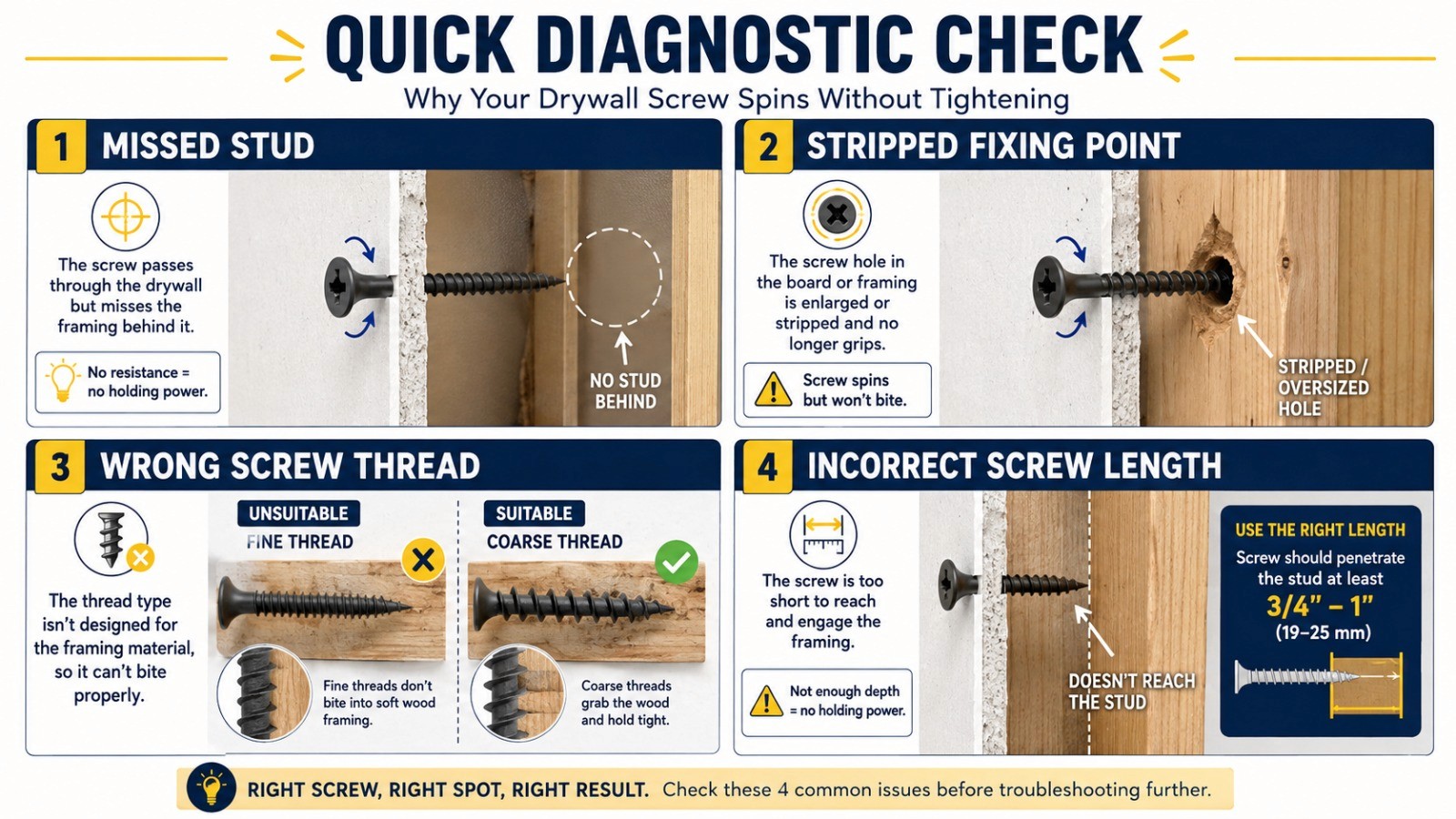
A drywall screw that keeps spinning without tightening is usually a sign that the screw is not gripping the framing properly. This can happen because the screw missed the stud, the fixing point is damaged, the wrong screw thread was selected, or the screw was driven incorrectly.
Instead of forcing the screw deeper, identify the cause and correct the fixing.
Looking for reliable drywall screws for your next project or bulk requirement?
🟨 Request Bulk Quote
📘 Download Product Catalogue
📦 Explore Our Product Range
📞 Talk to Our Sales Team
Why Does a Drywall Screw Keep Spinning?
A properly installed drywall screw should pull the gypsum board firmly against the framing. As the screw enters the stud, resistance should increase and the screw head should sit slightly below the board surface without damaging the paper facing.
If the screw continues rotating without tightening, common causes include:
Missing the stud
Stripped or damaged fixing point
Wrong screw thread
Incorrect screw length
Weak or split timber
Excessive driving speed
Overdriving
A spinning screw should not be considered a secure drywall fixing.
1. The Screw Missed the Stud
One of the most common reasons a drywall screw spins is that it never properly engaged the framing.
The screw may have passed through the gypsum board without entering the timber or metal stud.
Signs include:
Very little resistance
Continuous rotation
Loose board
Screw feels unstable
No proper framing engagement
Solution: Confirm the stud position and install the replacement screw into sound framing at an appropriate location.
2. The Fixing Point Is Stripped
If the screw initially tightens but suddenly starts spinning, the material around the threads may have become damaged.
Repeatedly driving screws into the same location can weaken the fixing point.
Solution: Use a sound fixing location and follow the approved repair method for the drywall system.
3. Wrong Drywall Screw Thread
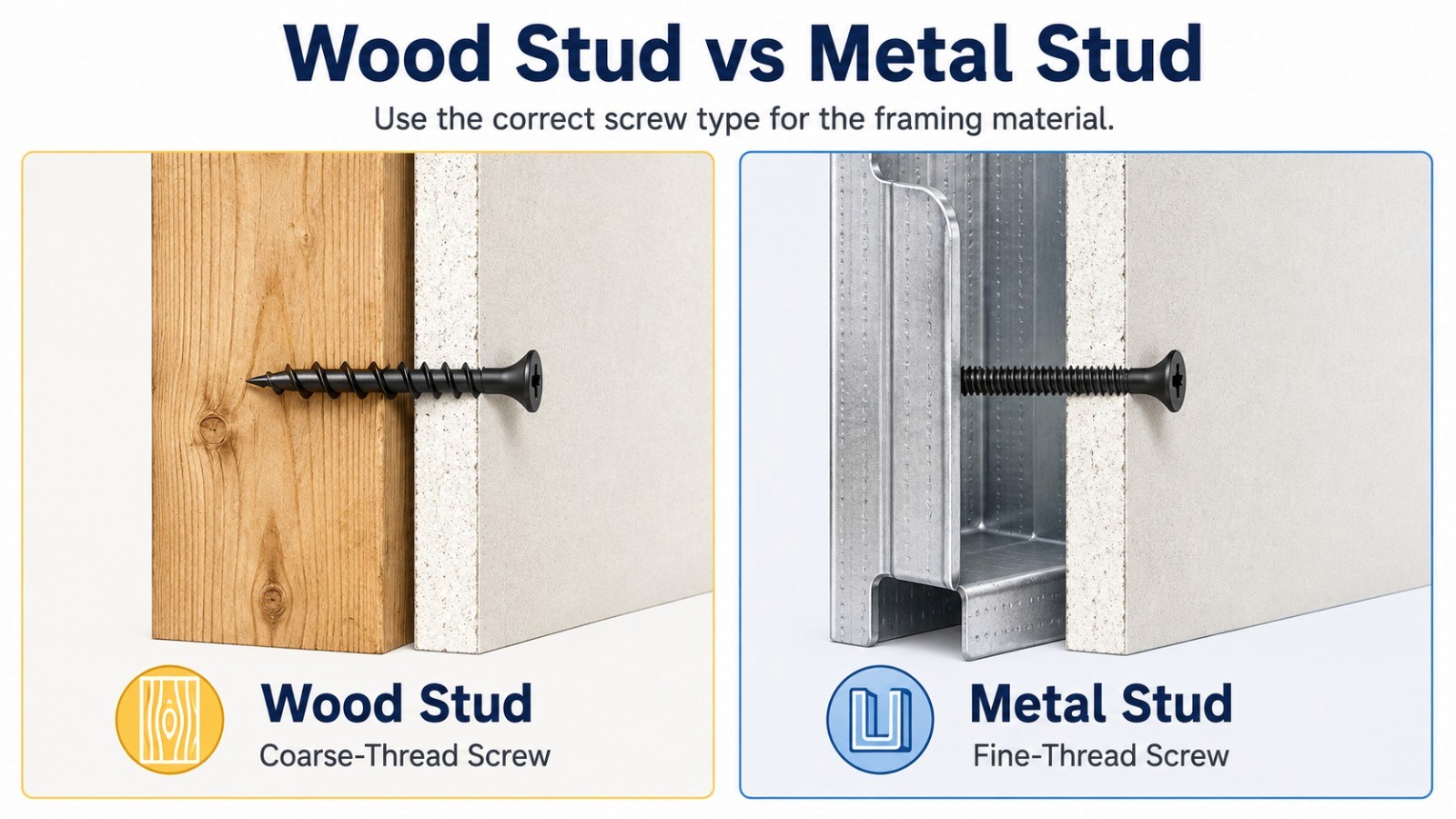
Choosing the correct drywall screw thread is important because framing materials require different types of thread engagement.
Timber Framing
Coarse-thread drywall screws are commonly used with suitable wooden studs because their deeper threads provide effective engagement in timber.
Metal Framing
Fine-thread drywall screws are generally used with compatible light-gauge metal framing.
Using the wrong thread can reduce grip and cause the screw to spin without tightening.
4. Incorrect Screw Length
A screw that is too short may pass through the drywall without penetrating sufficiently into the framing.
When selecting drywall screw length, consider:
Board thickness
Number of board layers
Framing material
Required penetration
Project specifications
The screw should be selected according to the complete drywall system rather than simply choosing the longest available screw.
5. Weak or Damaged Timber
Even the right drywall screw may fail if the framing itself cannot provide a secure fixing point.
Problems can include:
Split timber
Soft or damaged wood
Previous damaged holes
Excessive moisture
Deteriorated framing
If the framing is compromised, replacing the screw alone may not solve the problem.
6. Excessive Driving Speed
Driving a too quickly can reduce installation control and cause overdriving or damage to the fixing point.
As the screw head approaches the drywall surface, reduce the driving speed and allow the screw to seat properly.
The goal is controlled penetration—not maximum force.
7. Overdriving the Drywall Screw
Overdriving drywall screws is another common installation problem.
The screw head should normally sit slightly below the board surface while keeping the paper facing intact. Driving the screw too deeply can damage the paper and gypsum core, reducing the effectiveness of the fixing.
Proper drywall screw driving depth is therefore important for a reliable installation.
Wood Stud vs Metal Stud
The cause of a spinning screw can vary depending on the framing material.
Wooden Studs
Common problems include:
Missed stud
Split timber
Damaged fixing point
Wrong thread
Weak timber
Incorrect screw length
Metal Studs
Possible causes include:
Incorrect screw type
Poor metal engagement
Damaged fixing location
Incorrect screw selection
Framing thickness mismatch
Always select the drywall screw according to the framing material and approved installation system.
Looking for reliable drywall screws for your next project or bulk requirement?
🟨 Request Bulk Quote
📘 Download Product Catalogue
📦 Explore Our Product Range
📞 Talk to Our Sales Team
How to Prevent Drywall Screws From Spinning
Good screw selection and installation technique can prevent many common problems.
Before installation:
Confirm the framing location.
Select the correct drywall screw type.
Choose the appropriate screw length.
Inspect the framing condition.
Control driver speed.
Avoid damaged fixing points.
Maintain correct screw depth.
Follow the required screw spacing.
Inspect the installation before finishing.
Choosing the Right Drywall Screws
The performance of a drywall installation depends on more than the installation technique. Selecting a reliable drywall screw manufacturer and the correct screw specification is equally important.
Consider:
Framing material
Thread type
Screw length
Board thickness
Surface finish
Project requirements
Required quantity
For professional construction and bulk requirements, buyers should choose precision-engineered drywall screws manufactured with consistent dimensions and quality.
Frequently Asked Questions
Why does my drywall screw keep spinning?
A drywall screw may keep spinning because it missed the framing, stripped the fixing point, has the wrong thread, or does not penetrate the framing sufficiently.
Why does a drywall screw spin in wood?
Possible causes include split timber, damaged fixing points, unsuitable thread type, missed framing, or insufficient penetration.
Can I leave a spinning drywall screw in place?
No. A spinning screw should not be relied upon as a secure fixing. Correct the fixing using an appropriate replacement location and installation method.
Can the wrong screw type cause spinning?
Yes. A screw that does not match the framing material can have poor thread engagement and reduced grip.
Can overdriving make a drywall screw loose?
Yes. Overdriving can damage the drywall paper facing or fixing point and reduce fastening effectiveness.
Should I use coarse-thread or fine-thread drywall screws?
The choice depends on the framing system. Coarse-thread drywall screws are commonly used for suitable timber framing, while fine-thread drywall screws are generally used for compatible light-gauge metal framing.
Final Takeaway
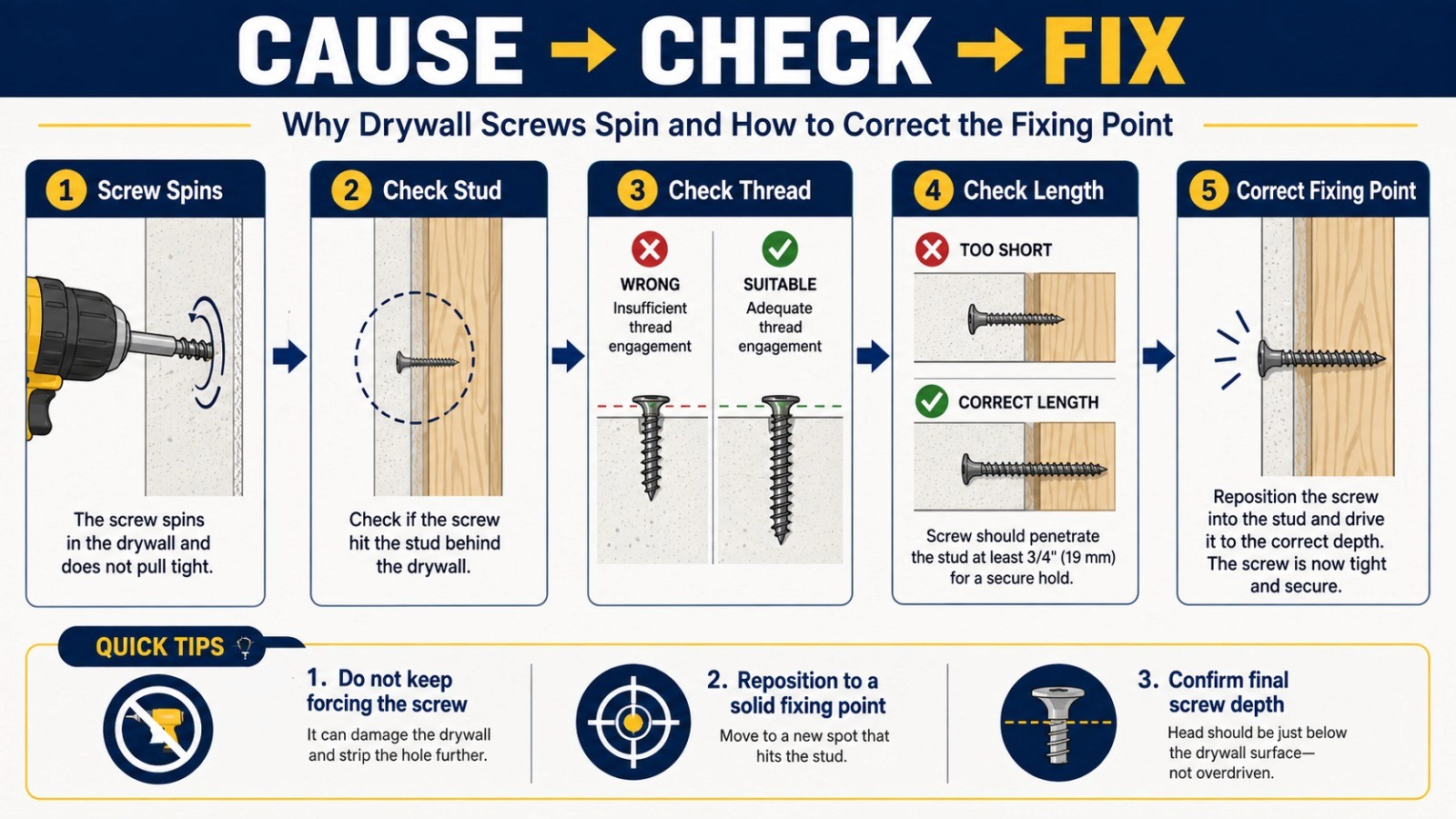
A drywall screw that keeps spinning usually indicates that the screw is not gripping the framing correctly. Driving it harder is rarely the solution.
Instead:
Find the cause → inspect the framing → select the correct screw → correct the fixing → verify the final position.
Using the right drywall screws, correct screw length and thread, controlled driving speed, and proper installation technique can help create a stronger and more reliable drywall fixing.
Looking for reliable drywall screws for your next project or bulk requirement?