📦 Request Quote
📞 Connect with us
Learn why drywall screws fail in humid construction environments and how black phosphate and zinc coated screws improve durability.
Discover how humidity affects drywall screws and which coatings protect construction projects.
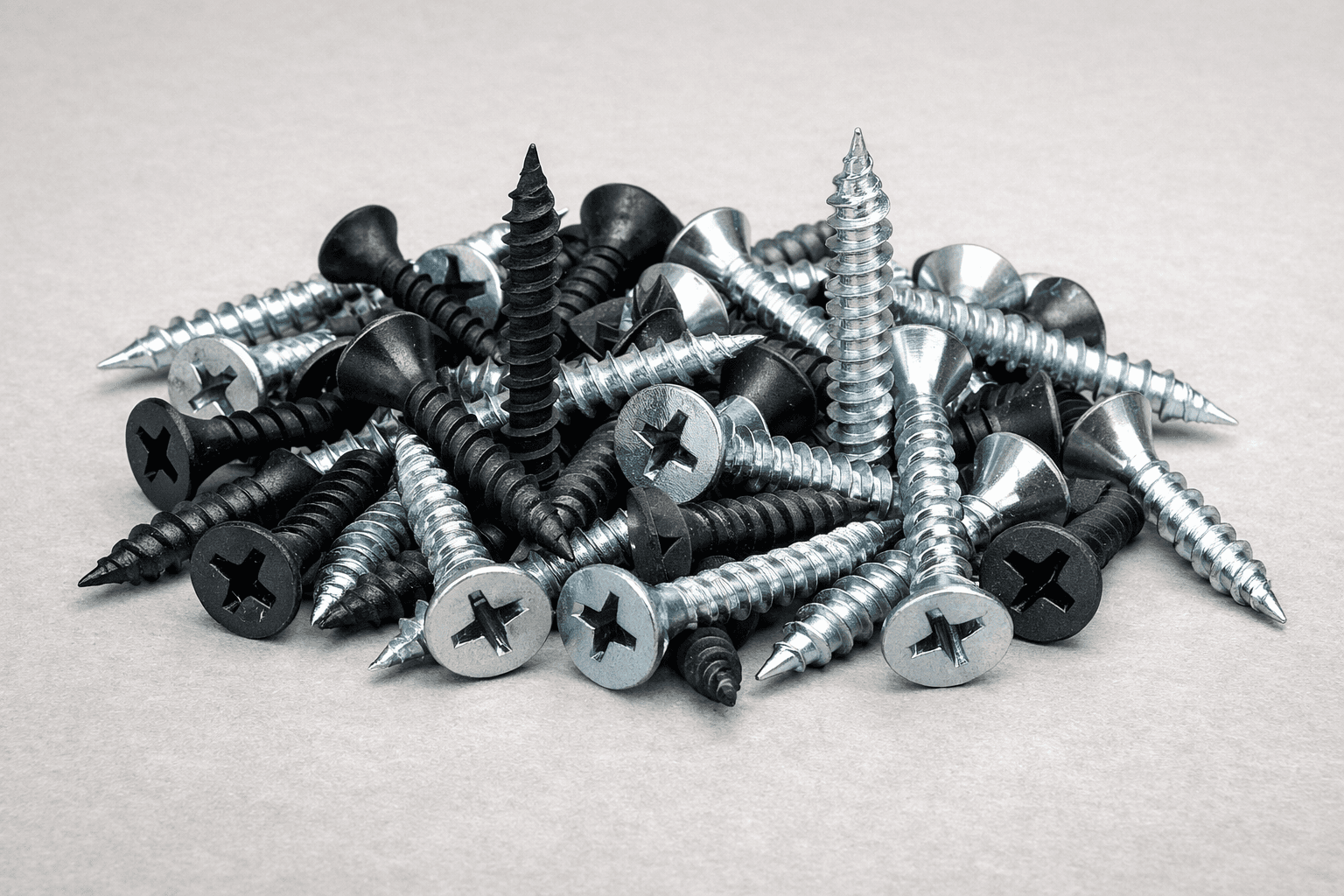
Many construction failures begin with small components that are often ignored during material selection. One of the most common examples is drywall screw corrosion in humid environments.
In coastal regions, commercial kitchens, warehouse interiors, and high-moisture buildings, ordinary screws can begin to rust much faster than expected. Once corrosion starts, the fastening strength weakens and drywall panels may slowly loosen over time.
This is why experienced contractors prefer using black phosphate drywall screws in moisture-sensitive applications. The protective coating creates an additional barrier against environmental exposure and improves installation performance.
Another reliable option is zinc coated drywall screws, which offer additional corrosion resistance for interior structures exposed to changing temperatures and humidity levels.
Builders working on gypsum partitions, suspended ceilings, and commercial interiors should always evaluate environmental conditions before choosing fastening materials. A reliable drywall screws supplier can help contractors select the correct screw type based on project conditions instead of price alone.
Many builders also ignore storage conditions. Even high-quality screws can develop surface damage if stored improperly at construction sites. Proper packaging and dry storage environments are equally important for maintaining fastening quality.
For projects involving gypsum installations, contractors can also explore gypsum board screws to understand how screw selection impacts structural durability.
The future of modern construction depends not only on large structural materials but also on intelligent fastening solutions designed for long-term reliability.