📦 Request Quote
📞 Connect with us
Learn why drywall screws fail, including wrong size, thread, overdriving, loose fixing and coating issues, plus simple ways to avoid installation problems.
Learn the most common reasons drywall screws fail and how to avoid loose fixings, damaged board surfaces and incorrect screw selection.
Why Do Drywall Screws Fail? Common Problems and How to Avoid Them
Drywall screws usually fail because of the wrong screw size, incorrect thread type, overdriving, poor installation, or using the screw in the wrong material.
A good drywall fixing depends on choosing the correct screw and installing it properly.
For interior drywall and plasterboard work, Black Zinc Drywall Screws can be a reliable option when the screw size, thread type and framing material match the application.
1. The Screw Is Too Short
One of the most common problems is using a screw that does not penetrate deeply enough into the framing.
A screw that is too short may not create enough grip.
This can lead to:
Loose gypsum board
Movement in the panel
Weak joints
Screws pulling out over time
How to avoid it
Choose the screw length based on:
Gypsum board thickness
Framing material
Required penetration
Joint design
The screw should provide enough engagement without being unnecessarily long.
2. The Wrong Thread Type Is Used
Drywall screws can use fine or coarse thread options.
The correct thread depends on the framing material.
Using the wrong thread can reduce grip and make installation less reliable.
Screwbee’s Black Zinc Drywall Screw range includes fine and coarse thread options for compatible substrates.
How to avoid it
Before installation, check whether the screw is suitable for:
Wood framing
Light-gauge framing
Gypsum board
Plasterboard
Do not choose a screw based only on length.
3. The Screw Is Driven Too Deep
Overdriving is another common drywall screw problem.
The screw head should sit neatly into the board surface.
If it is driven too deeply, it can tear the paper layer of the gypsum board and weaken the fixing point.
How to avoid it
Use controlled driving pressure.
Stop when the screw head is properly seated.
A bugle head is designed to support controlled, flush seating in gypsum board when installed correctly.
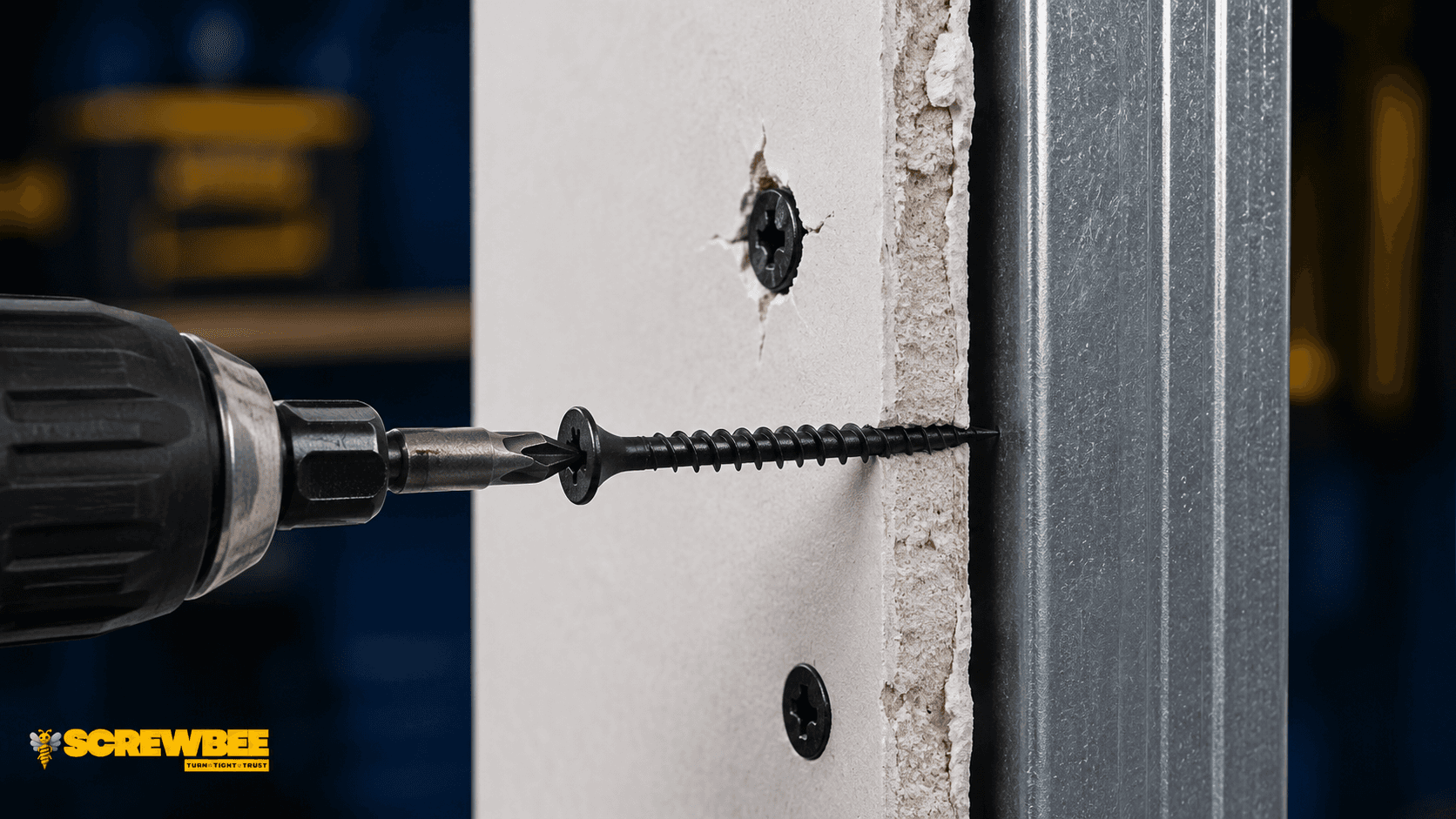
4. The Screw Head Is Left Too High
The opposite problem is under-driving.
If the screw head remains above the board surface, it can interfere with finishing work.
This may cause problems during:
Joint compound application
Sanding
Painting
Final surface finishing
How to avoid it
Drive the screw until the head sits neatly into the surface without damaging the board paper.
The goal is a clean, controlled finish.
5. The Screw Is Installed Too Close to the Edge
Driving screws too close to the edge of gypsum board can damage the panel.
The edge may break, crack or lose holding strength.
How to avoid it
Follow the recommended screw position and spacing for the drywall system.
Avoid placing screws directly on weak or damaged board edges.
6. The Wrong Screw Is Used for the Framing Material
Not every drywall screw works equally well with every framing system.
A screw that works with compatible wood framing may not be the best choice for a different metal framing setup.
How to avoid it
Before choosing the screw, identify:
Framing type
Framing thickness
Board thickness
Thread requirement
Screw dimensions
Screwbee lists Black Zinc Drywall Screws for drywall and plasterboard installation with compatible wood or light-gauge framing.
7. Poor Driver Engagement Damages the Screw Head
Using the wrong bit or allowing the driver to slip can damage the screw recess.
This makes installation difficult and can prevent proper tightening.
Screwbee Black Zinc Drywall Screws use a Phillips drive.
How to avoid it
Use the correct Phillips driver bit and keep the driver aligned with the screw.
Avoid excessive speed when starting the screw.
8. The Coating Does Not Suit the Environment
Screw coating matters too.
Screwbee’s current product uses a black zinc finish, designed for approved interior applications.
A screw should not be used in an environment that requires a different corrosion-protection specification.
How to avoid it
Before ordering, check:
Indoor or outdoor use
Moisture exposure
Project specification
Required coating
Required corrosion resistance
If the environment is demanding, confirm the correct fastener specification before installation.
9. The Wrong Screw Size Is Selected
Screw diameter and length both affect performance.
Screwbee’s current Black Zinc Drywall Screw range covers approximately:
Diameter: 3.5 mm to 4.8 mm
Length: 16 mm to 60 mm
A larger screw is not automatically better.
How to avoid it
Choose the size according to the actual board, frame and fastening requirement.
Why Use Black Zinc Drywall Screws?
Black Zinc Drywall Screws combine:
Black zinc finish
Phillips drive
Bugle head
Fine or coarse thread options
Sharp point
Mild carbon steel construction
These features make them suitable for compatible drywall, plasterboard and interior construction applications.
Black Zinc Drywall Screws for UAE Projects
Buyers searching for black zinc drywall screws UAE, black zinc drywall screws Dubai, drywall screw supplier in UAE, or drywall screws for interior fit-out UAE are usually looking for reliable fasteners for construction, partitions and interior work.
Before ordering, compare:
Screw diameter
Screw length
Thread type
Head style
Coating
Framing material
Required quantity
Packaging
Project specification
For UAE and Dubai projects, the correct technical specification is more important than choosing only by price.
Common Drywall Screw Problems at a Glance
The most common problems are:
Screw too short
Wrong thread type
Overdriving
Under-driving
Poor edge placement
Wrong framing match
Damaged Phillips recess
Incorrect coating
Wrong screw size
Most of these problems can be avoided by choosing the right screw and using controlled installation.
Frequently Asked Questions
Why do drywall screws pull out?
Drywall screws may pull out when they are too short, poorly installed, or not properly matched to the framing material.
Why do drywall screw heads damage the board?
This often happens when the screw is driven too deeply and tears the paper surface of the gypsum board.
Are black zinc drywall screws suitable for gypsum board?
Yes. Screwbee lists its Black Zinc Drywall Screws for compatible drywall and plasterboard applications.
What thread types are available?
Screwbee’s current range includes fine and coarse thread options.
What head type is used?
The product uses a Phillips bugle head for controlled, flush seating.
What finish is used?
The current product uses a black zinc finish.
Final Thoughts
Drywall screw failure is usually not caused by one single issue.
The most common causes are:
Wrong screw size
Wrong thread type
Poor installation depth
Incorrect framing match
Unsuitable coating
Improper driver use
The best way to avoid drywall screw problems is to match the screw size, thread, head type, coating and framing material to the actual application.
For drywall and plasterboard work, Black Zinc Drywall Screws can provide a clean, reliable fastening option when correctly selected and installed.