📦 Request Quote
📞 Connect with us
Learn why Chipboard Screws use a flat countersunk head and how it helps create a clean, flush finish in MDF, furniture and wood-based boards.
Learn why Chipboard Screws use a flat countersunk head and how it helps create a clean finish in MDF, furniture and wood-based boards.
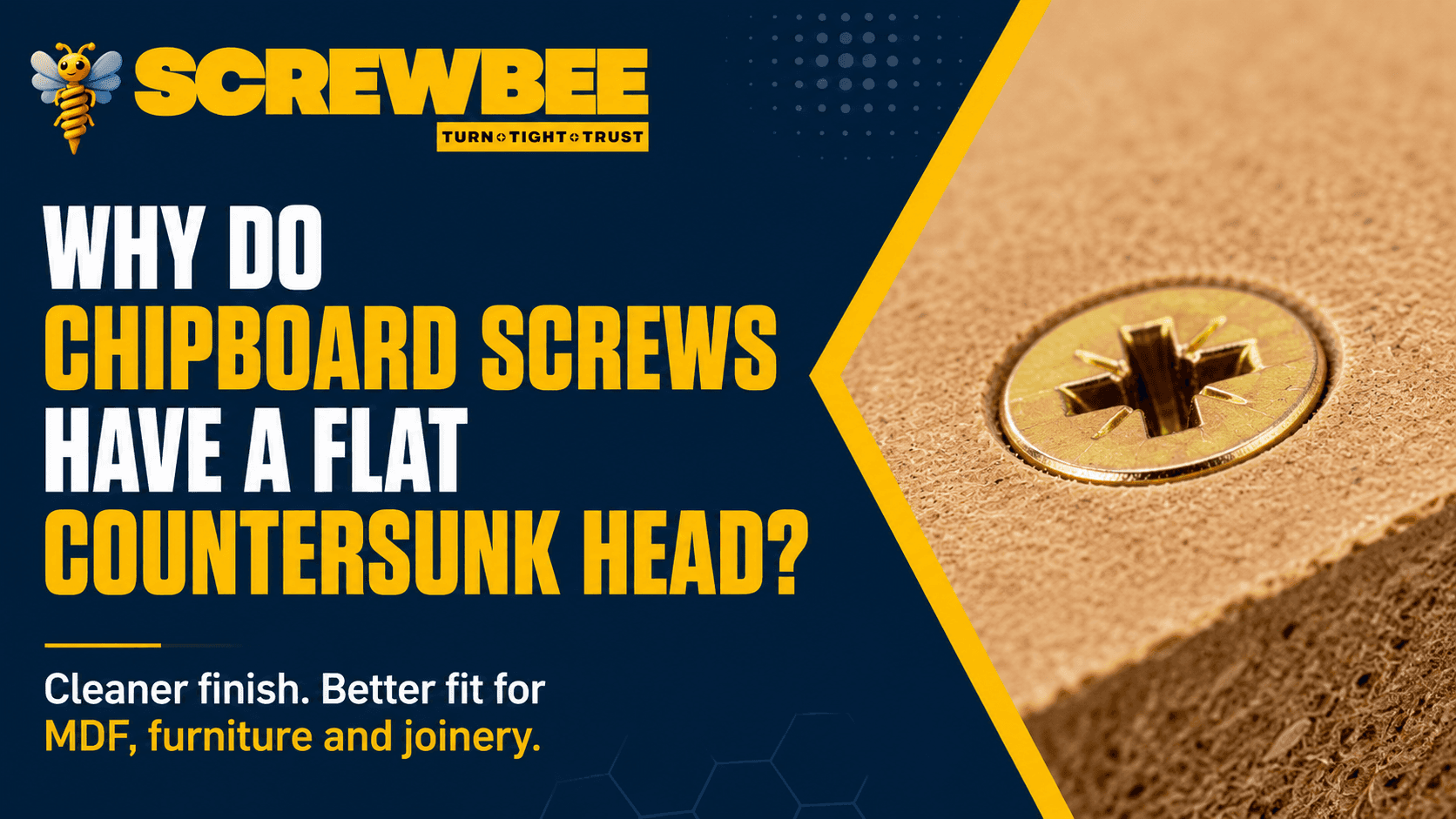
Why Do Chipboard Screws Have a Flat Countersunk Head?
A flat countersunk head is designed to sit flush or slightly below the surface of chipboard, MDF and other compatible wood-based boards.
That means the screw head does not need to remain raised above the surface. This helps create a cleaner finish in furniture, cabinetry and joinery work.
Screwbee Chipboard Screws use a flat countersunk head, deep coarse thread and sharp point for compatible wood-based board applications.
What Does “Countersunk” Mean?
“Countersunk” simply means the screw head is shaped so it can settle into the material surface.
For a beginner:
Raised head → sits above the board
Countersunk head → sits flush or slightly below the board
This is especially useful when the finished surface needs to look smooth and neat.
Why Is a Flat Head Useful for Furniture?
In furniture and cabinet assembly, a projecting screw head can affect appearance or interfere with another panel.
A flat countersunk Chipboard Screw can help provide:
Cleaner furniture joints
Smooth surface finishing
Less head projection
Neater cabinet assembly
Better appearance in visible areas
Correct installation is still important. Driving the screw too deeply can damage MDF or chipboard around the fixing point.
Does the Thread Matter Too?
Yes.
The head controls how the screw finishes at the surface, while the deep coarse thread helps the screw engage compatible wood-based boards.
So both features have different jobs:
Flat countersunk head → clean surface finish
Deep coarse thread → strong material engagement
Screwbee lists these two features together across its Chipboard Screw range.
Where Are Flat Countersunk Chipboard Screws Used?
Common compatible applications include:
Always choose the correct screw diameter and length for the material thickness and joint design.
Frequently Asked Questions
Should a Chipboard Screw head sit flush?
When correctly installed, a flat countersunk head is designed to finish flush or slightly below the board surface.
Can I drive the head deeper for a cleaner finish?
No. Over-tightening can crush or damage the board. Stop once the screw is seated correctly.
Do Screwbee Chipboard Screws have coarse threads?
Yes. Screwbee lists deep coarse threads for its Chipboard Screw range.
Final Answer
A flat countersunk head on a Chipboard Screw helps create a clean, low-profile finish in MDF, particleboard, furniture and other compatible wood-based applications.
Simply remember:
Countersunk head = clean finish
Coarse thread = secure engagement
Choosing the correct size and driving the screw carefully helps you get both.