📦 Request Quote
📞 Connect with us
Learn how to choose self drilling screws for metal roofing and cladding based on material thickness, drill point, washer, screw length and project requirements.
A practical guide to choosing self drilling screws for metal roofing and cladding, including drill point, washer, size, thickness and ordering checks.
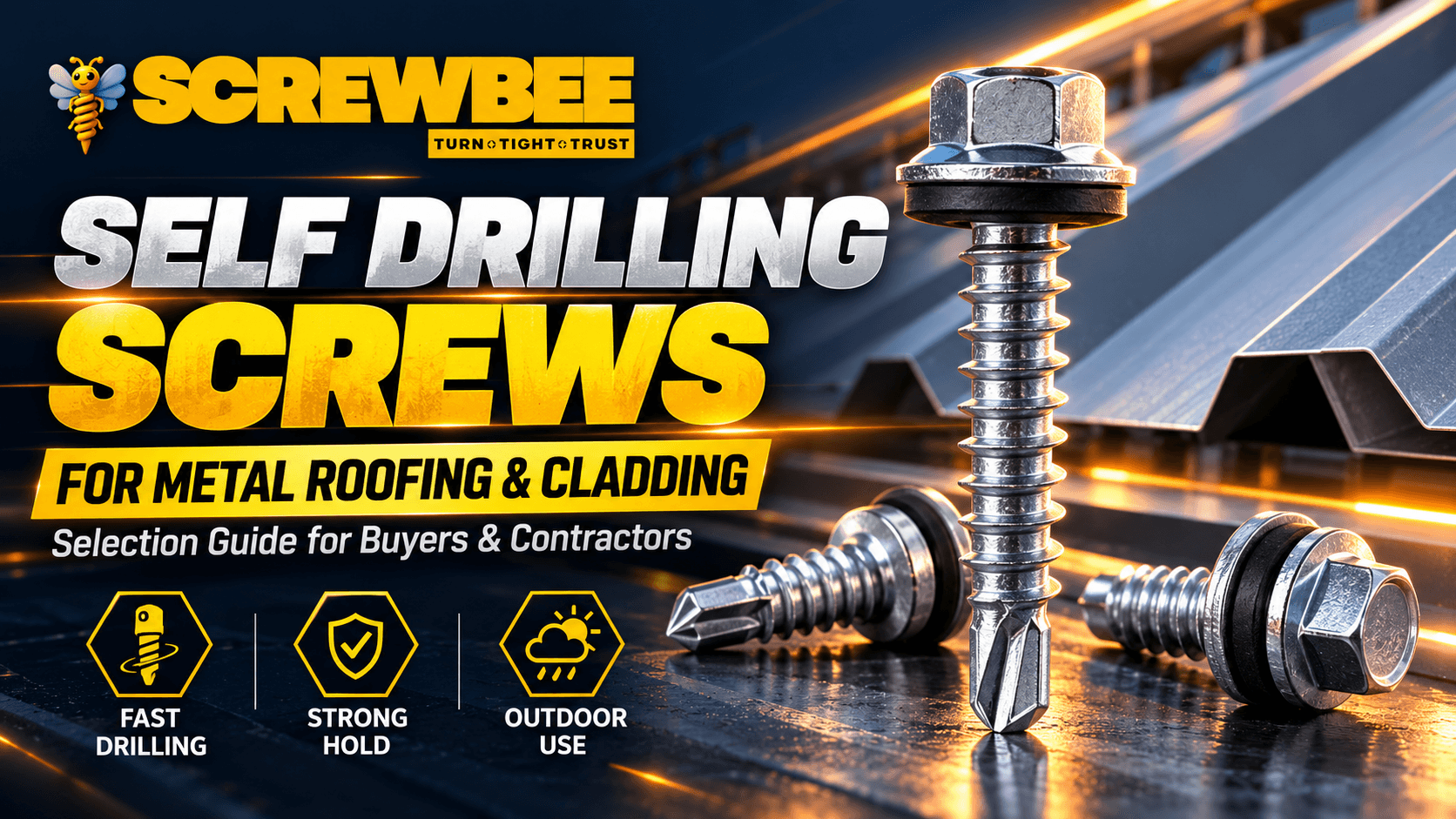
How to Choose the Right Screw for Metal Roofing and Cladding
Quick Answer
For metal roofing and cladding, the right screw depends on the sheet thickness, supporting material, drill point, washer requirement, screw length and project environment.
Self drilling screws are useful because the drill point is designed to create its own hole during installation, but the correct screw still has to match the material and application.
Why Screw Selection Matters for Metal Roofing and Cladding
Metal roofing and cladding systems use screws to secure sheets, panels and related components to the supporting structure.
Using an unsuitable screw can lead to poor fixing, installation difficulty or an incorrect fit for the material thickness.
Before ordering, buyers should confirm the application rather than choosing only by screw appearance.
1. Check the Material Being Fastened
Start with the material that needs to be fixed.
For example:
Thin metal sheet
Roofing sheet
Wall cladding panel
Light-gauge metal section
Supporting steel section
The screw should suit both the outer sheet and the supporting material.
2. Check the Material Thickness
Material thickness is important because the drill point and thread engagement must suit the fastening condition.
A screw selected for a light sheet may not be suitable for a thicker steel section.
Before requesting a quotation, share the approximate sheet and support thickness where possible.
3. Choose the Right Drill Point
Self drilling screws are available with different drill point designs.
The drill point should match the thickness and type of material being drilled.
For metal roofing and cladding applications, buyers should avoid selecting a drill point only by appearance.
Confirm the project requirement before finalising the screw.
4. Check Whether a Washer Is Required
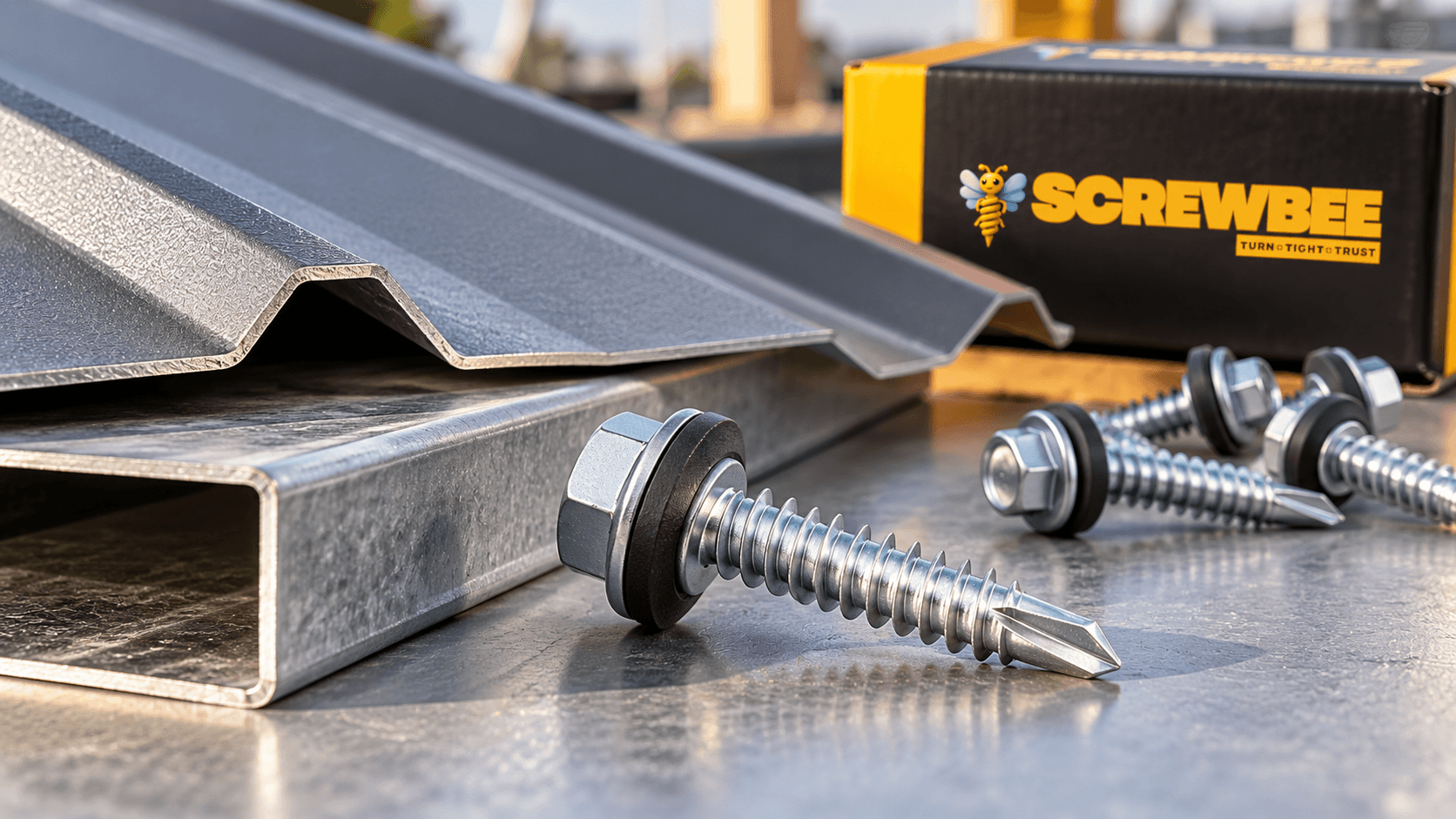
Many roofing and cladding applications use screws with a washer.
The washer can help provide a better seating surface around the fixing point.
The exact washer requirement depends on the application and project specification.
When requesting a quote, mention whether the screw should be supplied with a washer.
5. Select the Correct Screw Length
Screw length should be selected based on:
Sheet thickness
Supporting material
Number of layers being fixed
Required thread engagement
A screw that is too short may not provide enough engagement, while an unnecessarily long screw may not be suitable for the installation.
6. Confirm the Head Style
Different projects may require different screw head styles.
The head should suit the installation tool, appearance requirement and fixing method.
If the buyer already has a drawing or specification, share it with the supplier before ordering.
7. Consider the Project Environment
The installation environment can also affect screw selection.
For example, buyers may need to consider whether the project is:
Indoor
Outdoor
Exposed to weather
Located in a humid or coastal area
The required finish or coating should be confirmed based on the actual project specification.
Do not assume one finish is suitable for every environment.
8. Confirm Quantity and Packaging
For bulk orders, also confirm:
Required quantity
Packing preference
Screw size
Washer requirement
Project location
Delivery destination
Clear information helps avoid delays during quotation and order processing.
Quick Buyer Checklist
Before ordering self drilling screws for metal roofing or cladding, confirm:
Sheet material
Sheet thickness
Supporting material
Drill point requirement
Screw length
Head style
Washer requirement
Finish or coating
Quantity
Delivery location
Self Drilling Screws for Metal Applications
ScrewBee supplies self drilling screw options for different metal fastening requirements.
Before ordering, share your application details so the suitable screw type can be reviewed.
Frequently Asked Questions
Are self drilling screws suitable for metal roofing?
They are commonly used in metal roofing applications, but the correct screw depends on the sheet thickness, support material, drill point and washer requirement.
Do metal roofing screws always need a washer?
Not always. The washer requirement depends on the roofing system and project specification.
How do I choose the correct screw length?
The screw length should be selected based on the sheet thickness, supporting material and required thread engagement.
Can the same self drilling screw be used for every metal thickness?
No. Different material thicknesses may require different drill point and screw specifications.
What details should I send when requesting a quote?
Share the application, material thickness, screw size, washer requirement, quantity and delivery location.
Need Help Choosing Self Drilling Screws?
Share your metal roofing or cladding requirement with ScrewBee, including material thickness, quantity and delivery location.