📦 Request Quote
📞 Connect with us
Learn how to choose the correct Allen key size for Flat Head Allen Screws and avoid slipping, socket stripping and poor tightening.
A quick guide to matching the correct Allen key with Flat Head Allen Screws for safer and more controlled installation.
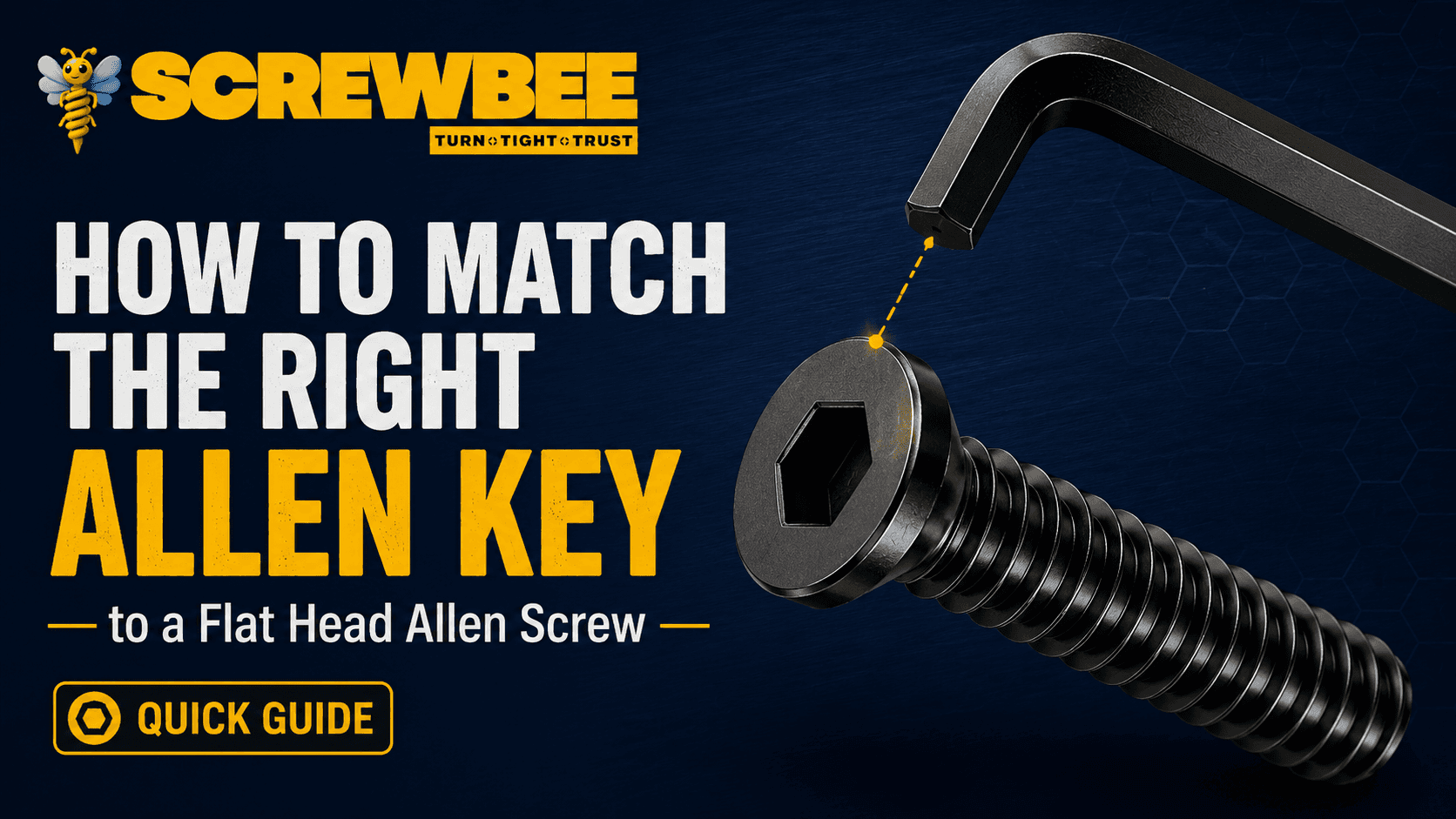
How to Match the Right Allen Key to a Flat Head Allen Screw
Using the correct Allen key is important for safe and controlled screw installation.
If the Allen key is too small, worn, or inserted at an angle, the internal hex socket can slip or strip.
For Flat Head Allen Screws, the correct tool should fit the internal hex socket firmly with very little movement.
Why Allen Key Size Matters
The internal hex drive is designed to transfer turning force from the tool into the screw.
If the key does not fit correctly, common problems include:
A correctly matched Allen key gives better control.
How to Check the Right Allen Key Size
Before tightening the screw:
Insert the Allen key fully into the socket
Check that it sits deep and straight
Make sure there is minimal side-to-side movement
Do not force an oversized key
Do not use a loose-fitting undersized key
The key should fit naturally and firmly.
What Happens If the Allen Key Is Too Small?
A key that is too small may not fully engage the hex socket.
This can cause:
Edge rounding inside the socket
Slipping during tightening
Reduced torque transfer
Permanent socket damage
If the tool feels loose, stop and use the correct size.
What Happens If the Allen Key Is Too Large?
An oversized Allen key will not seat correctly.
Trying to force it into the socket can damage:
The screw head
The Allen key
The internal hex profile
The correct key should fit without forcing.
Does Tool Condition Matter?
Yes.
Even the correct size can cause problems if the Allen key or hex bit is worn.
A worn tool may:
Slip under torque
Round the socket
Cause uneven tightening
For repeated furniture or joinery work, inspect tools regularly.
Keep the Allen Key Straight
Angle also matters.
The Allen key should stay aligned with the screw axis.
Driving at an angle increases pressure on only part of the hex socket.
This can cause:
Uneven wear
Socket damage
Slipping
Poor tightening
Straight engagement is always better.
Flat Head Allen Screws in Furniture and Joinery
Screwbee Flat Head Allen Screws use:
They are suitable for compatible furniture, cabinet, woodwork and joinery applications.
Simple Rule
Use this rule before installation:
Correct socket fit + full tool engagement + straight alignment + controlled torque
That gives the best chance of protecting the Allen socket.
Frequently Asked Questions
How do I know which Allen key fits my screw?
Insert the key into the internal hex socket. It should fit firmly with very little movement.
Can I use a slightly smaller Allen key?
It is not recommended. A loose fit can strip the internal hex socket.
Can a worn Allen key damage the screw?
Yes. Worn edges can slip and round the socket.
Should the Allen key be inserted fully?
Yes. Full engagement improves torque transfer and reduces the chance of slipping.
Can over-tightening strip an Allen screw?
Yes. Excessive torque can damage the socket or the material being fastened.
Final Answer
The correct Allen key size for a screw should fit the internal hex socket firmly, fully and without forcing.
Before tightening, check:
Fit → depth → alignment → tool condition → torque
Using the right Allen key helps protect the screw head and improves installation control.