📦 Request Quote
📞 Connect with us
Learn how to choose chipboard screws for MDF and particle board, including screw length, thread, countersunk heads, furniture uses and UAE buying tips.
Learn how to choose the right chipboard screws for MDF and particle board for furniture, cabinetry, joinery and engineered wood applications.
How to Choose Chipboard Screws for MDF and Particle Board
Choosing the right chipboard screw for MDF or particle board is important for creating a strong, clean and reliable fixing.
Chipboard screws are commonly used with MDF, particle board, chipboard and other engineered wood materials. They are especially useful for furniture, cabinetry, shelving and interior joinery where good thread engagement and a neat finish are important.
For product details and available specifications, explore Screwbee Chipboard Screws.
What Are Chipboard Screws?
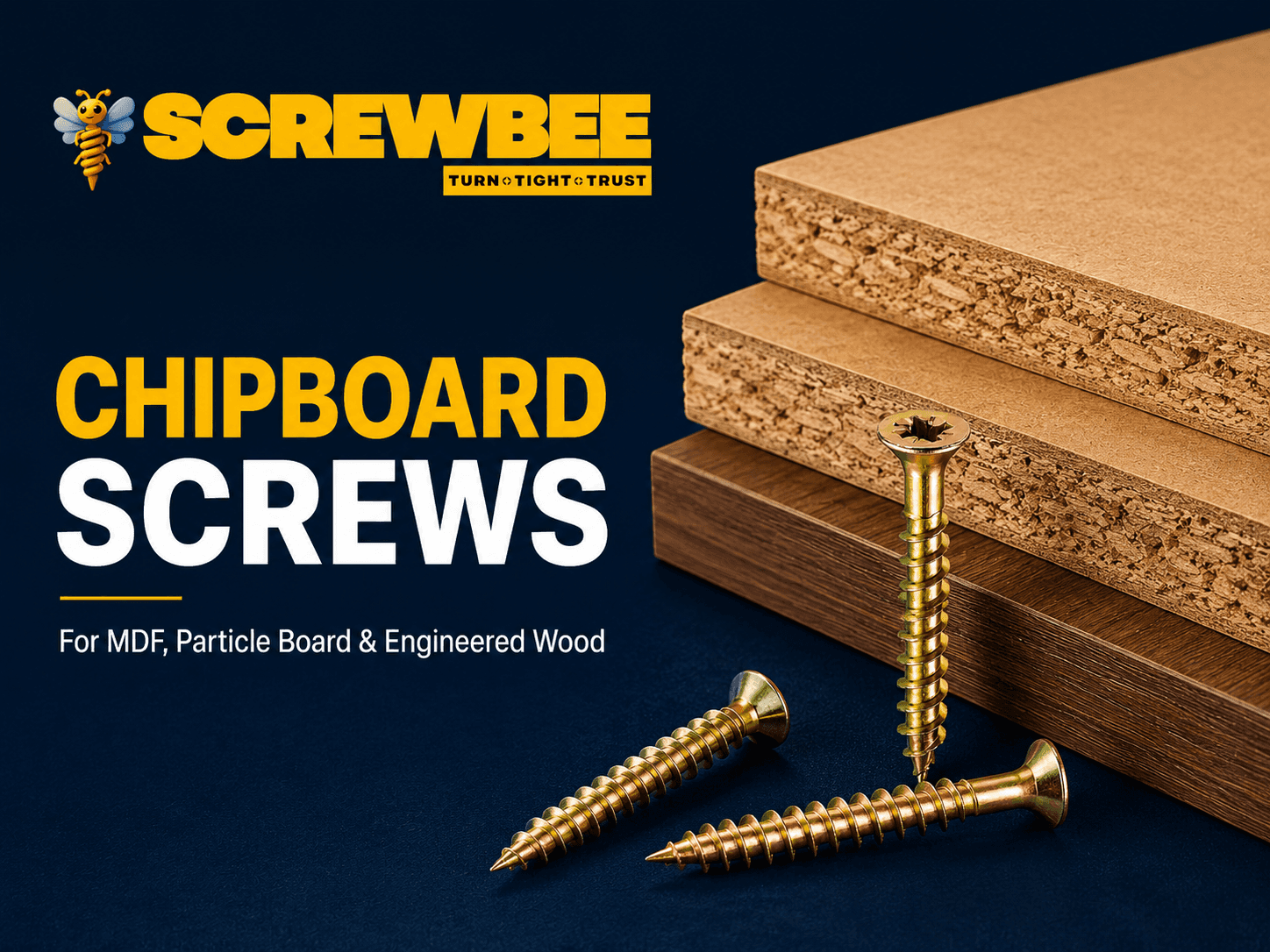
Chipboard screws are fasteners designed for wood-based boards and engineered wood applications.
They are commonly used for:
MDF
Particle board
Chipboard panels
Furniture assembly
Cabinets
Wardrobes
Shelving
Modular furniture
Interior joinery
Fit-out applications
Their thread design helps the screw engage effectively with compatible wood-based materials.
For a wider range of fastening solutions, explore Screwbee Products. For more educational screw guides, visit the Screwbee Blog.
1. Choose the Screw Based on the Board Material
The first step is identifying the material you are fastening.
MDF
MDF is dense and uniform, but the edges can be sensitive during fastening.
When choosing a chipboard screw for MDF, consider:
Board thickness
Screw diameter
Screw length
Distance from the board edge
Joint design
Required holding strength
Driving too close to an MDF edge or overtightening can damage the material.
Particle Board
Particle board is made from compressed wood particles.
A suitable chipboard screw for particle board should provide enough thread engagement to create a stable connection without unnecessarily damaging the board.
Chipboard
Chipboard screws are commonly used for compatible chipboard panels and similar engineered wood materials.
The correct screw should always be matched to the thickness and type of board being fastened.
2. Choose the Correct Chipboard Screw Length
Screw length plays an important role in the strength and appearance of the finished joint.
A screw that is too short may not provide enough engagement.
A screw that is too long may pass through the opposite side of the board.
Before choosing a chipboard screw length, check:
Thickness of the first board
Thickness of the receiving board
Required penetration depth
Position of the fixing
Joint type
Expected load
Choosing the correct screw length helps create a safer and cleaner assembly.
3. Check the Thread Design
Thread design is especially important when fastening MDF, chipboard and particle board.
A suitable chipboard screw thread can help provide:
Better grip
Stable fastening
Stronger board engagement
Reliable furniture assembly
Consistent installation
This is one reason chipboard screws for furniture and chipboard screws for joinery are commonly used in engineered wood applications.
4. Consider a Countersunk Head
A countersunk chipboard screw is useful when a clean, low-profile finish is required.
When installed correctly, the head can sit close to or flush with the board surface.
This makes countersunk screws useful for:
Cabinets
Furniture panels
Wardrobes
Shelving
Drawers
Storage units
Modular furniture
Interior joinery
The head type should always suit both the application and the desired finished appearance.
5. Avoid Overtightening
Choosing the correct screw is only part of the job. Installation technique also matters.
Excessive driving force can damage MDF or particle board around the screw.
For cleaner installation:
Keep the screw straight
Use the correct driver bit
Apply controlled speed
Avoid excessive torque
Stop when the screw is properly seated
Be careful near board edges
Correct driving helps protect the board and improves the finished joint.
Chipboard Screws for Furniture
Chipboard screws for furniture are commonly used where engineered wood panels need to be joined securely.
Typical applications include:
Cabinets
Wardrobes
Bookshelves
Drawers
Desks
Storage units
Modular furniture
Display units
Furniture manufacturers should consider board thickness, screw size and joint design before selecting a fastener.
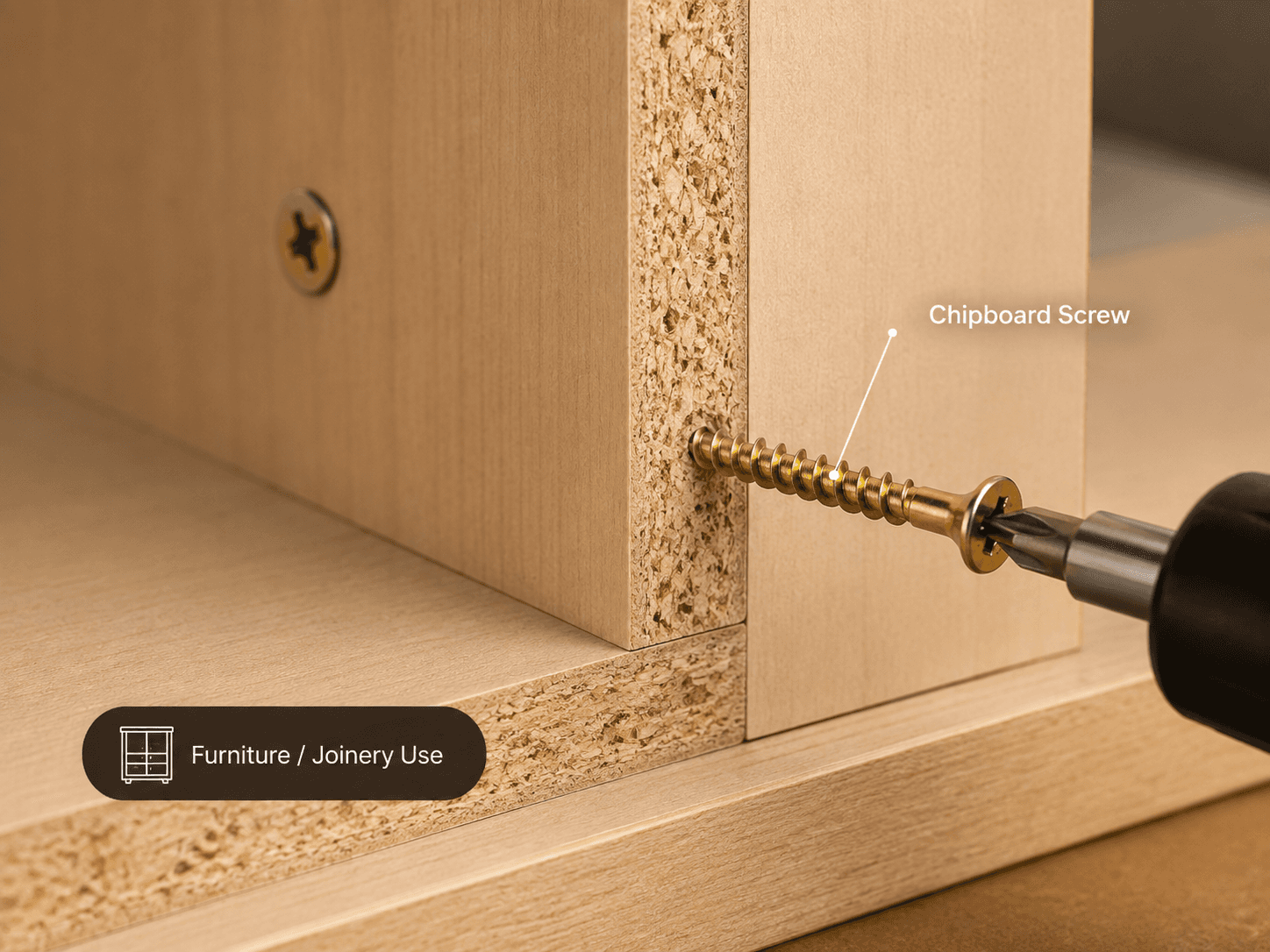
Chipboard Screws for Joinery
Chipboard screws for joinery are also useful for interior wood-based assembly work.
They may be used in compatible applications involving:
MDF panels
Particle board panels
Shelving
Cabinetry
Furniture frames
Interior fit-out
Joinery components
The correct screw should be selected according to the material, thickness and type of joint.
MDF vs Particle Board: What Should You Check?
Before choosing screws for MDF or particle board, compare these factors.
Board Thickness
The screw must suit the thickness of the boards being joined.
Screw Length
Choose enough penetration for a reliable connection without unnecessarily passing through the opposite surface.
Edge Distance
Avoid placing screws too close to weak edges.
Joint Design
A cabinet corner joint may require a different approach from a shelf or panel connection.
Surface Finish
A countersunk head can help produce a cleaner finished surface.
Installation Pressure
Too much torque can damage engineered wood materials.
Chipboard Screws for UAE Buyers
Buyers searching for chipboard screws UAE, chipboard screw supplier in UAE, or chipboard screws for furniture UAE are often looking for commercial supply for furniture manufacturing, joinery, interiors and fit-out work.
When sourcing chipboard screws for UAE projects, compare:
Screw dimensions
Material
Head type
Thread design
Intended application
Required quantity
Packaging requirements
Export support
Choosing the correct product specification is more important than selecting only by price.
Chipboard Screws for Dubai
Searches such as chipboard screws Dubai and chipboard screw supplier in Dubai often reflect commercial intent.
Furniture manufacturers, fit-out contractors, joinery workshops and distributors should choose the screw according to the actual board material and fastening requirement.
Before placing an order, compare size, thread, head style, quantity and application suitability.
What Should Buyers Check Before Ordering Chipboard Screws?
Before placing a commercial order, check the following.
Material
Confirm that the screw material suits the intended application.
Diameter
Choose a diameter appropriate for the board and joint.
Length
Select enough penetration without damaging the opposite surface.
Thread
Look for thread geometry suited to engineered wood.
Head Type
Consider whether a countersunk finish is required.
Application
Confirm whether the screw will be used for MDF, particle board, furniture, cabinetry or joinery.
Quantity
Bulk buyers should also consider required quantities and packaging requirements.
Common Mistakes When Choosing Chipboard Screws
Avoid these common mistakes:
Choosing a screw that is too short
Using an unnecessarily long screw
Selecting the wrong diameter
Driving too close to board edges
Overtightening
Ignoring board thickness
Using the same screw size for every application
Ignoring joint design
Selecting only by price
Using a screw without checking application suitability
The right screw can improve both fastening performance and the appearance of the finished assembly.
Frequently Asked Questions
Can chipboard screws be used for MDF?
Yes. Suitable chipboard screws for MDF can be used when the screw dimensions, board thickness, joint design and installation technique are appropriate.
Can chipboard screws be used for particle board?
Yes. Chipboard screws are commonly used with compatible particle board and other engineered wood materials.
Are chipboard screws suitable for furniture?
Yes. Chipboard screws for furniture are commonly used for cabinets, wardrobes, shelving, drawers and modular furniture.
Can chipboard screws be used for joinery?
Yes. Suitable chipboard screws for joinery can be used in many engineered wood and interior assembly applications.
Why use a countersunk chipboard screw?
A countersunk head can sit closer to the board surface, helping create a cleaner and more professional finish.
How do I choose the right chipboard screw length?
Check the thickness of both materials, required penetration depth and joint design. The screw should provide enough engagement without unnecessarily passing through the opposite side.
Where can I find chipboard screws for UAE projects?
Buyers looking for a chipboard screw supplier in UAE should compare screw specifications, sizes, application suitability, quantities and export support before ordering.
Where can I find chipboard screws in Dubai?
Buyers searching for a chipboard screw supplier in Dubai should select the screw according to board material, joint design, required dimensions and commercial quantity.
Final Thoughts
Choosing the right chipboard screw for MDF and particle board depends on the board thickness, joint design, screw dimensions and intended application.
For furniture, cabinetry and joinery work, focus on suitable screw length, good thread engagement, correct head type and controlled installation.
The right chipboard screw helps create a strong joint while maintaining a clean and professional finish.