📦 Request Quote
📞 Connect with us
Learn the correct drywall screw depth for gypsum board, why screw heads should sit slightly below the surface, and how to avoid overdriving and finishing problems.
Learn how deep drywall screws should sit in gypsum board and how correct screw depth helps prevent paper damage, loose fixing and finishing problems.
How Deep Should a Drywall Screw Sit in Gypsum Board?
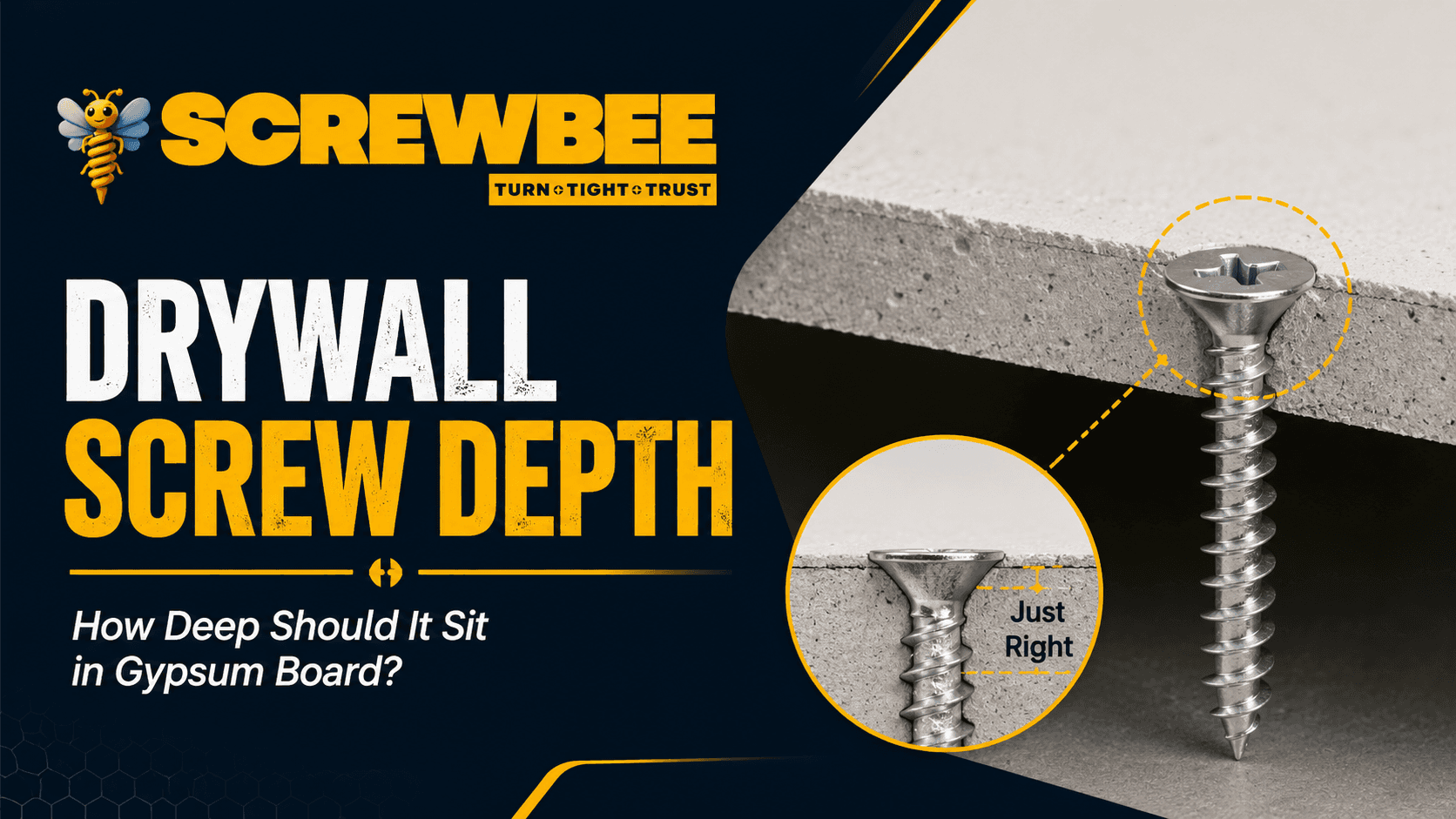
A drywall screw should sit slightly below the surface of the gypsum board without tearing or breaking the face paper.
The goal is to create a small, clean recess that can be covered with joint compound. If the screw head stays too high, finishing becomes difficult. If it is driven too deep, the paper around the screw can tear and the fixing may become less reliable.
What Is the Correct Drywall Screw Depth?
When installing drywall screws for gypsum board, the screw head should be slightly recessed below the board surface.
A correctly installed screw should:
Sit just below the surface
Keep the gypsum-board paper intact
Hold the board tightly against the framing
Leave a clean area for finishing compound
A Phillips bugle head drywall screw is designed to help create this controlled seating when installed correctly.
What Happens If a Drywall Screw Is Too Deep?
Overdriving is one of the most common drywall screw installation mistakes.
If the screw goes too deep, it can tear through the face paper of the gypsum board.
This may lead to:
Reduced holding around the screw head
Loose gypsum board
Damaged board surface
Visible finishing defects
Drywall screw pops later
If the paper has been badly damaged, installing another properly positioned fixing may be necessary.
What Happens If the Screw Head Is Too High?
A screw head that remains above the gypsum-board surface can also create problems.
Raised screw heads may interfere with:
Joint compound
Sanding
Painting
Smooth wall finishing
The installer should therefore avoid both underdriving and overdriving drywall screws.
Why Does the Bugle Head Matter?
Screwbee Zinc Drywall Screws use a Phillips bugle-head profile.
The curved bugle shape is designed for controlled seating in compatible drywall applications.
When driven correctly, it helps the screw head sit neatly below the gypsum-board surface without unnecessarily damaging the paper.
This makes the screw suitable for applications such as:
Gypsum-board installation
Interior partition systems
Plasterboard fixing
False ceilings
Compatible wood or light-gauge framing
Does Screw Length Affect Installation Depth?
Yes.
The correct drywall screw length should be selected according to:
A longer screw should not simply be driven deeper into the board.
The screw length determines how much of the fastener engages with the supporting framing, while the screw head depth determines how neatly it sits in the gypsum board.
Screwbee’s Zinc Drywall Screw range includes selected diameters from approximately M3.5 mm to M4.8 mm and lengths from 16 mm to 60 mm.
How Can You Avoid Driving Drywall Screws Too Deep?
Follow these simple steps:
Keep the screw straight while driving
Use the correct Phillips driver bit
Reduce driving speed near the final seating point
Stop when the head sits slightly below the surface
Do not tear the gypsum-board paper
Check the fixing before applying joint compound
Correct driver control is just as important as choosing the correct screw.
Frequently Asked Questions
Should a drywall screw be flush with the gypsum board?
It should normally sit slightly below the surface, creating a small recess for finishing, without tearing the face paper.
Can drywall screws be driven too deep?
Yes. Overdriving can damage the gypsum-board paper and reduce the quality of the fixing.
Why are bugle-head screws used for drywall?
A bugle head helps provide controlled seating and a clean recess in gypsum board when installed correctly.
What screws are suitable for gypsum board?
Use drywall screws designed for gypsum board and select the correct thread, length and diameter for the framing material and project specification.
Final Answer
So, how deep should a drywall screw sit in gypsum board?
The screw head should be:
Slightly below the board surface → paper intact → board held firmly → clean finishing recess.
Avoid leaving the head raised, and avoid driving it so deeply that the gypsum-board paper tears.
Correct drywall screw depth, screw size and installation technique all work together to create a secure and clean drywall finish.