📦 Request Quote
📞 Connect with us
Compare flat head Allen screws vs chipboard screws for furniture, MDF, cabinetry and joinery. Learn their differences, uses and how to choose the right screw.
Compare flat head Allen screws and chipboard screws to understand their differences, applications and which screw is better for your furniture or joinery project.

Flat Head Allen Screws vs Chipboard Screws: Which One Should You Use?
Choosing between flat head Allen screws and chipboard screws depends mainly on the material, joint design, drive style and finish you need.
Both screws can be used in furniture, cabinetry and wood-based applications, but they are built differently.
A flat head Allen screw uses an internal hex drive with a low-profile countersunk head. Screwbee’s current range also uses a black zinc finish and deep coarse/full threading for strong engagement in compatible wood applications.
A chipboard screw is designed mainly for MDF, particle board, chipboard and other wood-based panels. It uses a flat countersunk head and deep coarse thread for reliable grip.
Understanding these differences makes it easier to choose the right screw for your project.
What Are Flat Head Allen Screws?
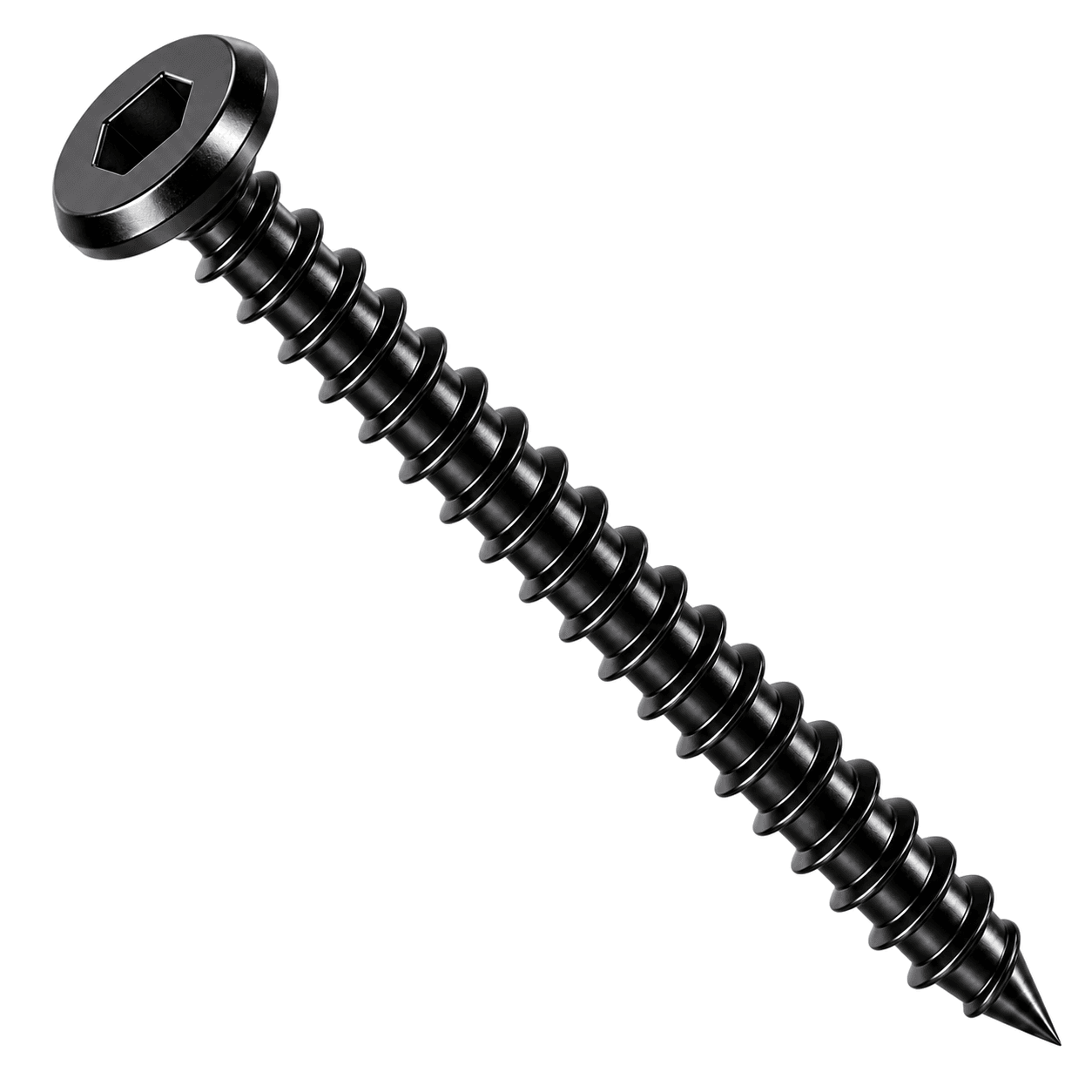
Flat head Allen screws use an internal hex or Allen drive.
The recessed hex socket gives the driver secure engagement and helps provide controlled installation.
Screwbee’s Flat Head Allen Screws feature:
Internal hex drive
Flat countersunk / low-profile head
Deep coarse/full thread
Black zinc finish
Pointed tip
Sizes from M3.5 mm to M4.8 mm
Lengths from 16 mm to 60 mm
They are suitable for applications such as:
Wood-to-wood fastening
Cabinet assembly
Fixture installation
Furniture work
Joinery
General woodwork
Their main advantage is the combination of a clean low-profile finish, secure internal hex engagement and strong thread grip.
What Are Chipboard Screws?
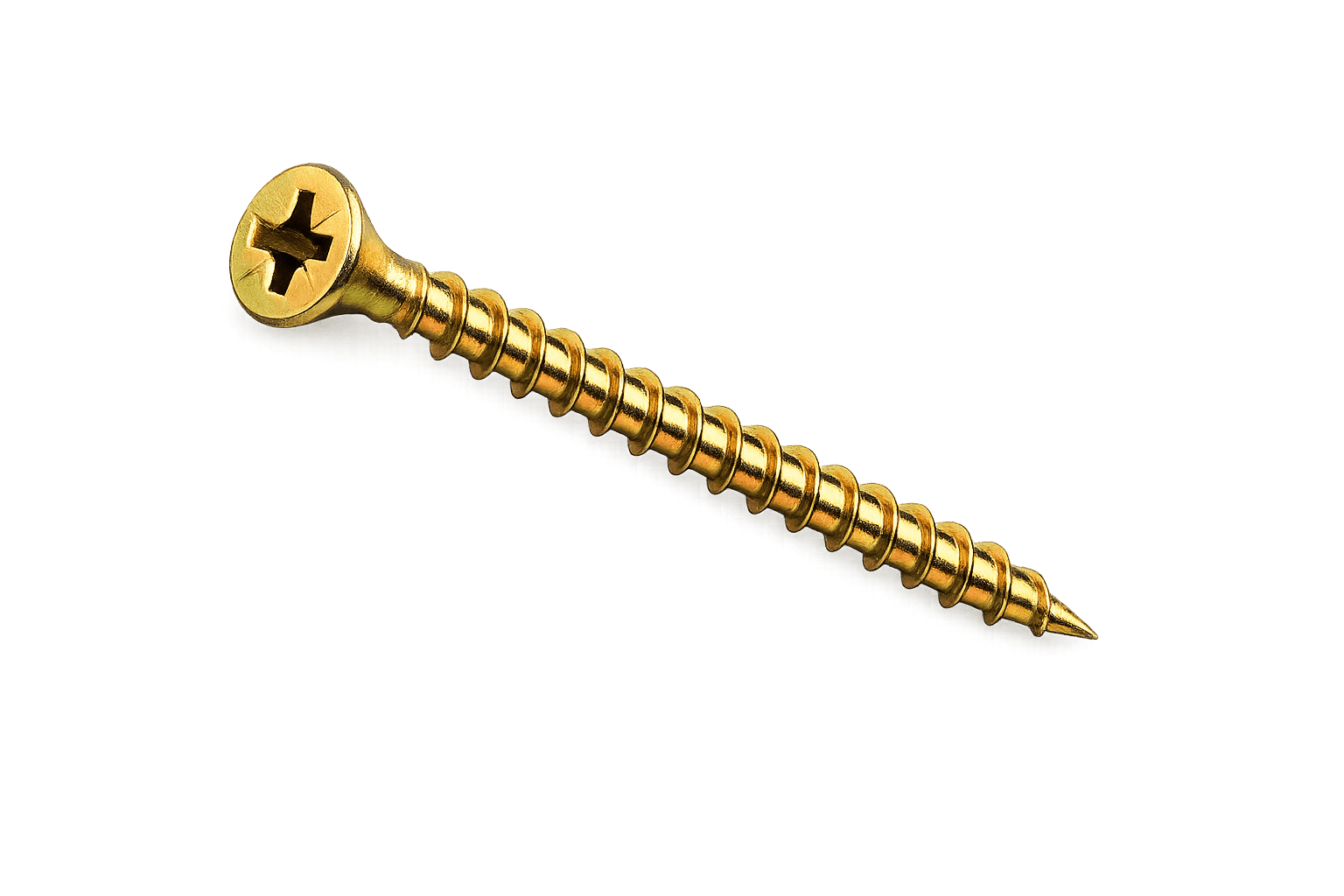
Chipboard screws are designed mainly for wood-based boards.
Screwbee’s Chipboard Screws feature:
Flat countersunk head
Deep coarse thread
Mild carbon steel construction
Zinc finish on most listed sizes
Diameter range from 3.0 mm to 6.0 mm
Length range from 12 mm to 100 mm
They are commonly used with:
MDF
Particle board
Chipboard
Furniture panels
Cabinets
Shelving
Modular furniture
Other compatible wood-based boards
This makes chipboard screws for MDF and chipboard screws for particle board practical choices for many furniture and joinery applications.
Main Difference Between Flat Head Allen Screws and Chipboard Screws
The biggest difference is not simply that one is for furniture and the other is not.
Both can be used in wood and furniture applications.
The real differences are in the drive style, product design, finish and intended fastening requirement.
Flat Head Allen Screws
Choose flat head Allen screws when you need:
Internal hex drive
Controlled tightening
Secure tool engagement
Low-profile countersunk finish
Black zinc finish
Strong thread engagement
Wood-to-wood or cabinet assembly
Chipboard Screws
Choose chipboard screws when you need:
Direct fastening into MDF or particle board
Deep coarse thread for wood-based boards
Countersunk surface finish
A broad range of screw sizes
Furniture, shelving or panel assembly
So the better screw depends on the exact material and joint.
Which Screw Is Better for MDF?
For direct fastening into MDF, chipboard screws for MDF are usually the more straightforward choice because they are specifically designed for wood-based boards.
Their deep coarse thread helps provide grip in compatible MDF applications.
Flat head Allen screws can also be suitable for MDF or other wood-based furniture assemblies when the joint is designed for an internal hex fastener.
For a simple MDF panel-to-panel connection, chipboard screws are generally easier to select.
For a controlled furniture or cabinet assembly where an Allen drive is preferred, a flat head Allen screw may be the better option.
Which Screw Is Better for Particle Board?
Chipboard screws for particle board are generally the more natural choice.
Their deep coarse thread is designed for engagement in compatible wood-based boards.
Before installation, check:
Board thickness
Screw length
Screw diameter
Distance from the edge
Joint design
Required holding strength
Avoid overtightening because particle board can be damaged when too much force is applied.
Which Screw Is Better for Furniture Assembly?
Both screws can work well for furniture assembly.
Choose Chipboard Screws When:
Fastening MDF
Joining particle board
Building shelves
Making cabinets
Assembling wardrobes
Working with engineered wood panels
You want a simple countersunk wood fastener
Choose Flat Head Allen Screws When:
Internal hex drive is preferred
Controlled tightening is important
Secure driver engagement is required
A neat low-profile finish is needed
The joint is designed for an Allen-drive screw
You are working on cabinet or wood-to-wood assembly
So both flat head Allen screws for furniture and chipboard screws for furniture can be suitable, but the right choice depends on the joint and installation method.
Flat Head Allen Screws for Cabinetry and Joinery
Flat head Allen screws for furniture and cabinetry are useful where controlled fastening and a clean finished appearance are important.
Screwbee lists applications including:
Cabinet assembly
Wood-to-wood fastening
Fixture installation
General woodwork
The internal hex socket provides secure driver engagement, while the deep coarse thread supports strong holding power.
Chipboard Screws for Cabinetry and Joinery
Chipboard screws for furniture and joinery are widely used with engineered wood panels.
They are suitable for applications involving:
MDF cabinets
Particle board furniture
Shelving
Wardrobes
Drawers
Storage units
Modular furniture
Interior fit-out
Their flat countersunk head helps create a clean finish, while the deep coarse thread provides grip in compatible wood-based boards.
What About the Screw Head?
Both products use a low-profile or countersunk-style head, but the drive is different.
Flat Head Allen Screw
Screwbee Flat Head Allen Screws use a hex socket flat countersunk head.
This gives secure internal hex engagement and controlled installation.
Chipboard Screw
Screwbee Chipboard Screws use a flat countersunk head with drive options shown on the product page such as Pozi, Phillips, Torx or slotted.
The countersunk shape helps the screw sit neatly in the board surface.
What About Thread Design?
This is where the two products are more similar than the earlier version suggested.
Both Screwbee products use strong thread geometry for wood-based fastening.
Flat Head Allen Screws use full threads with deep coarse thread geometry.
Chipboard Screws use a deep coarse thread designed for compatible wood-based boards.
So buyers should not choose based only on thread style.
Also check:
Drive type
Diameter
Length
Head profile
Finish
Material
Application
Which Screw Should You Choose?
Use this simple rule:
Choose chipboard screws when your main requirement is direct fastening into MDF, particle board, chipboard or similar engineered wood panels.
Choose flat head Allen screws when your assembly needs an internal hex drive, controlled tightening, strong tool engagement and a clean low-profile finish.
For furniture and cabinetry, both can work well. The best choice depends on how the joint is designed.
Common Selection Mistakes
Avoid these common mistakes:
Choosing only by appearance
Ignoring board thickness
Using a screw that is too long
Using a screw that is too short
Driving too close to MDF or particle board edges
Overtightening
Ignoring drive type
Assuming both products are interchangeable
Selecting only by price
Correct screw selection improves both fastening performance and finished appearance.
Flat Head Allen Screws and Chipboard Screws for UAE Buyers
Buyers searching for flat head Allen screws UAE, chipboard screws UAE, furniture screws UAE, or screws for joinery in UAE should compare the actual product specification before ordering.
Important details include:
Diameter
Length
Head style
Drive type
Thread design
Material
Finish
Intended application
Required quantity
Packaging requirements
The same approach applies to buyers sourcing screws for Dubai and other UAE markets.
Frequently Asked Questions
Are flat head Allen screws the same as chipboard screws?
No. Both can be used in wood and furniture applications, but they have different drive systems, product specifications and typical use cases.
Which screw is better for MDF?
For simple direct MDF fastening, a suitable chipboard screw is usually the easier choice. Flat head Allen screws can also be used in compatible MDF or wood-based assemblies where an internal hex drive is preferred.
Can flat head Allen screws be used for furniture?
Yes. Screwbee lists cabinet assembly, wood-to-wood fastening, fixture installation and general woodwork among their applications.
Are chipboard screws good for cabinets?
Yes. Chipboard screws are commonly suitable for compatible MDF, particle board and other wood-based furniture applications.
Which screw is better for particle board?
Chipboard screws are generally the more direct choice for particle board because they are specifically designed for compatible wood-based panels.
Do both screws have coarse threads?
Yes. Screwbee’s current product information shows deep coarse thread geometry on both Flat Head Allen Screws and Chipboard Screws.
Can both screws be used for joinery?
Yes, depending on the joint. Chipboard screws are well suited to engineered wood panels, while flat head Allen screws are useful where controlled internal-hex fastening and a low-profile finish are preferred.
Final Thoughts
There is no single winner in the flat head Allen screws vs chipboard screws comparison.
Both can be used in furniture and wood-based applications.
Use chipboard screws when you need direct fastening into MDF, particle board, chipboard or similar engineered wood panels.
Choose flat head Allen screws when you need an internal hex drive, controlled tightening, strong tool engagement and a clean low-profile finish.
For the best result, always match the drive type, screw length, diameter, thread, material and joint design to the actual application.