📦 Request Quote
📞 Connect with us
Common drywall screw problems in UK construction and DIY projects caused by incorrect installation depth, wood movement, and misuse of plasterboard screws in non-intended applications.
Small fastening mistakes lead to big wall problems—discover why plasterboard screws fail and how UK builders avoid costly installation errors.
Introduction
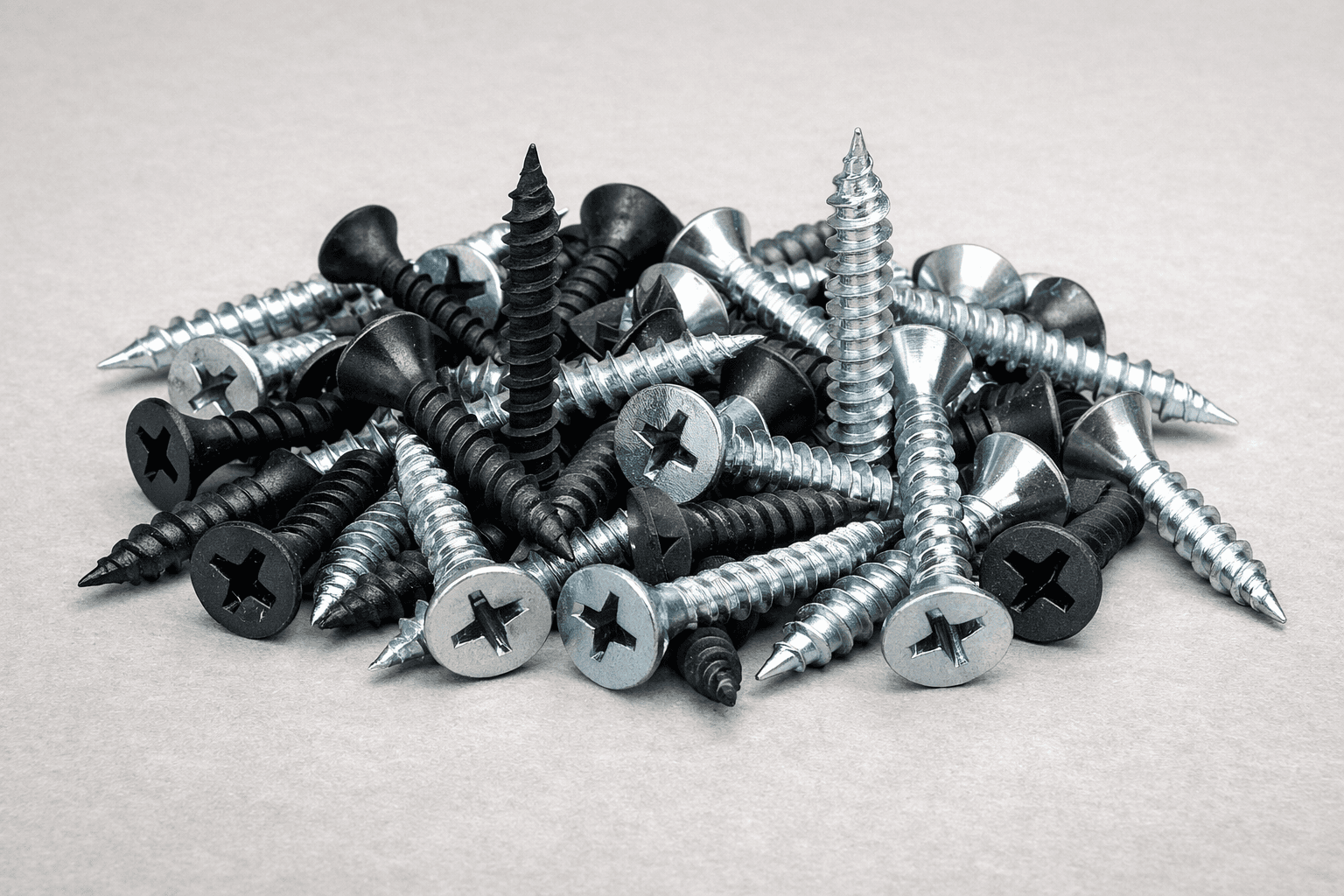
In the UK construction and renovation sector, drywall screws—commonly referred to as plasterboard screws—are one of the most frequently used fasteners for interior wall systems. Despite their simple appearance, these screws are engineered for a very specific purpose: fixing plasterboard securely to timber or metal framing without damaging the board surface.
However, a large number of installation issues arise not because of product failure, but because of incorrect usage. Contractors, tradespeople, and DIY users often treat drywall screws as general-purpose fasteners, which leads to performance problems, reduced holding strength, and visible wall defects.
Understanding these issues is essential for improving installation quality and avoiding long-term structural imperfections.
Incorrect Installation Depth: The Most Common Problem
One of the most frequent issues in UK plasterboard installation is incorrect screw depth.
Drywall screws are designed to sit just below the surface of the plasterboard paper layer without breaking it. When driven too deep, the paper layer tears, weakening the grip and reducing the screw’s ability to hold the board securely.
Over-driving is often caused by:
Using high-speed power tools without depth control
Lack of experience in plasterboard fixing
Misjudging board density or stud resistance
When screws are driven too deep, the board loses surface integrity. This creates weak points that can later result in cracks, uneven finishes, or detachment over time.
On the other hand, under-driving leaves the screw head protruding, which affects plaster finishing and creates visible surface imperfections.
Professional installers often rely on consistent technique and proper tools to maintain correct depth throughout installation.
Moisture Movement in Timber Frames
Another major challenge in UK construction is the natural movement of timber due to moisture variation.
Wood expands and contracts depending on humidity levels and temperature changes. This movement affects the grip strength of fasteners over time.
Drywall screws are designed for static structural conditions, not dynamic movement environments. When used in timber that is still adjusting to moisture changes, the screws may loosen or shift slightly.
This leads to:
Hairline cracks in plasterboard joints
Squeaking or movement in wall panels
Reduced long-term holding strength
To minimize this issue, contractors ensure that timber is properly seasoned and acclimatized before installation. In some cases, alternative fixing methods or improved framing preparation are preferred.
Misuse as a General-Purpose Fastener
A major contributor to drywall screw failures is incorrect usage. These screws are often treated as general-purpose fasteners in DIY and low-skill applications.
However, plasterboard screws are engineered specifically for:
Non-structural wall systems
Gypsum board to stud fixing
Light load interior applications
They are not designed for:
Structural load-bearing joints
Outdoor applications
Heavy timber or metal fastening
High-vibration mechanical systems
Using drywall screws outside their intended purpose can result in:
Screw snapping under load
Thread stripping
Corrosion in exposed environments
Sudden joint failure
This misuse is particularly common in DIY renovations where users substitute them for wood screws or construction fasteners.
Importance of Screw Selection in UK Construction
In the UK, plasterboard installation standards emphasize correct fastener selection depending on framing material and application type.
For timber studs, coarse-thread screws provide better grip due to deeper penetration into wood fibers.
For metal studs, fine-thread screws are preferred because they can securely bite into thin steel without stripping.
Using the wrong type of screw often leads to reduced performance, even if installation technique is correct.
This is why contractors prefer sourcing from a reliable drywall screws supplier UK who can provide consistent product quality and correct fastener specifications for different applications.
Surface Cracking and Long-Term Wall Defects
One of the most visible consequences of improper screw usage is surface cracking.
When screws are over-driven or incorrectly spaced, stress points form in the plasterboard. Over time, these stress points expand into visible cracks, especially around joints and ceiling edges.
Other contributing factors include:
Excessive screw spacing
Poor framing alignment
Over-tightening during installation
These issues often become visible only after finishing work is completed, making repairs more expensive and time-consuming.
Tool Selection and Installation Technique
Even high-quality screws can fail if installation tools are not used correctly.
Common issues include:
Using high-speed drills without depth control
Lack of screw-setting attachments
Inconsistent pressure during driving
Poor angle alignment during installation
Professional installers often use drywall screw guns with depth stops to ensure consistent installation quality across large surfaces.
Proper technique significantly reduces installation defects and improves finishing results.
Why Understanding These Issues Matters
Understanding drywall screw performance is not just a technical detail—it directly impacts construction quality, finishing efficiency, and long-term maintenance costs.
For contractors, avoiding these issues means:
Fewer repair callbacks
Faster project completion
Improved client satisfaction
Reduced material wastage
For DIY users, it prevents common mistakes that often lead to visible wall defects and unnecessary rework.
Conclusion
Drywall screws may seem like simple construction components, but their performance depends heavily on correct application and installation practices.
Most problems in UK plasterboard installations are not caused by product defects, but by improper depth control, timber movement, and misuse of screws outside their intended function.
By understanding these issues and applying correct installation methods, both professionals and DIY users can achieve cleaner finishes, stronger wall systems, and longer-lasting results.