📦 Request Quote
📞 Connect with us
Find answers to 50 common questions about drywall screws, including uses, sizes, prices, threads, coatings, installation and bulk purchasing.
Get clear answers about drywall screw uses, sizes, threads, finishes, installation, pricing and bulk procurement.

Drywall Screws:
50 Essential Questions Answered for Buyers, Contractors and Distributors
Drywall screws are purpose-designed fasteners primarily used to secure gypsum boards to compatible timber or light-gauge metal framing. Although they appear simple, selecting the correct drywall screw requires consideration of thread type, diameter, length, head geometry, surface finish and installation conditions.
This comprehensive FAQ answers 50 common questions about drywall screws—from basic definitions and available sizes to installation, pricing, bulk procurement and quality evaluation.
Drywall Screw Basics
1. What is a drywall screw?
A drywall screw is a threaded steel fastener primarily designed to attach gypsum board or plasterboard to compatible framing. It normally features a sharp point, Phillips drive recess, relatively slender body and bugle-shaped head.
The bugle head allows the screw to seat gradually into the board when correctly installed.
2. What are drywall screws used for?
Drywall screws are principally used to fix gypsum boards to compatible timber or light-gauge metal framing in:
Partition walls
Drywall ceilings
False ceilings
Residential interiors
Commercial fit-outs
Retail and institutional interiors
Approved gypsum-board systems
Drywall screws should not automatically be treated as structural fasteners.
3. Are drywall screws and gypsum screws the same?
The terms are commonly used for the same general fastener category. “Drywall” describes the construction system, while “gypsum board” describes the panel typically used in that system.
Depending on the market, the product may be called a drywall screw, gypsum screw, gypsum-board screw or plasterboard screw.
4. What is the difference between drywall screws and normal screws?
Drywall screws are designed around gypsum-board installation. They usually have a slender body, sharp point, high thread profile and bugle head.
General-purpose screws may have different heads, threads, materials and performance characteristics. A screw suitable for timber, furniture or structural work is not automatically appropriate for fixing gypsum board.
5. Why do drywall screws have bugle heads?
The curved underside of a bugle head helps the screw seat progressively into the gypsum board.
When installed correctly, the head forms a shallow recess that can be finished with an appropriate jointing compound. The screw should not be driven so deeply that it tears through the board’s paper facing.
Drywall Screw Threads and Points
6. What are coarse-thread drywall screws?
Coarse-thread drywall screws have wider spacing between their threads. They are generally selected for fixing gypsum board to compatible timber or wooden framing.
The thread pattern is designed to engage effectively with suitable wood-based substrates.
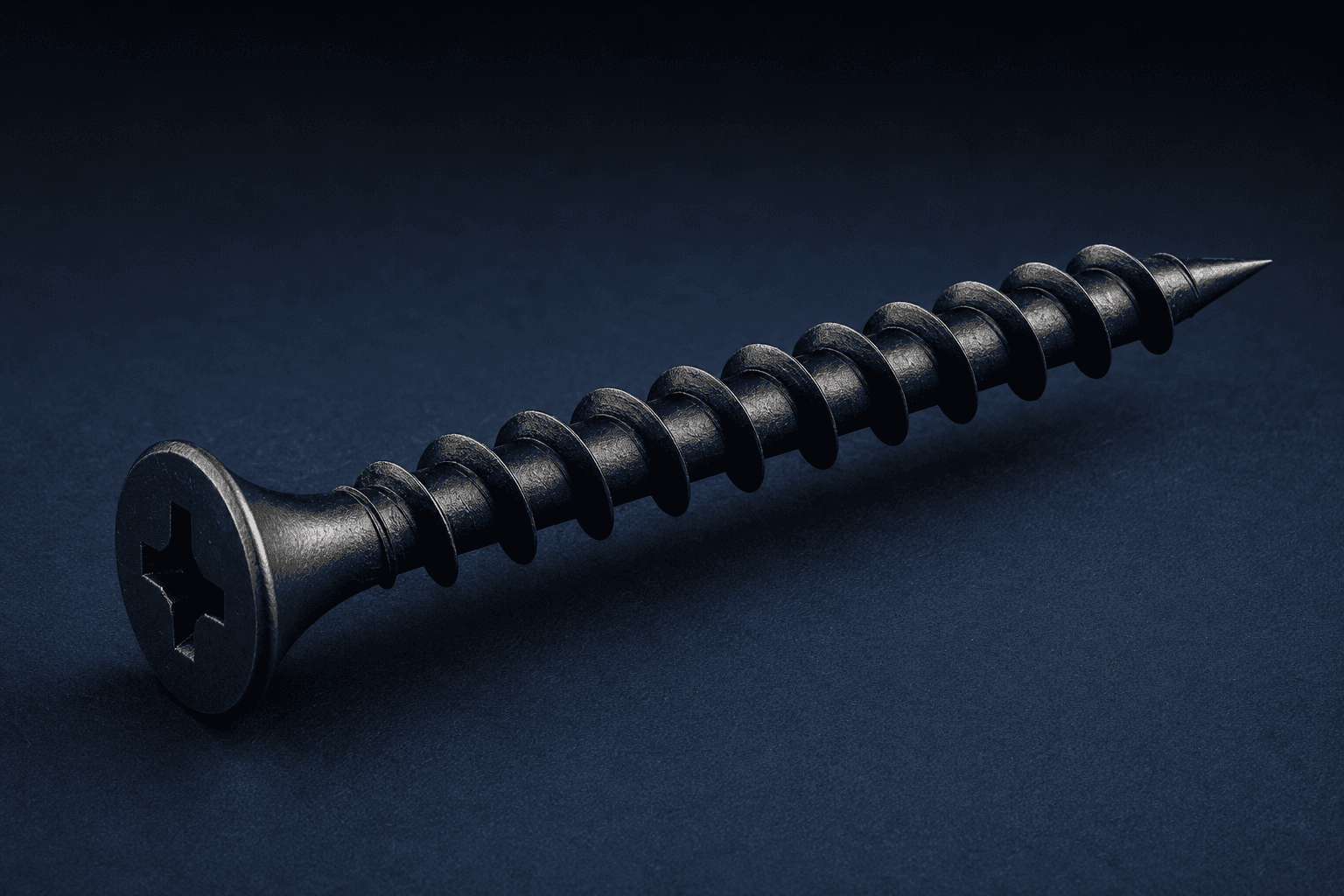
7. What are fine-thread drywall screws?
Fine-thread drywall screws have closely spaced threads and are generally associated with suitable light-gauge metal framing.
The thickness and specification of the metal section must be confirmed because an ordinary fine-thread drywall screw is not suitable for every metal framing system.
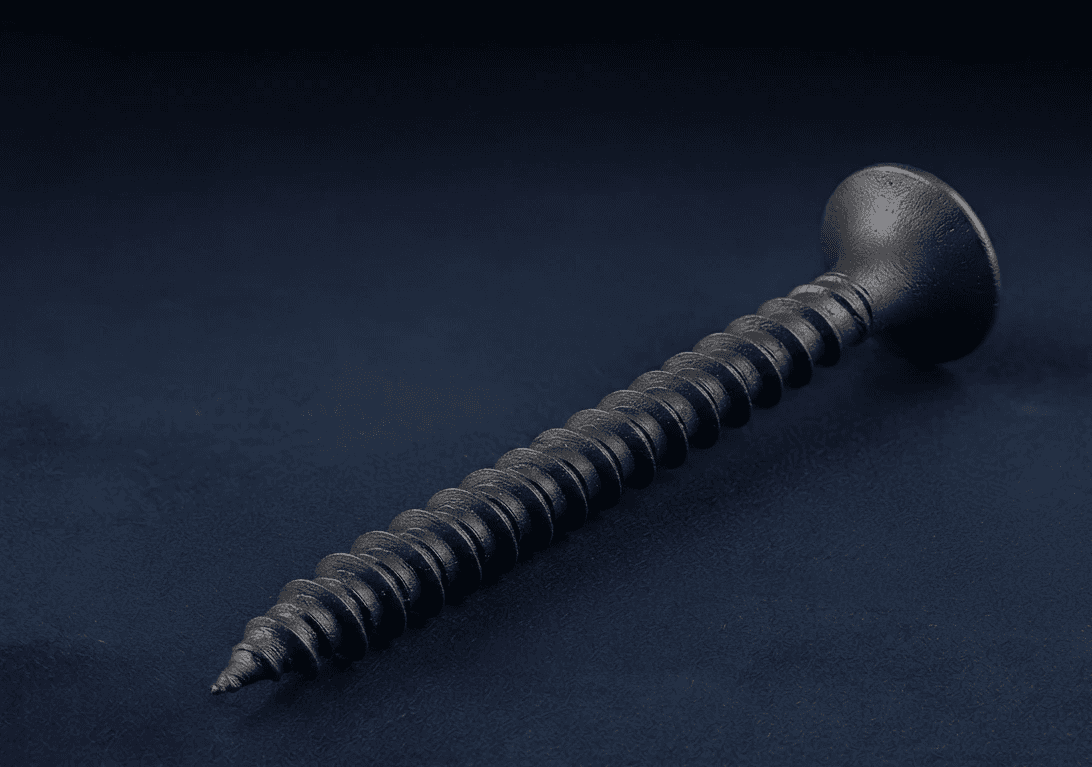
8. Which drywall screws should be used for timber framing?
Coarse-thread drywall screws are generally used with compatible timber framing. The correct diameter and length must still be selected according to the board thickness and required engagement in the wood.
Always follow the approved gypsum-board system and project specification.
9. Which drywall screws should be used for metal framing?
Fine-thread drywall screws are generally selected for compatible light-gauge metal framing.
Do not choose the screw based only on appearance. Confirm the metal thickness, screw specification and installation-system requirements before purchasing.
10. Can one thread type be used for every application?
No. Coarse and fine threads are designed for different substrate characteristics.
Using the wrong thread can result in poor engagement or inconsistent installation. The framing material should be identified before the screw is ordered.
11. Why do drywall screws have sharp points?
A sharp and centred point helps the screw begin penetrating the gypsum board and compatible framing with less wandering.
Point formation should remain consistent across a production batch, particularly for high-volume installations.
Drywall Screw Sizes
12. What sizes do drywall screws come in?
Drywall screws are available in multiple diameters and lengths. The required size depends on:
Board thickness
Number of board layers
Framing material
Required engagement
Installation system
Project specification
There is no single drywall screw size suitable for every project.
13. What is a 1-inch drywall screw?
A 1-inch screw is approximately 25.4 mm long. In metric product ranges, a 25 mm drywall screw is the closest commonly listed length.
The name refers to the overall screw length, but the complete specification should also include its diameter, thread type and finish.
14. Is a 25 mm drywall screw the same as a 1-inch screw?
They are very close but not mathematically identical. One inch equals 25.4 mm, while the metric size is listed as 25 mm.
Buyers should use the manufacturer’s stated dimensions rather than assuming that metric and imperial designations are always exact equivalents.
15. What is a 1.5-inch gypsum screw?
A 1.5-inch screw is approximately 38.1 mm long. A 38 mm gypsum screw is its closest common metric size.
Before ordering, confirm the diameter, thread configuration and actual manufacturing specification in addition to the nominal length.
16. How do I choose the correct drywall screw length?
The drywall screw must pass through the gypsum board and achieve the required engagement in the framing.
Consider the board thickness, number of layers, framing material and approved system requirements. Selecting the longest available screw is not automatically better.
17. What drywall screw sizes does Screwbee offer?
Screwbee offers drywall screws in the following diameter and length combinations:
Diameter | Available lengths |
|---|---|
3.5 mm | 16 mm, 19 mm, 25 mm, 32 mm, 38 mm and 50 mm |
4.2 mm | 19 mm, 25 mm, 32 mm, 38 mm, 50 mm and 60 mm |
4.8 mm | 50 mm and 60 mm |
These sizes are available in zinc and black zinc finishes. Thread options should be confirmed according to the required specification.
Zinc and Black Zinc Drywall Screws
18. What are zinc drywall screws?
Zinc drywall screws are steel drywall screws with a zinc-based metallic surface finish.

The required coating should be selected according to the procurement specification, visual requirement and installation environment. A zinc finish does not automatically make a drywall screw suitable for every exposure condition.
19. What are black zinc drywall screws?
Black zinc drywall screws use a dark zinc-based surface finish. They offer a dark appearance while retaining the characteristics of the specified zinc coating system.
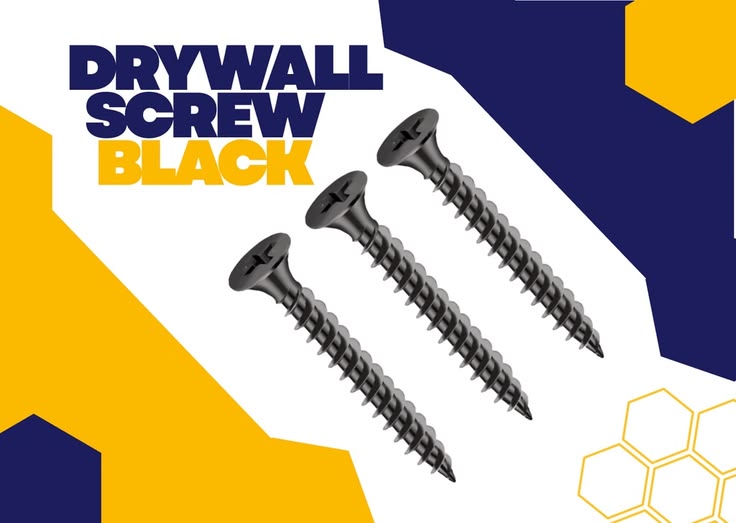
Their complete specification should include the size, thread type, head configuration and black zinc finish.
20. Is black zinc the same as black phosphate?
No. Black zinc and black phosphate are different surface treatments.
Although both can appear dark, their coating processes and characteristics are not identical. Buyers should specify “black zinc drywall screws” clearly when that is the required product.
21. Is black zinc the same as black oxide?
No. Black zinc and black oxide describe different finishing processes.
Ordering a “black screw” without stating the actual coating can create confusion. Product descriptions and purchase orders should identify the precise required finish.
22. Are black zinc drywall screws stronger than zinc drywall screws?
The surface colour does not determine the screw’s mechanical strength.
Strength depends primarily on the base material, manufacturing process, heat treatment, geometry and verified mechanical properties. The finish mainly influences appearance and coating-related characteristics.
23. Are drywall screws corrosion-resistant?
Their corrosion behaviour depends on the coating system, coating thickness, manufacturing quality and exposure environment.
A zinc or black zinc finish may provide protection appropriate to its specification, but the description alone does not prove suitability for wet, coastal, exterior or chemically aggressive conditions.
24. Can drywall screws be used outdoors?
Ordinary drywall screws should not automatically be used outdoors.
Exterior environments may require fasteners specifically approved for moisture exposure, temperature changes and corrosion conditions. Confirm the project specification before substituting a drywall screw.
25. Can drywall screws be used in bathrooms?
The answer depends on the exact location, moisture exposure, board system and fastener specification.
Do not assume that every zinc or black zinc drywall screw is suitable for frequently wet or highly humid areas. Follow the approved wall or ceiling system requirements.
26. Why do some drywall screws rust?
Possible causes include:
Inappropriate coating for the environment
Damage to the coating
Prolonged moisture exposure
Poor storage
Condensation
Chemical exposure
Incompatible site conditions
The cause should be investigated rather than assuming that colour alone indicates corrosion protection.
Drywall Screw Applications and Limitations
27. Are drywall screws structural screws?
Drywall screws should not automatically be considered structural fasteners.
Structural applications may require fasteners with specific tested load capacities, materials, dimensions and approvals. Use a drywall screw only for applications covered by its specification.
28. Can drywall screws be used with wall anchors?
Drywall anchors and drywall screws are not the same product.
Some wall-anchor systems use a compatible screw, but the correct screw is determined by the anchor manufacturer. Do not assume that an ordinary drywall screw is suitable for every anchor.
29. Can drywall screws be used to hang pictures?
A drywall screw driven only into gypsum board is not automatically a safe support for a picture or fixture.
The correct fixing method depends on the item’s weight, wall construction and attachment point. It may require a suitable anchor or secure engagement with framing.
30. Can drywall screws be used in wood?
Coarse-thread drywall screws can engage with compatible timber framing when used for gypsum-board installation.
However, that does not make drywall screws universal replacements for purpose-designed wood or structural screws. Furniture, joinery and load-bearing applications may require different fasteners.
31. Can drywall screws be used for plywood?
Drywall screws may physically enter plywood, but they are not automatically the correct fastener for plywood construction.
The appropriate screw depends on the assembly, load, material thickness and performance requirements. Use a fastener designed and approved for the intended application.
32. Can drywall screws be used for ceiling installation?
Yes, suitable drywall screws are used in approved gypsum-board ceiling systems.
The screw type, length, framing material and spacing must follow the ceiling-system specification. Ceiling installations should not be designed using assumptions taken from wall applications.
33. Can drywall screws be used for cement board?
Do not automatically use ordinary drywall screws for cement-board installation.
Cement-board systems may require different fasteners designed for the board’s density, moisture exposure and installation requirements. Follow the board manufacturer’s instructions.
Drywall Screw Installation
34. Do drywall screws require pilot holes?
In standard gypsum-board installation, properly specified drywall screws are commonly driven without a separate pilot hole.
However, substrate characteristics and specialised situations can differ. Follow the approved system and tool instructions rather than applying one rule universally.
35. What tool is used to install drywall screws?
Drywall screws are commonly installed using a screw gun or compatible power driver with the correct Phillips bit.
Depth-control tools can help maintain consistent seating. The tool should be aligned with the screw and operated at a controlled speed.
36. How deep should a drywall screw be driven?
The head should generally sit slightly below the board surface without tearing through the paper facing.
The goal is to create a shallow recess for finishing—not to bury the screw deeply into the gypsum core.
37. What happens when a drywall screw is overdriven?
An overdriven screw can tear the paper facing and reduce the effectiveness of that fastening point.
Corrective action should follow the gypsum-board system’s installation instructions. This may involve adding another correctly installed screw at an approved nearby position.
38. How far apart should drywall screws be?
Spacing depends on the wall or ceiling system, board thickness, number of layers, framing orientation and applicable construction requirements.
There is no universal spacing value suitable for every project. Follow the gypsum-board manufacturer’s approved installation guidance.
39. Why do drywall screws slip during installation?
Possible causes include:
Incorrect driver bit
Worn bit
Damaged recess
Poorly centred recess
Tool misalignment
Excessive driving speed
Inconsistent pressure
Both screw quality and installation technique influence bit engagement.
40. Can drywall screws be removed and reused?
Reusing drywall screws is generally not recommended for controlled professional installation.
Removal can damage the drive recess, threads, point or coating. A new screw provides more predictable installation than a previously driven fastener.
Drywall Screw Price and Purchasing
41. What is the price of drywall screws?
Drywall screw prices vary according to:
Diameter and length
Thread type
Surface finish
Raw-material cost
Order quantity
Packaging
Quality requirements
Destination and freight
Custom labelling requirements
A current quotation is more reliable than a fixed price published in a general article.
42. Why are some drywall screws cheaper than others?
Price differences may reflect material, manufacturing consistency, coating, dimensional control, inspection, packaging, order volume and supply terms.
The lowest unit price does not necessarily produce the lowest total installation cost if inconsistent products create waste or delays.
43. Can drywall screws be purchased in bulk?
Yes. Manufacturers and suppliers commonly provide drywall screws in wholesale and bulk quantities.
Buyers should communicate the required diameter, length, thread type, finish, quantity, packaging preference and delivery destination when requesting a quotation.
44. What packaging information should buyers confirm?
Bulk buyers should confirm:
Pieces per inner box
Inner boxes per master carton
Net and gross weight
Product labels
Size and finish identification
Batch traceability
Carton strength
Pallet or dispatch requirements
Packaging affects product protection and warehouse handling.
45. How should drywall screws be stored?
Store drywall screws in a dry, covered and well-ventilated location. Keep cartons away from direct contact with wet floors, rain, condensation and corrosive chemicals.
Damaged or wet packaging should be inspected promptly.
Manufacturing, Standards and Quality
46. How can buyers identify quality drywall screws?
Evaluate samples for:
Consistent dimensions
Complete thread formation
Sharp and centred points
Symmetrical bugle heads
Clean Phillips recesses
Uniform finish
Straight screw bodies
Strong packaging
Correct product labels
Application testing should be performed before approving a large order.
47. What should buyers ask a drywall screw manufacturer?
Ask for:
Available diameters and lengths
Fine- and coarse-thread options
Zinc and black zinc finishes
Packaging configurations
Minimum order quantity
Manufacturing and dispatch capacity
Sample availability
Technical documentation
Quality-control procedures
Delivery terms
These details are more useful than relying only on promotional claims.
48. What material are drywall screws made from?
Drywall screws are typically made from steel, then finished with a protective coating such as zinc or black zinc. The base steel provides the strength needed to drive and hold the screw, while the coating protects the surface from corrosion and gives the screw its finished appearance.
The exact steel grade and coating thickness should be confirmed with the manufacturer, since these details affect durability and performance.
49. Do drywall screws come with any kind of guarantee or quality assurance?
This varies by manufacturer. Buyers should ask directly about a supplier's quality-control process — how batches are inspected, whether samples are available before a bulk order, and what happens if a batch doesn't meet the agreed specification.
Requesting a sample before committing to a large order is a simple, reliable way to check consistency, finish and packaging quality firsthand.50. What are the best drywall screws to buy?
The best drywall screws are those correctly matched to:
Gypsum-board thickness
Timber or metal framing
Required fine or coarse thread
Diameter and length
Zinc or black zinc finish
Installation environment
Project specification
Quantity and packaging requirements
There is no universal “best” size for every project. Correct specification and consistent manufacturing matter more than colour, popularity or the lowest price.
50. What are the best drywall screws to buy?
The best drywall screws are those correctly matched to:
Gypsum-board thickness
Timber or metal framing
Required fine or coarse thread
Diameter and length
Zinc or black zinc finish
Installation environment
Project specification
Quantity and packaging requirements
There is no universal “best” size for every project. Correct specification and consistent manufacturing matter more than colour, popularity or the lowest price.
Screwbee Drywall Screw Size Range
Screwbee manufactures zinc and black zinc drywall screws in multiple dimensions for dealers, distributors, construction suppliers and procurement teams.
3.5 mm range
3.5 × 16 mm
3.5 × 19 mm
3.5 × 25 mm
3.5 × 32 mm
3.5 × 38 mm
3.5 × 50 mm
4.2 mm range
4.2 × 19 mm
4.2 × 25 mm
4.2 × 32 mm
4.2 × 38 mm
4.2 × 50 mm
4.2 × 60 mm
4.8 mm range
4.8 × 50 mm
4.8 × 60 mm
Available thread configurations and packaging should be confirmed when requesting a quotation.
Source Drywall Screws from Screwbee
Looking for drywall screws for distribution, project procurement or recurring bulk requirements?
Share your required diameter, length, fine or coarse thread, zinc or black zinc finish, quantity, packaging preference and delivery destination with Screwbee.
Choose Drywall Screws with the Right Specification
Buying the correct drywall screws begins with matching the fastener to the gypsum board, framing material and project requirements. Thread type, diameter, length, bugle-head geometry, drive quality and surface finish should all be evaluated before placing an order.
Screwbee supplies zinc and black zinc drywall screws in multiple sizes for wholesalers, distributors, contractors and procurement teams. Share your required size, thread type, finish, quantity, packaging preference and delivery destination to receive suitable product assistance.
Source Drywall Screws from Screwbee
Looking for reliable drywall screws for wholesale, distribution or project procurement? Screwbee offers zinc and black zinc drywall screws in multiple sizes with dependable bulk-supply support.
📞 Ready to Work with a Trusted Drywall Screw Manufacturer?
Whether you're sourcing drywall screws for wholesale distribution, commercial construction, or long-term procurement, Screwbee is ready to support your business with premium manufacturing, consistent quality, and dependable supply.
🟨 Request Bulk Quote
📘 Download Product Catalogue
📞 Contact Our Sales Team
Related Products
Zinc Drywall Screws — Explore available sizes and thread options.
Black Zinc Drywall Screws — Discover Screwbee’s dark zinc-finished product range.
Drywall/Gypsum Screws — Learn about available specifications for gypsum-board fixing.