📦 Request Quote
📞 Connect with us
Follow the drywall screw export process from India, covering RFQs, specification approval, samples, production, packaging, documents and dispatch.
See how an international drywall screw order moves from buyer RFQ and sample approval through production, packaging and export dispatch.
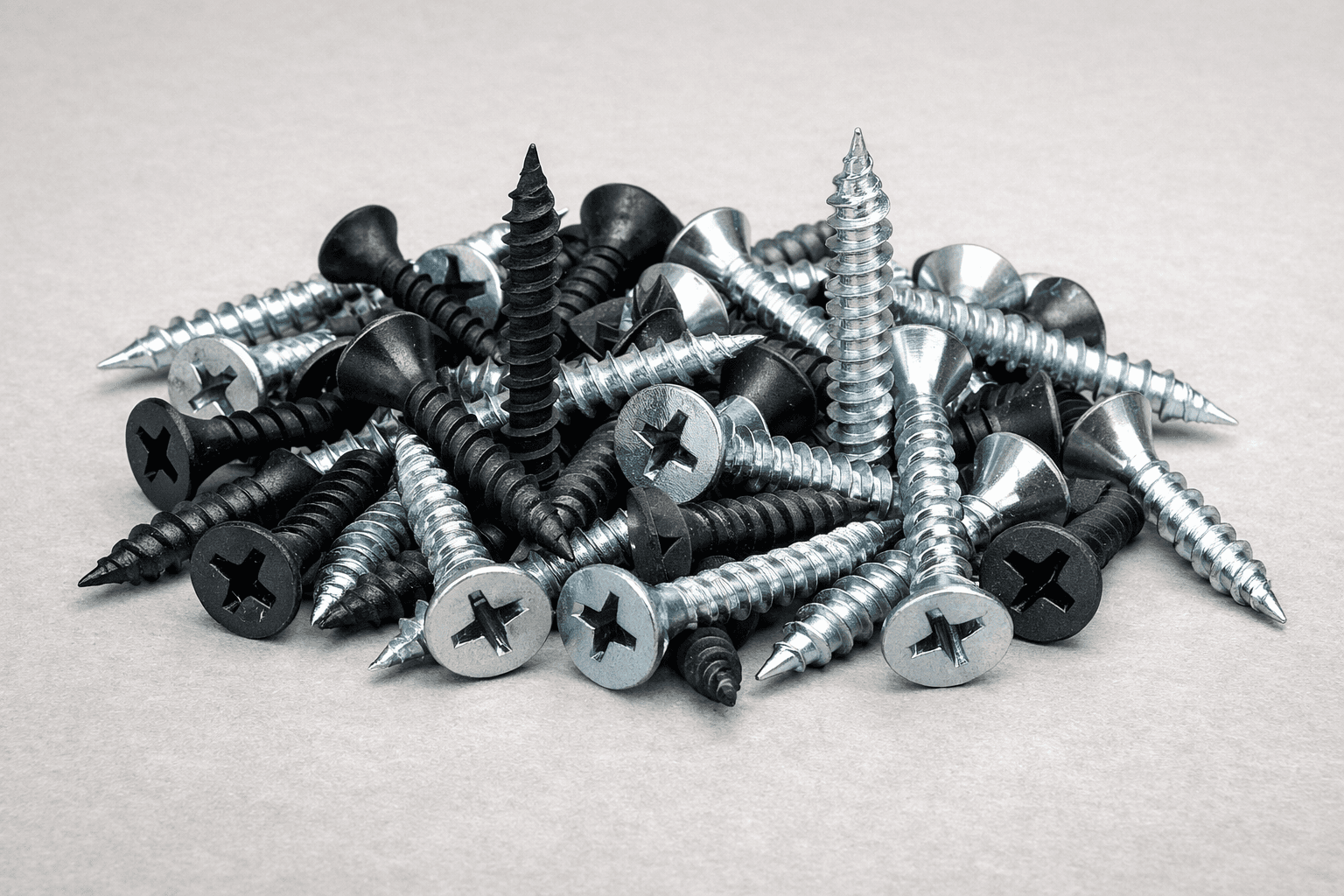
How Drywall Screws Are Exported from India: RFQ-to-Dispatch Process
Exporting drywall screws is not simply a matter of packing products into cartons and sending them overseas. A successful export order begins with a detailed buyer enquiry and proceeds through specification confirmation, sampling, production, inspection, packaging and shipping documentation.
Understanding this process helps importers prevent incorrect orders, packaging disputes and avoidable dispatch delays.
Stage 1: Receiving the Buyer’s RFQ
The process begins when the importer sends a request for quotation. A useful RFQ should describe the required product precisely.
It should include:
Screw diameter and length
Fine or coarse thread
Head and drive configuration
Point type
Zinc or black-zinc finish
Required quantity
Inner-box and carton preferences
Private-label requirements
Destination country and port
Preferred shipping terms
Required delivery date
An enquiry that says only “send your best drywall screw price” is insufficient. Different specifications, finishes and packaging arrangements can produce different costs.
Stage 2: Confirming the Specification
Before preparing a final quotation, the exporter and buyer should confirm the technical specification.
For example, “drywall screw, 25 mm” does not fully define the product. The buyer may still need to specify its diameter, thread type, finish, drive, point and packaging.
A written specification sheet creates a common reference for both parties. Any differences should be resolved before sampling or production begins.
Stage 3: Sample Evaluation
For a new buyer or customised order, samples may be evaluated before bulk production. The sample allows the importer to examine the product against the agreed requirements.
The review may cover:
Overall dimensions
Thread appearance
Head geometry
Drive recess
Point formation
Surface finish
Packaging presentation
Installation behaviour in the intended system
Sample approval does not replace applicable laboratory testing or project approval. Its purpose is to confirm that the supplied reference matches the buyer’s commercial specification.
Stage 4: Quotation and Commercial Terms
After the specification is established, the exporter can prepare a more accurate quotation.
The quotation should clearly identify:
Product specification
Unit of measurement
Order quantity
Price and currency
Packaging arrangement
Production lead time
Delivery or shipping term
Payment terms
Quotation validity
Documentation included
Buyers should compare quotations on the same basis. A lower price may reflect different packaging, quantities, specifications or shipping responsibilities.
Stage 5: Production Planning
Once the order is confirmed, production is scheduled according to the agreed quantity and specification.
Drywall screw manufacturing may involve wire preparation, cold heading, thread rolling, heat treatment, surface finishing and inspection. The exact production controls depend on the ordered product and contractual requirements.
Changes requested after production begins can affect cost and lead time. For this reason, the final specification and packaging artwork should be approved beforehand.
Stage 6: Inspection Before Packing
Inspection helps determine whether the completed batch matches the agreed order.
Depending on the contract, checks may cover:
Diameter and length
Thread formation
Head and drive condition
Point geometry
Surface appearance
Packaging quantity
Labels and carton markings
Any special testing or third-party inspection should be agreed upon when the order is placed—not after manufacturing is completed.
Stage 7: Export Packaging and Labelling
Packaging requirements differ between buyers. Some importers require neutral cartons, while others need branded boxes, barcodes or distributor-specific labels.
The packing instructions may define:
Pieces or weight per inner box
Inner boxes per master carton
Carton dimensions
Net and gross weight
Pallet configuration
Product labels
Batch identification
Country-of-origin marking
Handling instructions
Approved artwork is especially important for private-label orders. Errors in a barcode, size marking or carton label can create problems even when the screws themselves are correct.
Stage 8: Preparing Shipping Documents
The documents required for an export shipment depend on the destination, contract and transport method.
Common commercial documents can include:
Commercial invoice
Packing list
Bill of lading or airway bill
Certificate of origin, when required
Agreed inspection or product documents
Importers must verify the customs, product, marking and documentation requirements applicable in their country. The exporter and customs professionals should clarify these requirements before dispatch.
Stage 9: Dispatch and Shipment Tracking
After packaging and documentation are completed, the shipment is transferred to the selected logistics provider.
The buyer should receive relevant dispatch information, such as the shipped quantity, number of cartons or pallets, transport reference and available tracking details.
The parties should also agree on how shortages, transit damage or specification concerns will be documented and reported after arrival.
Export Enquiries with Screwbee
Screwbee supplies zinc and black-zinc drywall screws from India. International buyers can submit their required specifications, quantity, packaging format and destination for review.
Explore the Screwbee drywall screw range or submit an export enquiry.
Conclusion
A dependable drywall screw export order is built on specification accuracy and clear documentation. Each stage—from RFQ and sampling to packaging and dispatch—should be agreed upon before the shipment leaves India.
For importers, a detailed enquiry is the simplest way to reduce misunderstandings, receive comparable quotations and establish a smoother procurement process.